See more like this on Google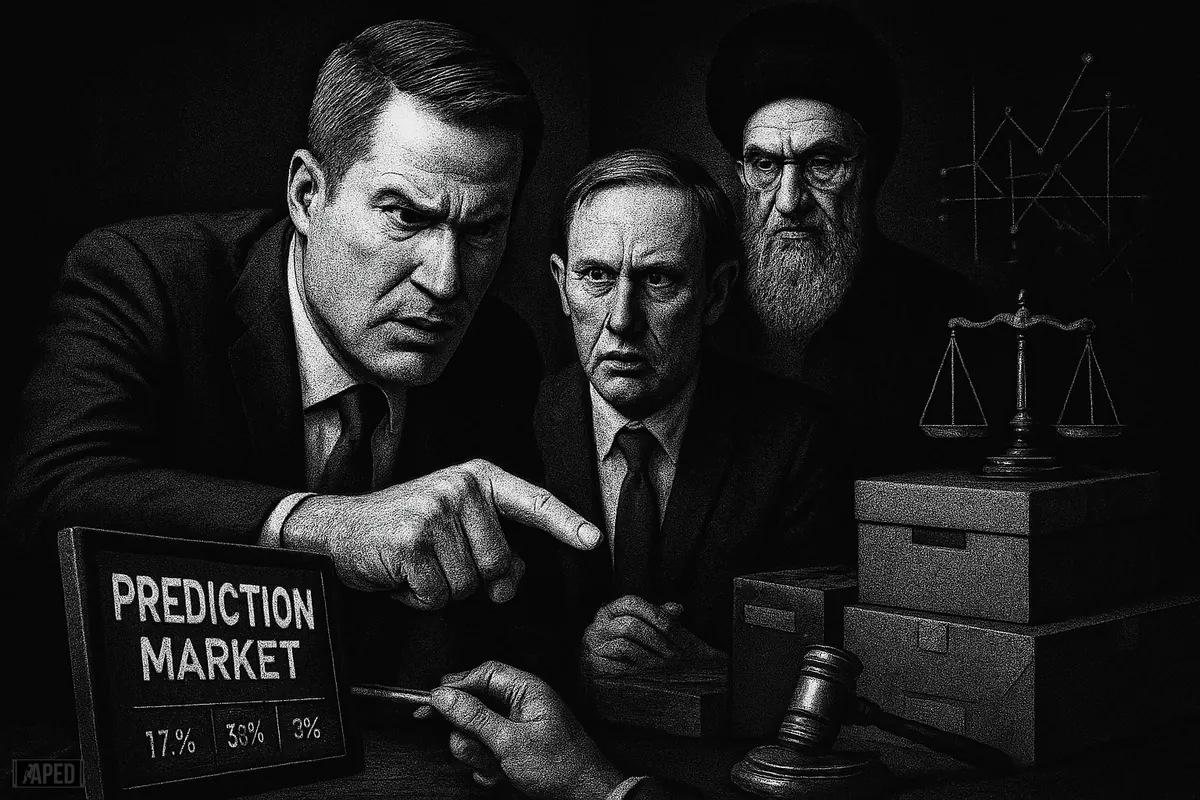
Share article
Share article
Enjoy articles without ads?
Register for free and get unlimited access to all articles.
The market was pulled fast, but only after public pressure
Moulton, a Democratic House member from Massachusetts and current Senate candidate, publicly criticized Polymarket on Friday for listing contracts tied to whether a lost American service member in Iran would be saved. His core point was simple: while a real rescue operation was underway, traders were being invited to speculate on a life-or-death outcome. [2]
Polymarket responded by archiving the market and saying it did not meet the platform's integrity standards. The company also said it was reviewing how the contract made it through internal safeguards in the first place. That wording matters. It suggests this was not defended as a legitimate edge case. Polymarket effectively admitted the listing should not have gone live. [3]
The platform did not just face criticism over optics. Moulton also pointed to a more combustible issue, alleged information asymmetry. He argued that politically connected investors could have access to nonpublic intelligence, making markets tied to military events look less like price discovery and more like a venue for trading on privileged information.
Why this hit a nerve
Prediction markets have spent the past two years trying to position themselves as sharper, faster alternatives to polling, punditry, and traditional forecasting. That pitch gets much harder when the product on offer is a contract linked to an active military rescue.
This episode landed in the middle of a broader geopolitical crisis around Iran, where event-driven contracts have already generated scrutiny. The criticism is no longer just that these markets feel distasteful. Lawmakers are now framing them as potential channels for profiteering around war and death, especially if traders with inside knowledge are involved. [4]
On-chain and trading concerns were already building
The backlash did not emerge in a vacuum. Recent Iran-related contracts on prediction markets had already raised eyebrows because of who appeared to profit and when.
The political pressure is widening
The real risk for prediction markets
This is bigger than one archived listing. Prediction markets are a multibillion-dollar category now, spanning politics, macro events, sports, and crypto-native narratives. But the more they move into live geopolitical and military outcomes, the harder it becomes to argue they are just neutral information tools.
The unresolved U.S. regulatory question is who gets final say over these venues. Federal and state authorities have already clashed over oversight, and incidents like this give critics more ammo to argue the sector cannot police itself. If lawmakers decide platforms are monetizing death, conflict, or nonpublic intelligence, the window for light-touch treatment narrows fast.
The Bottom Line
People Referenced
Seth Moulton
Seth Moulton is a U.S. Representative from Massachusetts and Marine Corps combat veteran, seeking the U.S. Senate as a Democrat.
Chris Murphy
Connecticut’s U.S. Senator since 2013; American lawyer, author, and former U.S. Representative.
Ali Khamenei
Iran’s second Supreme Leader (1989–2026), the Shia cleric and key post-1979 political architect of the Islamic Republic.