 See more like this on Google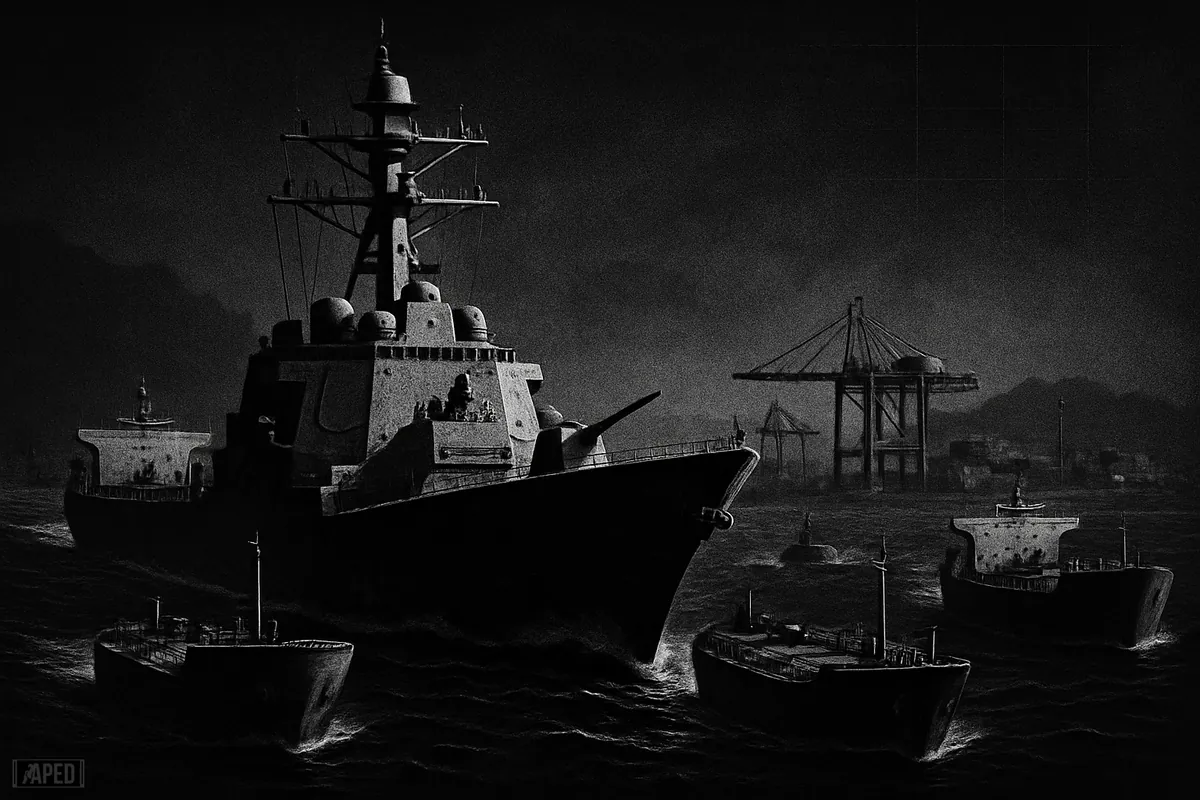
Share article
Share article
Enjoy articles without ads?
Register for free and get unlimited access to all articles.
What CENTCOM actually announced
According to CENTCOM's public statement, the enforcement order applies to all vessels entering or departing Iranian ports and coastal areas, including facilities along the Arabian Gulf and the Gulf of Oman. The language matters because it is broad on ship nationality and ownership. Officials said the blockade would be applied "impartially" to vessels of all nations, not just Iranian-flagged ships. [1]
That makes this less of a symbolic sanction and more of an operational maritime restriction. If a commercial vessel is heading for an Iranian port, the U.S. says it is now in scope. CENTCOM also said mariners should expect formal Notice to Mariners guidance and monitor bridge-to-bridge communications on VHF channel 16 in the Gulf of Oman and near the Strait approaches. [2]
Timing is also clear. The enforcement window begins Sunday, April 13, at 10 a.m. ET, which is 1400 UTC. As of Tuesday, April 14, the move is no longer just a warning. It is live policy. [3]
Hormuz stays open, and that is the key distinction
The U.S. message draws a bright line between Iranian port access and international transit through Hormuz. CENTCOM said freedom of navigation for ships moving to and from non-Iranian ports through the strait will continue.
That carveout is the whole strategy. A closure of Hormuz would immediately threaten a major share of global seaborne oil flows and likely trigger a much broader military and economic crisis. By keeping the chokepoint nominally open, Washington appears to be trying to tighten the screws on Iran while limiting blowback for Saudi, Emirati, Iraqi, and other regional exports.
Why Iranian ports matter even without a Hormuz shutdown
This is where the policy gets more potent than a standard sanctions headline. Sanctions often work through paperwork, banking friction, and delayed penalties. A naval blockade works at the level of physical movement. Cargo delayed at sea is not a theoretical cost.
Escalation risk is now the real variable
Research roundups tied to the announcement also point to rising rhetoric around enforcement and retaliation. That matters because shipping lanes do not need a declared war to become disorderly. They just need enough uncertainty for crews, owners, and insurers to demand a premium. [4]
China and other import-heavy economies are also likely to watch this closely. Any sustained disruption around Iranian maritime trade affects crude supply assumptions, refinery planning, and freight markets. Even if Iranian volumes are the direct target, regional pricing can move as if the risk is system-wide. [5]
What this means for markets beyond oil
Why it matters
This is a targeted maritime squeeze, not a closure of the world's most important oil chokepoint. That is the bullish interpretation for global trade. The bearish one is that once naval enforcement starts, the path from controlled pressure to shipping incident gets shorter.
For now, the thesis holds only if Hormuz transit for non-Iranian ports remains functional and broadly secure. If that changes, insurance costs jump, or enforcement bleeds into wider regional traffic, the market will stop treating this as a contained blockade and start pricing it as a broader Gulf security shock.