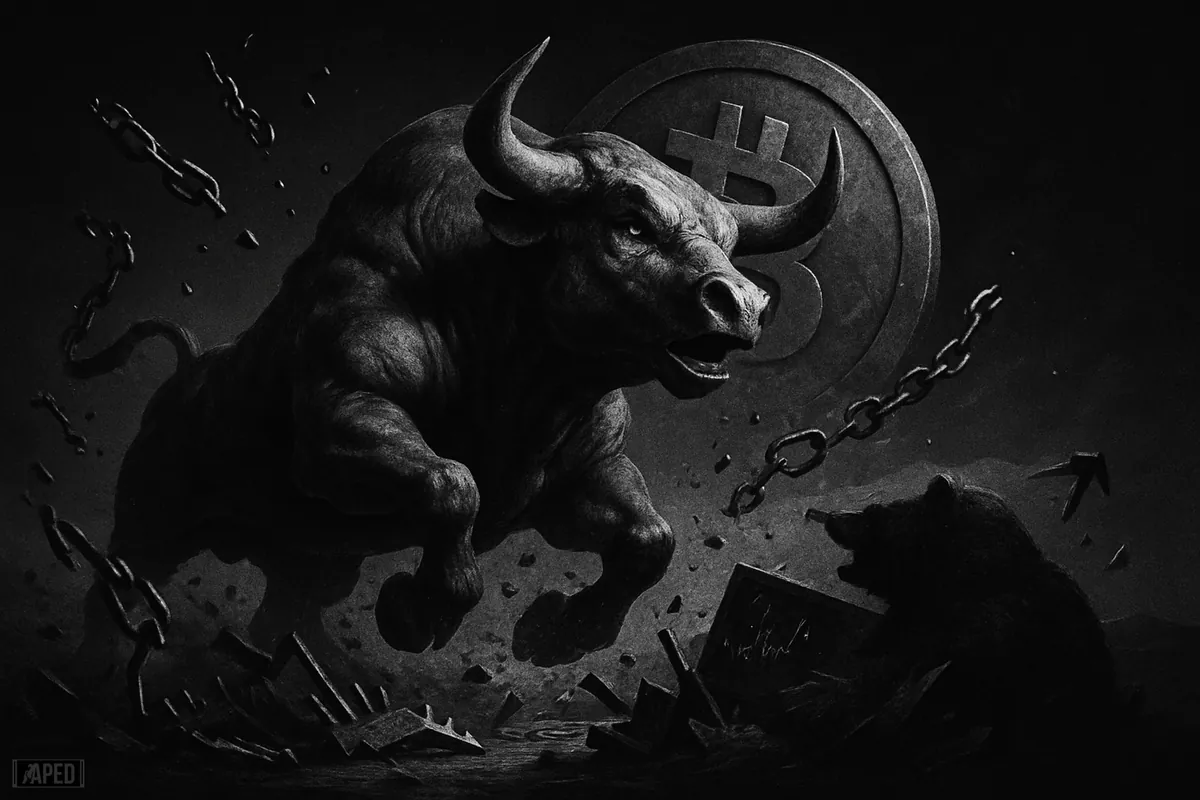
Bitcoin$80,213.89 pushed up toward $72,000 after a sharp short squeeze wiped out roughly $160 million in bearish positions, with traders also reacting to signs that geopolitical stress in the Middle East had eased. The move looks real enough on the tape, but as ever with BTC, the question is whether this was fresh conviction or just overleveraged shorts getting steamrolled. [1]
Spot BTC was trading around the low $71,000s in the source data, up close to 4% on the day, after briefly threatening the $72,000 level. That matters because the market had been leaning cautious, with macro nerves and geopolitical headlines keeping a lid on risk appetite. Once that pressure started to fade, short sellers ended up badly offsides. [2]
Register for free and get unlimited access to all articles.
The move was powered by liquidations, not just sentiment
The cleanest read on this rally is the liquidation stack. Around $160 million in BTC shorts were forced out as price accelerated higher, creating the classic feedback loop that crypto traders know well: rising price triggers liquidations, liquidations force buying, forced buying pushes price higher again. [3]
That kind of squeeze can be violent, and often is. It does not need a huge burst of fresh spot demand to get going if the derivatives market is crowded enough. A lot of traders had clearly positioned for more downside, or at least for a failed bounce. Instead, they got run over.
Short squeezes also tend to compress time. A move that might have taken days on spot-led buying can happen in hours when perpetual futures start unwinding. That seems to be the story here. BTC did not just drift higher, it snapped higher.
Cooling Middle East tensions helped reset risk
The other immediate catalyst was a broader improvement in market mood as fears tied to Middle East escalation cooled. Bitcoin$80,213.89 has a complicated relationship with geopolitical risk. Sometimes it trades like a hedge narrative, but more often in the short term it behaves like a high-beta risk asset. When traders get nervous, they cut leverage first and ask philosophical questions later. [4]
That is why easing tensions can matter even if there is no direct crypto-specific development. Less panic in macro tends to mean more room for risk assets to breathe, and Bitcoin was in a position where even a modest sentiment shift could trigger outsized moves because short exposure was already built up.
The result was a broad crypto bounce rather than a Bitcoin-only event. Ethereum$2,326.25, Solana$76.56 and major memecoins were also higher in the source data, which supports the idea that this was at least partly a general risk-on reset, not just an isolated BTC squeeze.
Why $72,000 matters on the chart and in positioning
Round numbers are a bit of a cliché, but they matter because traders cluster around them. The $72,000 area is close enough to recent key trading zones to attract both profit-taking from longs and defensive positioning from shorts. Once BTC got within touching distance, the market had a proper reason to test it.
If price can hold above the low $71,000s and turn $72,000 into support rather than just an intraday wick, traders will start looking higher. If it fails and slips back through the breakout zone, this could end up looking more like a squeeze-driven overshoot than the start of a clean trend leg.
That distinction matters because short squeezes are notorious for creating messy follow-through. The first move is forced. The second move needs actual buyers.
Derivatives can light the fuse, but spot has to do the heavy lifting
Crypto has seen this film before. Open interest builds, funding gets lopsided, a catalyst hits, and leveraged traders are liquidated into a fast move. Good fun if you are long, a bit of a mess if you are not. But once the squeeze clears out the weak hands, the market needs spot demand to keep going.
That is the key test after any liquidation-led rally. If exchange flows, ETF demand, and broader spot volumes stay firm, BTC can consolidate and continue higher. If not, the market often gives back part of the move once the forced buying is done.
The source material does not give a full derivatives breakdown beyond the $160 million short liquidation figure, so it would be sloppy to overstate the structural strength here. Still, the size of the wipeout tells you positioning was meaningfully skewed. Traders were leaning the wrong way, and the market punished them for it. [5]
What traders should watch now
A few things matter more than the headlines from here.
First, whether BTC can decisively reclaim and hold the $72,000 handle. Tapping a level is one thing, accepting above it is another.
Second, whether the broader market keeps participating. When ETH, SOL and large-cap alts rise alongside BTC, it usually points to healthier risk appetite. When Bitcoin runs alone after a squeeze, the move can be more fragile.
Third, whether derivatives reset cleanly. If funding flips too euphoric too quickly, the market can lurch into the opposite problem: overcrowded longs. Crypto loves punishing consensus, whichever side it sits on.
The wider crypto tape is improving, but not without caveats
The broader board was green in the source snapshot. Ether was up nearly 5%, Solana also posted a strong gain, and memecoins like Pepe$0.00000386, Shiba Inu$0.00000613 and Dogecoin$0.09301 moved higher too. That kind of breadth usually tells you traders are willing to reach a bit further out the risk curve.
Still, breadth alone is not enough to call this a durable breakout. Memecoin strength can just as easily signal speculative froth as healthy market depth. When the most reflexive corners of the market start sprinting, it often means leverage is back in fashion.
That is not automatically bearish. It just means discipline matters. Chasing a squeeze after the bulk of the forced buying has already hit can be a dodgy trade, especially if liquidity thins out near resistance.
Why this rally matters
Bitcoin getting back to the edge of $72,000 is important because it shows how quickly the market can reprice when fear fades and positioning is offside. The move was not built on a single grand narrative. It was a mix of easing geopolitical stress, improving risk appetite, and a derivatives market that had become too comfortable betting against price.
That combination can carry further, but only if spot demand now shows up and validates the squeeze. If BTC holds the breakout area and builds above it, the market will start talking seriously about the next leg higher. If it loses momentum and falls back under key support, this will look like another leverage flush dressed up as trend renewal.
For now, the takeaway is simple: bears got squeezed for $160 million, Bitcoin nearly tagged $72,000, and the market has reminded everyone, again, that crowded shorts in crypto are usually asking for trouble.
Your reviews help us improve the quality of both current and future articles. All reviews are public and visible to other readers. We use both ratings and comments to improve future articles and to revise any articles that do not meet our standards.
 See more like this on Google