 See more like this on Google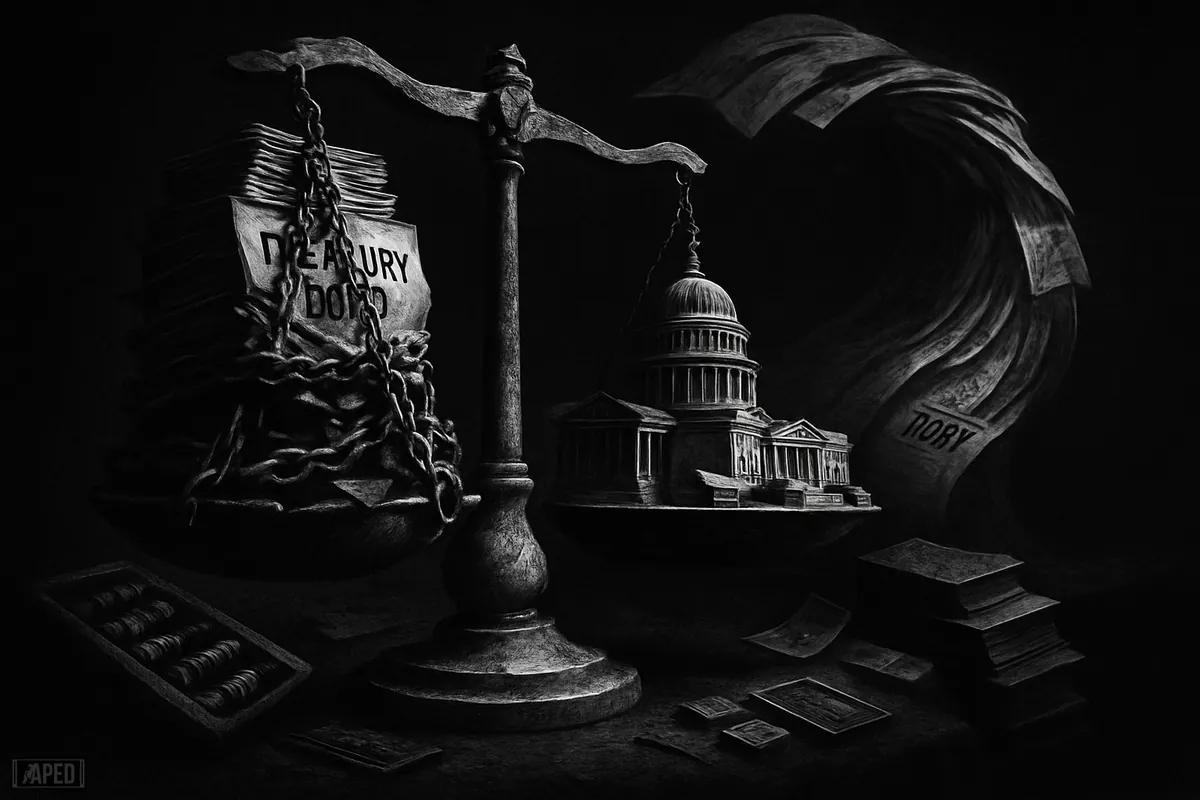

Share article
Share article
Paying interest on old borrowing is not supposed to become one of Washington's biggest line items. Yet here we are, with debt service starting to look less like accounting trivia and more like a budget priority that nobody actually voted for.
The numbers are blunt. In the first half of fiscal 2026, from October 2025 through March 2026, the US government paid about $529 billion in net interest on the national debt, according to preliminary estimates cited in the source reporting. That works out to roughly $88 billion a month, or more than $22 billion a week. The national debt itself has now moved past $39 trillion, but the immediate problem is less the headline total than the price tag attached to carrying it. [1]
Enjoy articles without ads?
Register for free and get unlimited access to all articles.
Interest costs are no longer a side issue
Debt interest has become large enough to compete with major federal spending categories. Over the same six month period, combined spending on the Department of Defense and the Department of Education came to roughly the same scale, about $531 billion altogether. That is the kind of comparison that tends to cut through the usual fog. Servicing past borrowing is starting to rival active policy choices. [2]
That shift matters because interest payments buy the government very little political flexibility. Defense spending funds troops, hardware, and operations. Education spending supports schools and grants. Interest expense mostly reflects yesterday's decisions colliding with today's rates. It is a mandatory cost, not an investment story, despite what budget spin might prefer.
Why the burden is rising so quickly
The strain is visible in revenue share, which is usually the cleaner way to judge sustainability. Data cited from The Kobeissi Letter shows the federal government spent 18 cents of every revenue dollar on interest in fiscal 2025. That is the highest share since the 1990s, and roughly triple the level seen in 2015. Put differently, a growing slice of tax receipts is being diverted before lawmakers even get to argue about the rest. Efficient? Sure. [4]
The real risk is crowding out
The budget threat is not just that interest costs are large. It is that they crowd out other priorities and narrow future choices. Every extra dollar spent on debt service is a dollar that cannot be used for infrastructure, defense, health programs, tax relief, or recession response without more borrowing. Once interest becomes one of the faster-growing components of federal outlays, the fiscal machine gets less adaptable. [5]
That dynamic is already showing up in long range forecasts. The Congressional Budget Office projects that by 2035, about 25 cents of every federal revenue dollar will go toward debt service. One in four dollars, gone before the government funds most of what voters actually associate with government. And those projections assume relatively stable conditions, not a recession, not a sharp jump in Treasury yields, and not some fresh emergency spending package because of course there is always a chance of one.
Why markets and crypto investors should care
There is also a credibility angle. If debt service keeps climbing faster than politically acceptable tax increases or spending cuts, markets may begin to price a greater probability of policy shortcuts. Those can include looser fiscal rules, softer inflation tolerance, or pressure for lower rates even when macro conditions do not quite justify them. None of that needs to happen tomorrow to influence positioning today.
Why this problem is harder to fix than it sounds
Spending cuts are difficult because large portions of the budget are mandatory or politically protected. Tax increases are rarely popular and often arrive dressed up in gentler language. Faster growth helps, but growth strong enough to outrun both deficits and interest costs is not something governments can order from a menu. Lower rates would reduce pressure, but they depend on inflation, labor markets, and investor demand for Treasuries, not just fiscal wishful thinking. [6]
What to watch next
The most important indicators now are not just the debt total, but the ratio of interest expense to federal revenue, the pace of Treasury issuance, and the direction of longer term yields. Watch whether net interest continues outpacing major discretionary categories, and whether CBO projections start moving higher rather than merely staying uncomfortable.
If the current path holds, debt service will keep acting like a silent tax on future policy choices. That is the part worth paying attention to. A government can live with a huge debt load for a long time. A government whose interest bill starts eating the budget alive gets far fewer easy options.