 See more like this on Google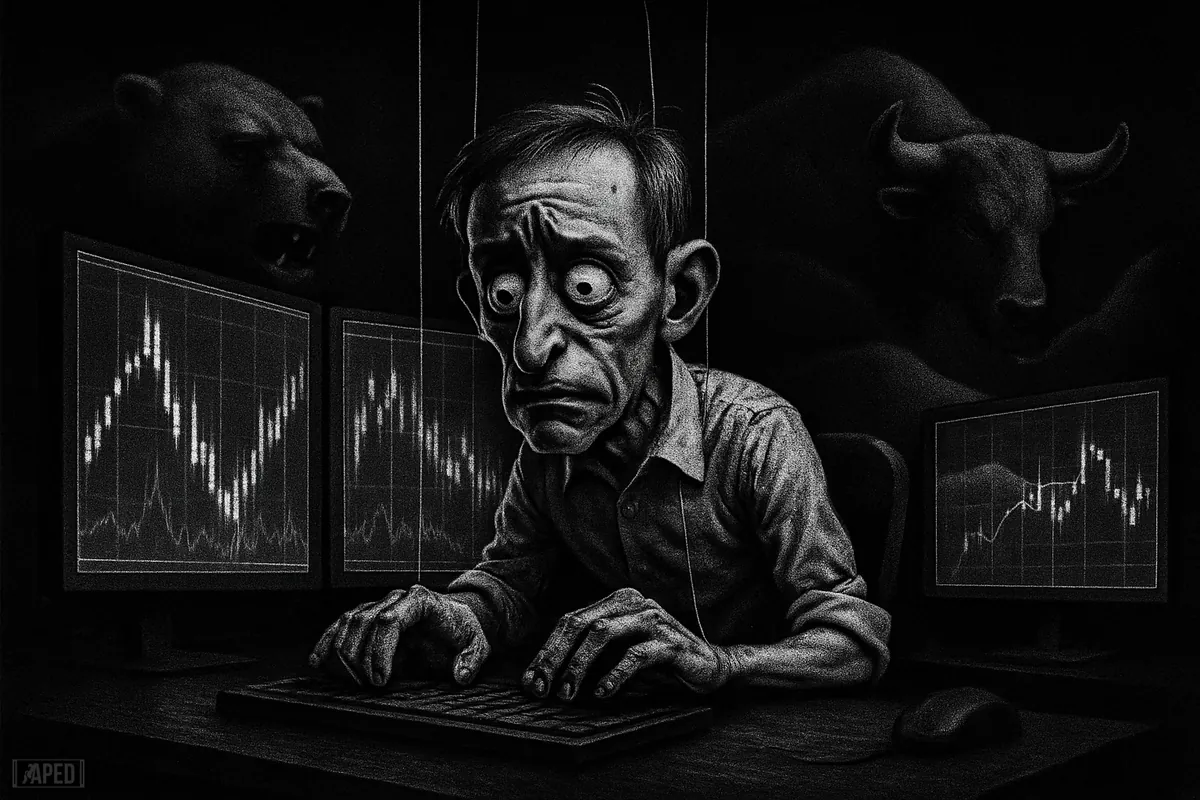
Share article
Share article
Enjoy articles without ads?
Register for free and get unlimited access to all articles.
Volatility is back, and it is not subtle
Research cited in the underlying report showed the global crypto market rose 10.3% during May 2025, despite sharp moves earlier in that month. That combination, violent intramonth action followed by a strong aggregate rebound, is exactly the sort of setup that punishes poor timing and rewards either discipline or dumb luck. [1]
Why retail feels the pain first
Retail investors are usually the least hedged, the most headline-sensitive, and the most exposed to bad execution. When prices snap lower, institutions may rotate, basis trade, or lean on derivatives. Retail tends to hit market sell, or worse, freeze. [3]
High trading activity amplifies every move
For smaller traders, that creates a nasty mismatch. They are often making slower decisions in a market that moves instantly. By the time a retail participant reacts to a push notification, the move may already be done.
Information travels faster than conviction
That is why simple headline reading is not enough. Volume spikes, abrupt momentum shifts, and the timing of moves around news releases tell a cleaner story than social media panic ever will.
The indicators that actually matter
Retail investors do not need a full quant stack, but they do need better filters.
Volume and market depth
Heavy volume can confirm that a move is real rather than a brief liquidity vacuum. Depth matters too. If order books are thin, even modest selling can produce ugly candles, especially outside peak trading hours.
Short-term momentum versus trend
Reaction to global events
Major swings tend to cluster around macro releases, regulatory developments, or meaningful crypto-specific updates. If price is moving without a clear catalyst, that can be a warning sign that leverage, not fundamentals, is driving the action.
Why this matters now
Industry executives still frame these periods as normal cycle behavior, and that is fair enough. Consolidation can reset leverage and cool irrational exuberance. But from the retail side of the screen, "healthy" is not always the first word that comes to mind.
What to watch next
- Bitcoin$80,623.96 dominance, currently around 57.26%, for clues on whether capital is hiding in BTC or rotating into riskier altcoins
- Spot volume concentration on major exchanges, because crowded flows can accelerate moves both up and down
- Order book depth during volatile sessions, especially around macro announcements
- Momentum after sharp pullbacks, to see whether buyers are defending trend or merely catching falling knives
- Retail sentiment and participation, which often weaken before price fully reflects a broader confidence problem
For everyday investors, the key point is simple: volatility is not a side effect in crypto. It is the product. The only real question is whether retail adapts to that reality, or gets shaken out by it again.