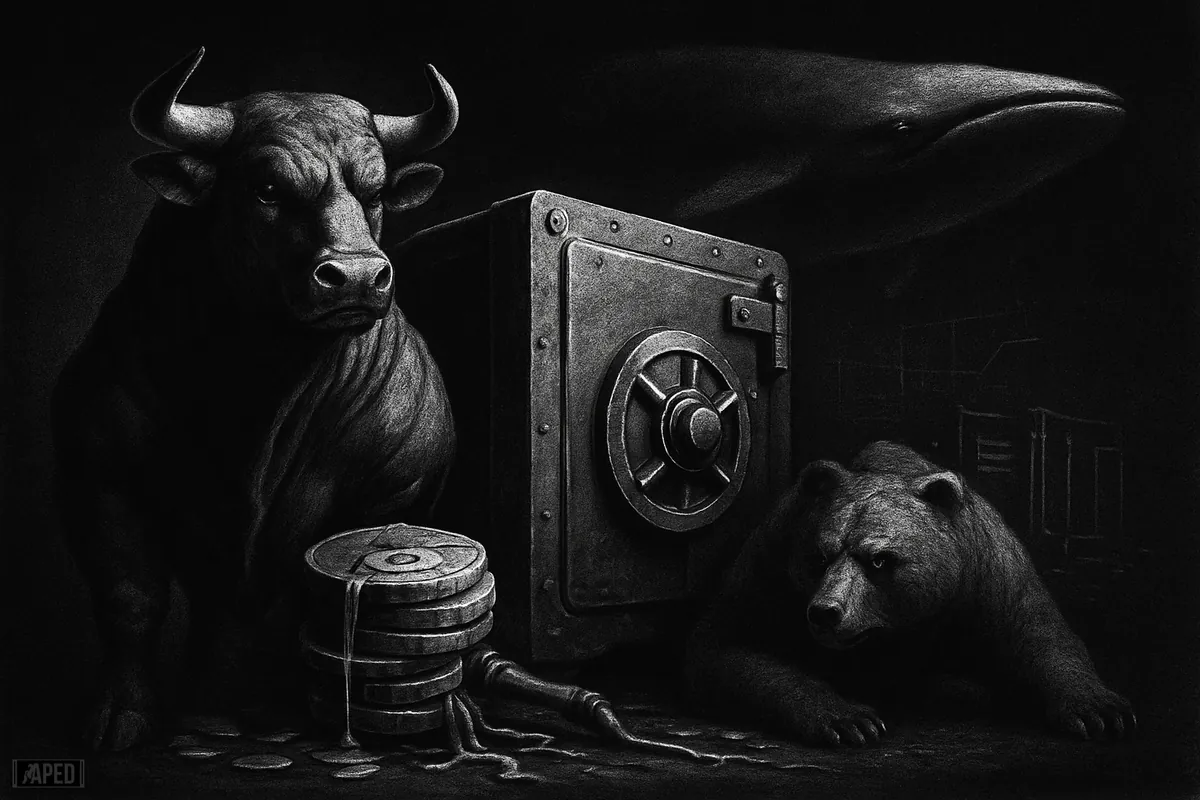
CT spent Saturday doing what it does best: doomscrolling macro, chasing pumps, and side-eyeing anything with a sketchy balance sheet. April 12 ended up feeling less like a clean trend day and more like a split-screen market, with Bitcoin$80,663.56 infrastructure and institutional tokenization looking constructive, while altcoinliquidity, walletsecurity, and politically adjacent meme trades looked shakier.
Enjoy articles without ads?
Register for free and get unlimited access to all articles.
Market Mood
The day opened with the afterglow of Friday's risk-on tone. The April 11 roundup, published just after midnight UTC, framed the setup clearly: Bitcoin had reclaimed $73,000, shorts got squeezed, and traders were leaning into risk ahead of macro catalysts. That mattered because much of Saturday's action read like the market trying to decide whether that optimism could actually broaden beyond BTC. [1]
Retail sentiment, however, looked far less comfortable a few hours later. A separate report highlighted how nonstop macro-driven volatility is again wearing down smaller investors, with panic selling, fatigue, and stress rising as crypto's 24/7 market structure keeps punishing anyone expecting a normal weekend. The vibe was familiar: pro traders treat volatility as inventory, retail often experiences it as sleep deprivation.
One of the clearest warning signs came from Bittensor$248.25's TAO market structure. Early data showed spreads blowing out to 26.6% across exchanges on April 10, a sign that liquidity had fragmented badly enough to impair price discovery. For anyone not glued to order books, that means the quoted price stopped being especially trustworthy, and execution risk jumped.
Later in the day, another update showed TAO spreads still sitting at a painful 25.3% on April 11. The slight improvement did not change the core read. A token can still print a number on a chart while the actual market behind it is half broken. That matters more than the headline move because wide spreads punish both entries and exits, especially for anyone trading size or assuming arbitrage desks will smooth things out automatically.
Siren$0.00404 kept its speculative crowd interested after a 300% weekly rally and another 17% gain over 24 hours. The setup was not framed as a clean breakout yet, though. Traders were watching resistance closely, which is usually code for "great chart, terrible place to FOMO." It was another reminder that momentum still exists in pockets, but conviction is thin and moves are getting crowded fast.
Meme Coins, Political Tokens, and Balance Sheet Anxiety
TRUMP drew dip buyers, but trend damage remained
TRUMP$0.00000183, the meme coin tied to Donald Trump branding, stayed in a technical downtrend despite a fresh whale wallet buying $1.71 million worth of tokens from Bybit. The token is still down 48% year to date, so the buy sparked curiosity more than confidence. Whale accumulation can sometimes mark local bottoms, but just as often it becomes CT's favorite screenshot before the next leg lower.
The more serious Trump-linked story involved WLFI, which fell to a record low after onchain data suggested the project used its own token as collateral to borrow $75 million in stablecoins. That is the kind of structure that makes risk managers sit up straight. Using native or affiliated tokens to back borrowing can create reflexive pressure if price drops force deleveraging, and the market seemed to price in exactly that fear.
Taken together, the TRUMP and WLFI stories showed a familiar split in speculative crypto. Narrative can still pull in opportunistic buyers, but balance sheet questions now hit faster and harder. Traders are clearly more willing to buy a dip than to ignore collateral risk.
Android wallet exposure was the day's biggest security warning
Microsoft said an Android flaw tied to the EngageLab SDK may have exposed 30 million crypto wallet users, putting a spotlight on app-layer risk rather than the usual smart contract exploit headline. That distinction matters. Crypto users spend a lot of time worrying about chain security, but many losses still begin one layer higher, inside mobile apps, SDK dependencies, push notification tooling, and poor operational hygiene. [2]
The scale of the exposure made this more than a niche dev story. If a third-party component can create a broad wallet-side vulnerability, then "self-custody" still depends heavily on software supply chains most users never audit. Saturday's security takeaway was blunt: your seed phrase can be safe while your app stack is not.
Bitcoin testnet shipped a meaningful mempool upgrade
There was better news on the infrastructure side. Bitcoin$80,663.56 Core v31.0rc4 reached testnet with a major mempool overhaul that clusters pending transactions for better handling before any eventual mainnet release. This is not the kind of update that trends outside dev circles, but it is one of those under-the-hood improvements that can meaningfully affect transaction processing and node behavior over time. [3]
For a market obsessed with price candles, this was a useful counterweight. Bitcoin's speculative story may dominate headlines, but protocol work is still moving, and Saturday brought a concrete example of engineering progress rather than narrative theater.
Shiba Inu$0.00000613 held onto weekend gains as token burns jumped 237% in 24 hours. Price, however, only rose 0.24%. That mismatch was the real story. Burn metrics still generate community energy and social engagement, but the market response was muted, suggesting traders want more than symbolic supply reduction to push the next leg higher.
Zcash$355.81 was one of the day's standout movers, up 59% over the week as privacy coin momentum combined with fresh chatter around quantum resistance. Traders were watching the $360 level as support, which now matters because fast vertical moves tend to attract both breakout buyers and equally fast profit-taking.
The ZEC rally also said something broader about current market appetite. Capital is still willing to rotate into older coins if there is a fresh narrative wrapper and enough room for momentum. Privacy plus "future-proofing" against quantum risk turned out to be a much cleaner pitch than many newer altcoin stories.
Gaming and Institutional Direction
NFT gaming kept leaning toward utility over hype
A roundup of April's best NFT games pointed to a sector that is finally acting a little less allergic to product-market fit. The projects getting attention now are the ones emphasizing actual gameplay, creator economies, and token models that feel built to last longer than a launch week. That does not mean the NFT game sector is suddenly risk-free, only that players and collectors appear more interested in useful digital ownership than pure speculation.
Morgan Stanley looked past Bitcoin
Late in the day, Morgan Stanley reportedly turned its attention toward tokenization opportunities beyond Bitcoin. The story's full detail was limited in the supplied briefing, but the directional signal was clear: major institutions are still treating tokenization as a bigger long-term opportunity than simple BTC exposure alone. [4]
That matters because it broadens the institutional conversation from "Should we hold crypto?" to "Which real-world assets and financial rails can be rebuilt onchain?" Even on a messy trading day, that kind of shift supports the idea that the industry's next durable growth phase may come from infrastructure and asset issuance rather than meme velocity.
Key Takeaways
Saturday's tape was a good reminder that crypto can be bullish and brittle at the same time. Bitcoin-facing infrastructure improved, institutions kept inching toward tokenization, and selective altcoins still found strong narrative bids. At the same time, TAO's broken spreads showed how fast liquidity can disappear, the Android wallet exposure highlighted hidden security dependencies, and WLFI's collateral questions punished any project that looked too financially cute.
For readers, the practical takeaway is simple: watch structure, not just slogans. Tight liquidity, app-level security, and collateral quality will matter more than vibes if volatility stays elevated into the new week. The market still wants to believe, but it is asking harder questions first.
Your reviews help us improve the quality of both current and future articles. All reviews are public and visible to other readers. We use both ratings and comments to improve future articles and to revise any articles that do not meet our standards.
 See more like this on Google