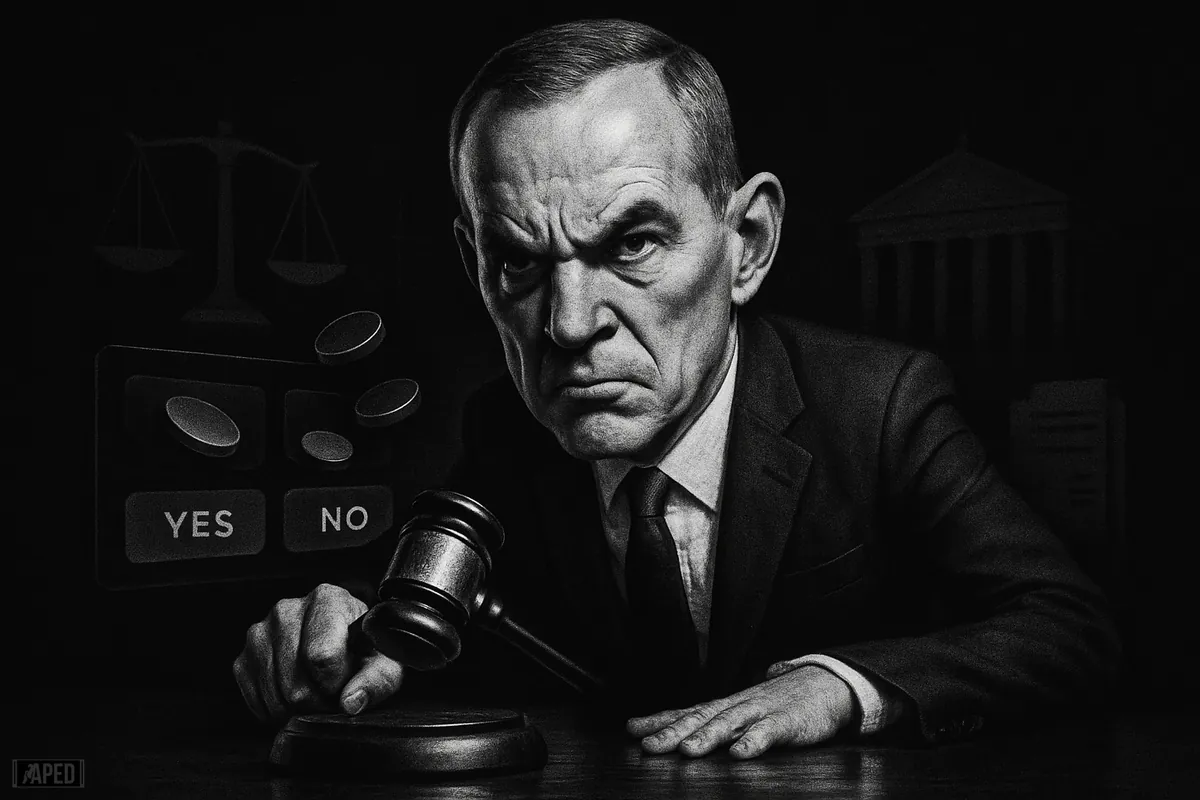
Kalshi's state-by-state legal fight just got bigger. Washington sued the prediction market operator on Friday, accusing it of offering illegal online gambling products inside the state. The immediate takeaway is simple: this is no longer just a niche regulatory spat. It is turning into a live test of whether event contracts can scale nationally if states keep treating them like sports betting in different clothes. [1]
The complaint, filed by Washington Attorney General Nick Brown, targets Kalshi's core product set, contracts that let users wager on future outcomes. Washington says those markets violate the state's Consumer Protection Act, Gambling Act, and Recovery of Money Lost at Gambling Act. The state's angle is straightforward: if users are staking money on uncertain events for a payout, Washington believes that falls under gambling law, not some separate federally blessed category. [2]
Enjoy articles without ads?
Register for free and get unlimited access to all articles.
What Washington is alleging
Washington's suit leans on the state's hard line against online gambling and its tightly controlled gaming framework. According to the complaint, Kalshi offered contracts to Washington residents even though the state broadly prohibits that kind of online betting activity. The filing argues the platform's structure does not change the basic economic reality of the product: users are risking funds on event outcomes and receiving payouts if they are right. [3]
That matters because Kalshi's broader defense has rested on its status as a federally regulated prediction market under the Commodity Futures Trading Commission. Washington is effectively pushing back on the idea that federal derivatives oversight gives Kalshi a free pass at the state level. This is the key legal level to watch. If states can successfully argue that these contracts still trigger local gambling bans, Kalshi's growth map gets a lot messier.
This is not just about Washington users. The bigger trade here is regulatory fragmentation. Prediction markets have pitched themselves as a cleaner, regulated alternative to offshore betting and casino-style books. That thesis gets weaker if each state can force a separate fight over whether event contracts are lawful within its borders.
For Kalshi, the risk is not only fines or injunctive relief. It is precedent. A win for Washington could encourage other states with restrictive gaming laws to take a harder look at the platform. A loss for the state, on the other hand, would strengthen Kalshi's argument that federally supervised event markets occupy a different lane from traditional gambling. [4]
The pressure is building
Washington is now the latest entry in a growing list of legal and political challenges around prediction markets. That growing pileup matters more than any single complaint. Once multiple jurisdictions start testing the same theory, the cost of compliance rises, expansion slows, and counterparties start gaming out headline risk. [5]
This also lands in a broader environment where event contracts tied to politics, sports-adjacent outcomes, and headline-driven markets have drawn scrutiny from regulators and state gaming authorities. The core question is no longer whether prediction markets are innovative. It is whether regulators view that innovation as a legitimate futures product or as repackaged wagering.
Everything comes back to classification. If Kalshi's markets are treated primarily as financial contracts, it has a path to defend its business through federal preemption and CFTC oversight. If courts and state officials see them as gambling products first, the platform may need to geofence more aggressively, restructure offerings, or fight an expensive fifty-state war.
That is the part traders and builders should care about. This is not a token pump or dump story. It is infrastructure risk for the broader prediction market sector. Platforms in this category need legal clarity to deepen liquidity, onboard users, and attract institutional participation. Without that clarity, the whole space trades at a discount.
What could flip the story
The bullish case for Kalshi is a court ruling that draws a bright line between regulated event contracts and illegal gambling. The bearish case is copycat enforcement, especially from states with strong anti-online-gambling statutes. Any sign that more attorneys general are preparing similar actions would raise the pressure fast.
For now, the watchlist is clear: whether Washington seeks immediate operational restrictions, whether Kalshi moves to dismiss on federal grounds, and whether other states join the pile-on. This suit does not settle the classification debate, but it does raise the stakes. If Kalshi loses ground here, the prediction market narrative gets a lot harder to sell.
Your reviews help us improve the quality of both current and future articles. All reviews are public and visible to other readers. We use both ratings and comments to improve future articles and to revise any articles that do not meet our standards.
 See more like this on Google