See more like this on Google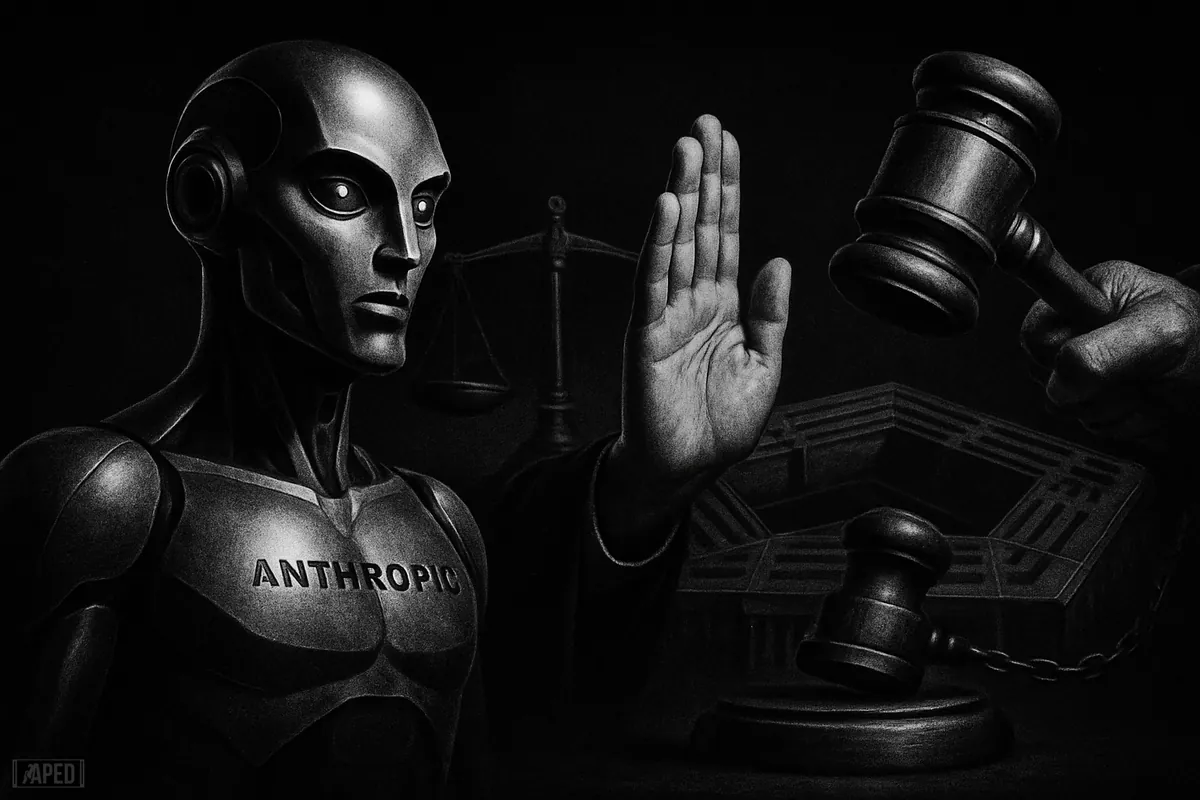
Share article
Share article
Enjoy articles without ads?
Register for free and get unlimited access to all articles.
What the judge did
The ruling, issued this week, prevents the Pentagon from formally applying the threat label to Anthropic while the case moves forward. Based on reporting across the underlying coverage, the judge treated the designation as serious enough to cause immediate harm, especially because a national security tag can cut off contracts, damage counterparties' willingness to engage, and stain a company's standing far beyond a single procurement fight. [2]
That matters because courts are usually reluctant to second guess national security judgments. Here, the judge appears to have concluded that Anthropic raised substantial enough questions about the Pentagon's reasoning, and about the process used, to justify emergency relief. [3]
Why Anthropic fought it
A Pentagon determination of that kind could also ripple into future federal work even outside the Department of Defense. Once an agency frames a vendor as a security risk, other buyers tend to widen bid spreads, slow approvals, or step back entirely. Even if the label were later reversed, the damage could already be done.
The judge appears to have taken that concern seriously. Several reports describe the court as skeptical of any effort to effectively cripple Anthropic before the government had proven its case on the merits. [4]
Why this is bigger than one company
That is why the case has implications beyond Anthropic. It could help define how much evidence and procedural fairness the government owes a private AI vendor before deploying one of its harshest labels.
What seems to be at issue
The available reporting does not present the Pentagon's full evidentiary case in detail, but the court's reaction suggests the government did not, at least at this stage, clear the bar needed to justify immediate action. Judges tend to grant temporary blocks when they see a credible risk of irreparable harm and a meaningful chance that the challenger could succeed later.
The language attributed to the court is notable. Reports say the judge questioned whether the Pentagon was trying to "punish" Anthropic. That framing is a problem for the government because courts give agencies more room when they act to protect security than when they appear to be retaliating or bypassing basic due process. [5]
What happens next
This is not a final win on the merits. It is a pause, but a high stakes one. The Pentagon can still try to defend its position as the case proceeds, and the government typically gets broad deference in matters tied to national security.
Still, Anthropic now has breathing room. That matters operationally because the company avoids the immediate headline risk of being formally tagged while it continues dealing with customers and public sector stakeholders.
The next pressure points are straightforward: whether the Pentagon can produce a stronger factual basis, whether the court demands more procedural safeguards, and whether any internal government communications bolster Anthropic's claim that the move was punitive rather than protective. [6]
The takeaway
If the Pentagon produces concrete evidence tied to actual security risk, Anthropic's position weakens fast. If it cannot, this case could become an important limit on how federal agencies use national security labels against private AI vendors.