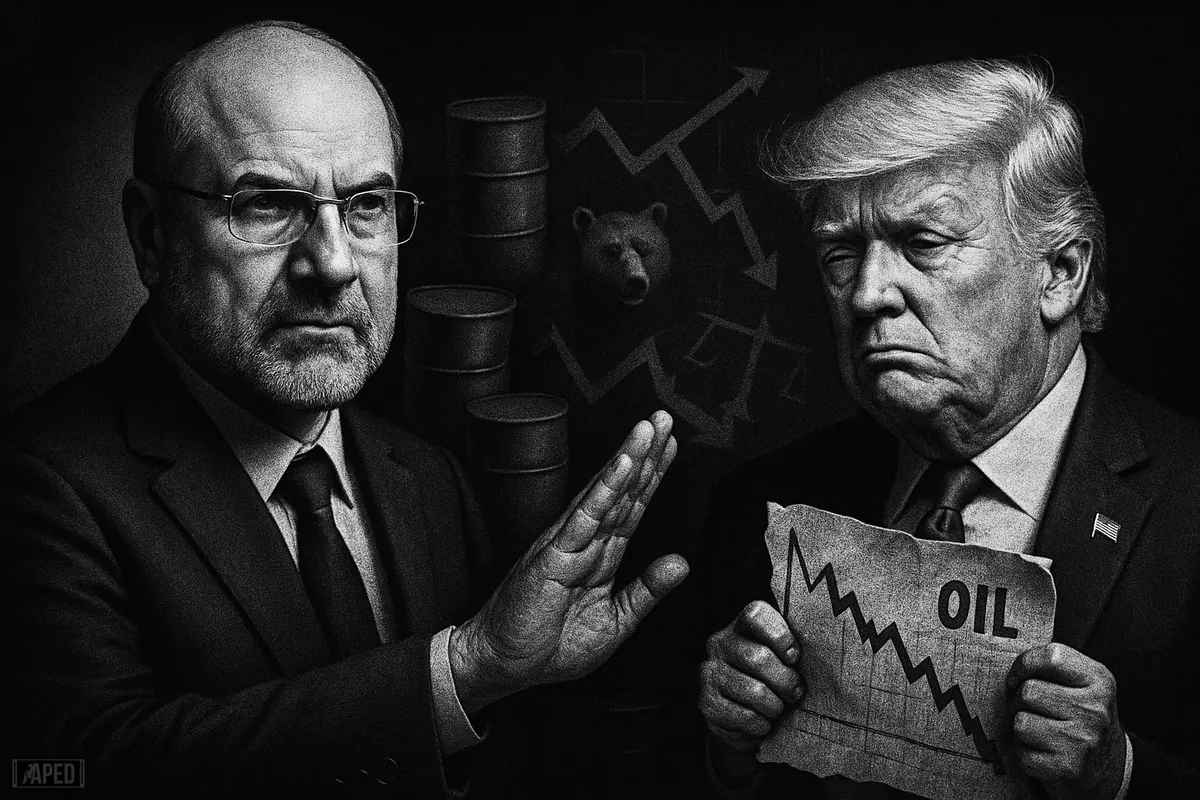
Mohammad Bagher Ghalibaf just lobbed a market taunt at Donald Trump, telling traders to treat the former US president's pre-market energy threats as a reverse signal. The timing matters, because the long-running "TACO" trade, shorthand for "Trump Always Chickens Out", has stopped paying cleanly after the latest Iran deadline extension failed to spark the usual relief bid. [1]
Enjoy articles without ads?
Register for free and get unlimited access to all articles.
A political jab that landed as market commentary
Ghalibaf, Iran's parliament speaker and one of the country's most influential political operators, posted on X that traders should effectively fade Trump's pre-market calls on energy. Strip out the rhetoric and it was trading advice: when Trump talks up a move, position the other way. [2]
That would have sounded like cheap propaganda if markets had immediately snapped back. Instead, last week's price action gave the barb some teeth. Trump pushed back his reported deadline for potential strikes on Iranian energy infrastructure from March 27 to April 6, but the market did not respond with the sort of straightforward risk-on rebound dip buyers had grown used to. [1]
The TACO trade became a proper Wall Street reflex through 2025. Trump would escalate, headlines would hit futures, risk assets would wobble, then traders would buy the dip on the assumption he would soften or delay. It worked often enough across trade disputes and foreign policy flare-ups that it became less a thesis and more a habit. [3]
A delayed deadline is not the same thing as a de-escalation, and the market seems to be treating it that way. Instead of reading the extension as a green light to pile back into risk, traders appear to be pricing a longer period of uncertainty around oil, regional security, and US policy credibility. That shift matters for crypto too, because Bitcoin$80,662.69 has spent much of this cycle trading less like an isolated anti-system asset and more like a high-beta macro instrument when geopolitical stress ramps up.
Macro pressure is doing the heavy lifting
The bigger tell is rates. The US 10-year Treasury yield is pressing towards 4.5%, a level that tends to tighten financial conditions all by itself. When yields are grinding higher, the White House gets less room to play headline games without markets demanding a proper policy response.
That is likely why the old "he'll blink, buy the dip" playbook is looking tired. If bond markets are already uneasy, a deadline extension on Iran is not enough to reset sentiment. Traders want clarity, not another round of brinkmanship.
For crypto participants, this is the bit worth watching. If yields stay elevated and oil risk remains live, the usual reflex into speculative beta can get messy fast. That can show up in Bitcoin$80,662.69 first through weaker ETF flows and softer basis, then bleed into alts via open interest getting too crowded on the long side.
Ghalibaf's post was obviously political theatre, but it also underscored how transparent the Trump headline trade has become. Once a strategy is this well known, it gets harder to monetise. Everyone is leaning the same way, everyone is waiting for the same reversal, and then one event breaks the rhythm. [4]
That is when markets get a bit dodgy. Participants who bought prior Trump-induced weakness expecting a clean bounce are forced to reassess whether they were trading a pattern or just a lucky streak. If enough of that positioning was crowded, the unwind can be sharper than the original move.
There is also a credibility issue. A postponed deadline can calm markets when investors believe the delay signals an exit ramp. It does the opposite when they read it as unresolved escalation risk kicked a few days down the road.
What crypto traders should watch now
Bitcoin$80,662.69 and majors are still downstream from macro here. The key variables are oil, Treasury yields, and whether April 6 becomes another extension, an off-ramp, or an actual escalation point. If crude spikes and yields keep climbing, risk assets probably struggle, regardless of how punchy CT decides to get.
On the positioning side, traders should be wary of assuming every Trump-related drawdown is automatically a buy. That worked until it didn't. The market has a habit of humiliating the most obvious setup once everyone has clocked it.
Bull case for the fade Trump trade: more deadline slippage, softer rhetoric, stable oil, and falling yields would restore the old pattern and likely support a relief bounce across equities and crypto.
What invalidates it: any genuine escalation around Iranian energy infrastructure, or a continued push higher in the 10-year yield, would keep pressure on risk assets and make "just buy the dip" look like stale advice.
For now, Ghalibaf's jab reads less like a meme and more like a warning: the easy Trump contrarian trade may be over, at least until markets see a proper de-escalation rather than another postponement.
Your reviews help us improve the quality of both current and future articles. All reviews are public and visible to other readers. We use both ratings and comments to improve future articles and to revise any articles that do not meet our standards.
 See more like this on Google