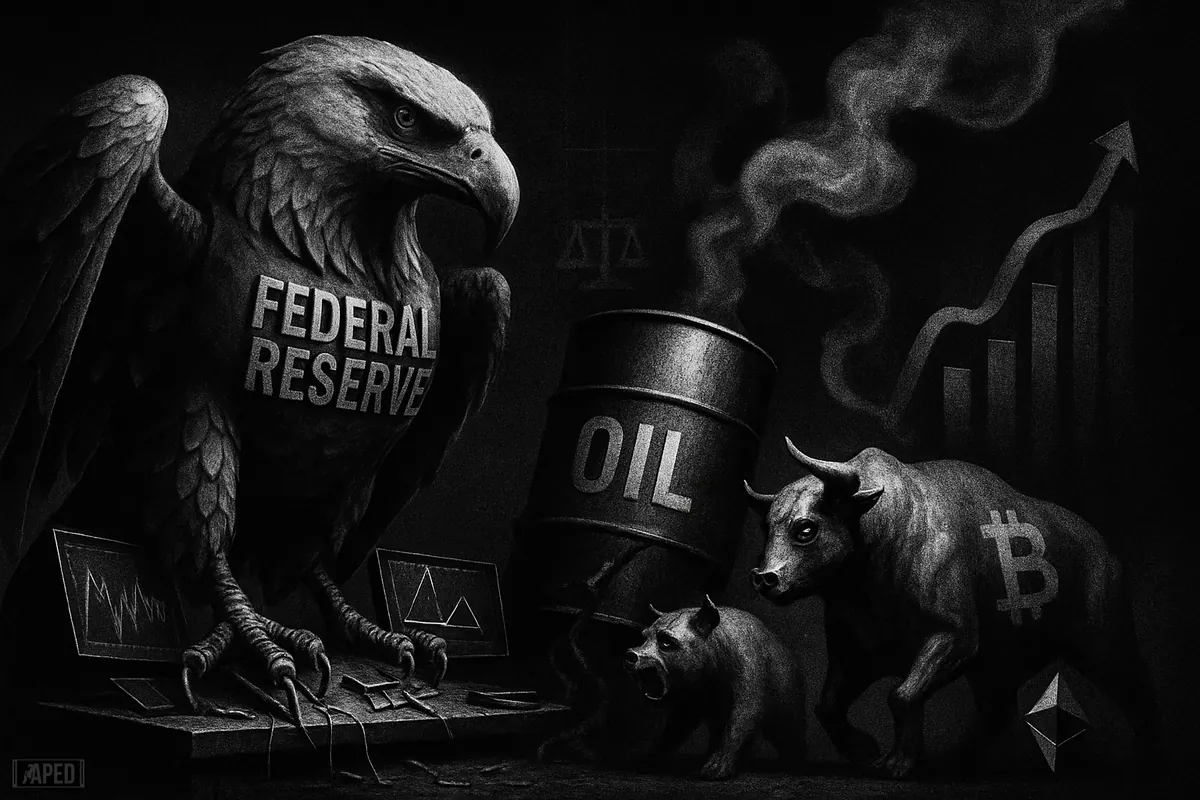
Sure, because apparently the 2026 script needed one more twist. A market that was recently leaning toward multiple Federal Reserve rate cuts is now starting to price the opposite: rate hikes, driven by fresh inflation fears and a geopolitical oil shock. [1]
That shift matters well beyond macro desks. It is already reshaping risk appetite across equities, bonds, commodities, and crypto, with Bitcoin$80,213.89 hovering around $66,401, Ethereum$2,326.25 near $1,990, XRP$1.518 at $1.32, and Solana$76.56 at $81.64 as traders digest a less friendly interest-rate backdrop.
Register for free and get unlimited access to all articles.
Fed expectations have flipped fast
The core change is simple: higher energy prices are feeding concern that inflation could reaccelerate just as investors had grown comfortable betting on easier policy. Markets that were pricing several cuts for 2026 have sharply repriced, with some now assigning real odds to the Fed tightening again this year. [2]
That is a meaningful reversal in a short window. The rate market is effectively saying the inflation fight may not be finished, especially if elevated oil prices start bleeding into transport, manufacturing, and consumer costs more broadly. For the Fed, that is the problem. Energy shocks do not stay politely contained.
Oil is doing the talking
The biggest driver of the repricing is crude. Middle East tensions have kept oil elevated, pushing investors to reconsider the idea that inflation would continue gliding lower. Central banks can usually look through one-off commodity spikes, but persistent strength in oil is harder to ignore, particularly when inflation expectations are already sensitive. [3]
That divergence suggests this is not a classic risk-off move with one clean winner. It is a repricing of growth, inflation, and policy all at once. Those phases tend to produce odd correlations, at least until markets settle on a dominant narrative.
Bitcoin$80,213.89 has outperformed some traditional assets in the very short term, a point crypto bulls will naturally present as evidence of maturing macro status. Maybe. Or maybe markets are still sorting out whether BTC is a hedge, a risk asset, or whichever one is most convenient that week.
What is clear is that a sustained rise in rate hike expectations is not automatically bullish for crypto. Higher real yields and tighter policy typically pressure speculative assets by raising the cost of capital and making safer returns more attractive. If Bitcoin continues to hold up while equities wobble, that would be worth taking seriously. One or two sessions of relative strength, on their own, are not a regime change. [4]
Ethereum$2,326.25 and altcoins may be even more sensitive here. While BTC can sometimes attract flows as the sector's most liquid macro proxy, smaller tokens generally face a tougher environment when liquidity expectations deteriorate.
Why this matters now
The market is no longer reacting only to inflation data prints. It is reacting to the possibility that geopolitics can reintroduce inflation through commodities, forcing the Fed back into a more defensive posture. That creates a different kind of uncertainty than the one investors were trading earlier this quarter. [5]
If the repricing continues, traders will have to deal with three pressures at once: sticky inflation, elevated energy costs, and weaker confidence in policy easing. That combination tends to punish crowded long-risk positioning and shorten the market's patience for speculative narratives.
What to watch next
The next key signal is whether oil remains elevated or starts to retreat. If crude cools, markets may walk back some of the newly priced hike risk. If it stays high, inflation expectations could become more entrenched. [6]
Fed communication also matters more now. Any hint from officials that they are concerned about second-round inflation effects would reinforce the hawkish turn. On the data side, traders should watch upcoming inflation prints and consumer expectations closely, not just headline numbers.
For crypto, the practical test is straightforward: can Bitcoin maintain relative strength if rate hike odds keep rising and equities stay under pressure? If yes, that would strengthen the case that BTC is carving out a more distinct macro role. If not, then this was just another brief episode of crypto looking special for a weekend, as everyone definitely predicted.
Your reviews help us improve the quality of both current and future articles. All reviews are public and visible to other readers. We use both ratings and comments to improve future articles and to revise any articles that do not meet our standards.
 See more like this on Google