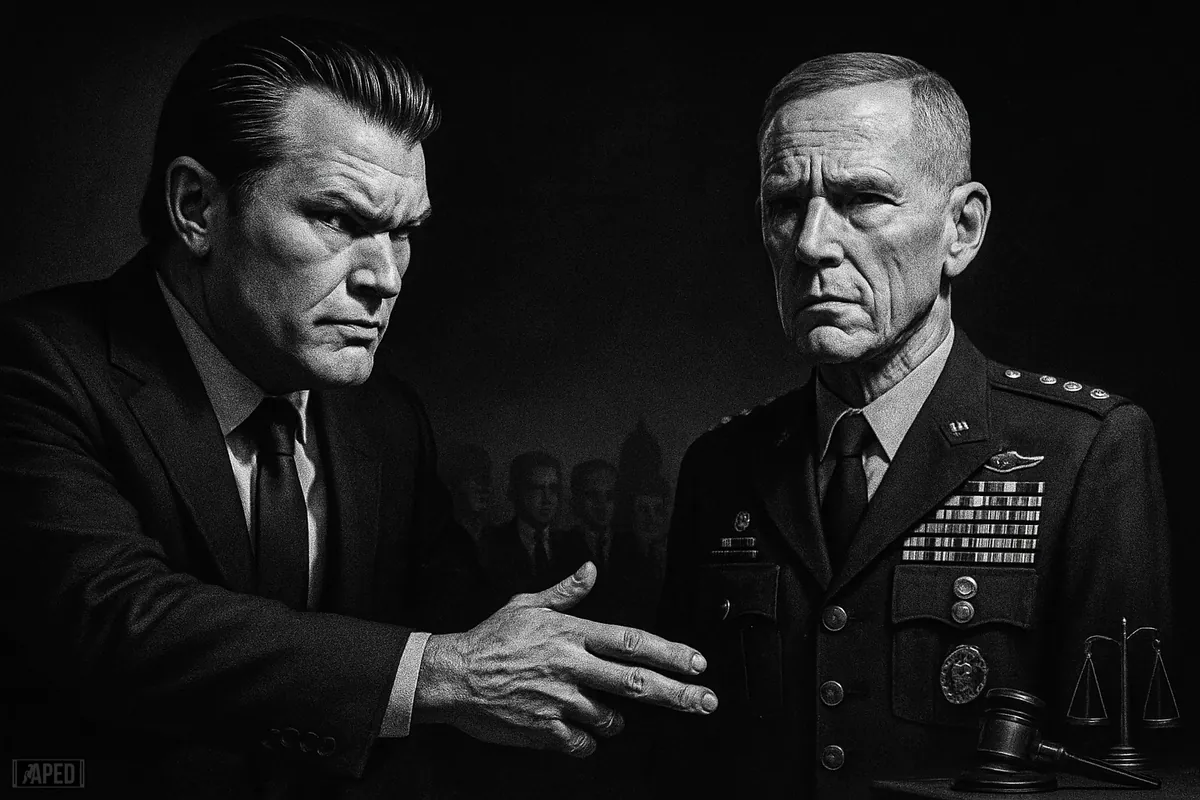
Defense Secretary Pete Hegseth has fired Army Chief of Staff Gen. Randy George after a clash over promotions, turning a simmering civil-military dispute into a full public rupture. The trade here is simple: this is not a routine personnel shuffle, it is a power move inside the Pentagon, and the key level to watch is whether the White House and Senate line up behind Hegseth's broader effort to remake senior military leadership. [1]
Enjoy articles without ads?
Register for free and get unlimited access to all articles.
What happened
Multiple reports say George was removed after resisting or pushing back against a set of politically charged promotion decisions. The dispute appears to have centered on whether senior Army appointments should follow established institutional processes or be reshaped more directly by political leadership. [2]
That matters because the Army chief of staff is not a marginal operator. The role sits at the top of the service's uniformed chain of advice, overseeing force readiness, modernization priorities, and senior leadership development. Firing that officer over a promotions confrontation sends a blunt message to the rest of the brass: get aligned, or get replaced.
George's ouster lands in a broader campaign by Hegseth to assert tighter civilian control over Pentagon personnel and culture. Civilian oversight is standard. Using promotions as a pressure point is where the fight gets hot. [3]
Promotions are one of the military's internal load-bearing beams. They determine not just who gets stars, but what kind of officer corps emerges over time. If senior officers believe advancement depends less on professional evaluation and more on political reliability, the downstream effects could hit morale, retention, and trust inside the institution.
The institutional fault line
Supporters of the move will frame it as overdue accountability and a correction to a military establishment they see as resistant to elected leadership. Critics will call it politicization, plain and simple. Both sides are arguing over the same chokepoint: who really controls the pipeline to command.
That is why this story is sticky. You can replace one general quickly. Rebuilding confidence in the promotion system is slower, messier work.
The immediate question is succession. If Hegseth installs a more compliant replacement, the Army could see faster turnover at the top and a sharper screening process for future promotions. If lawmakers push back, especially in confirmation or oversight channels, this could widen into a larger fight over military independence and executive authority. [4]
There is also a practical risk. Leadership churn at the top of the Army rarely stays confined to one office. It can delay planning, scramble priorities, and create hesitation among officers who do not know which signals matter most, performance or politics.
Why It Matters
This is less about one general losing his job and more about the rules of the game inside the Pentagon. Hegseth has shown he is willing to use personnel decisions as leverage, and the Army now has to decide whether this was a one-off warning shot or the start of a deeper purge. Watchlist: the replacement pick, Senate reaction, and whether more senior officers suddenly find their chairs getting hot. [5]
Your reviews help us improve the quality of both current and future articles. All reviews are public and visible to other readers. We use both ratings and comments to improve future articles and to revise any articles that do not meet our standards.
 See more like this on Google