 See more like this on Google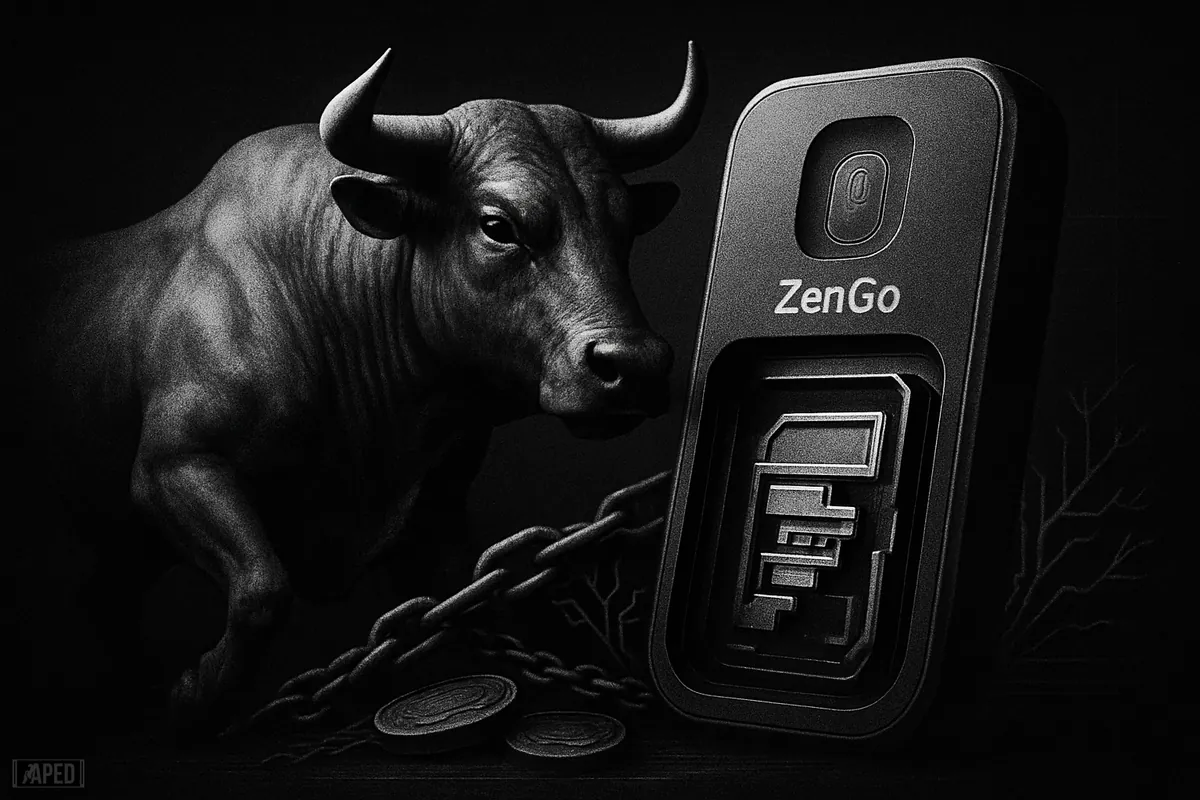
Share article
Share article
Enjoy articles without ads?
Register for free and get unlimited access to all articles.
Why eToro wants Zengo now
The strategic logic behind the deal
Self-custody is shifting from niche to baseline
Tokenised assets are the bigger prize
The company explicitly tied the deal to the expected growth of tokenised assets and decentralised trading models. That is the more interesting read-through. [4]
Zengo gives eToro a way to prepare for that future without building every piece from scratch.
What Zengo brings to the table
Zengo's main differentiator has been security architecture designed to remove the single point of failure that comes with seed phrases. In plain English, users do not have to write down a string of words and pray they never lose it. For retail adoption, that matters a lot.
Zengo also gives eToro a ready-made self-custody product rather than an internal prototype. That speeds up time to market and avoids one of the more dodgy habits in fintech, bolting on half-finished crypto tools and hoping branding can paper over the cracks.
Why this fits broader market trends
This deal lands at a moment when large platforms are trying to position themselves for a hybrid market structure. Centralised interfaces still dominate for onboarding, compliance, and customer support. But users increasingly expect assets to be portable and interoperable.
That creates a tension. Traditional platforms want control and clean user experience. Crypto users want ownership and composability. The firms that can offer both are likely to be in the strongest position.
eToro's move suggests it sees that clearly. Rather than framing self-custody as an off-platform leakage point, it appears to be treating it as a retention feature. If that works, it could become a model other retail investing apps copy. [5]
Not every wallet deal is equal
Still, a wallet acquisition is not automatically a winning trade. Integration is where these deals often go sideways. Self-custody products can lose credibility quickly if the acquiring company waters down control, adds friction, or turns the wallet into little more than a branded transfer tool.
So the test is not just whether eToro owns wallet technology. It is whether it preserves the parts that make that technology useful.
What the $70 million price tag signals
At roughly $70 million, this is not a mega-deal by fintech standards, but it is still a meaningful bet on wallet infrastructure. The number suggests eToro sees Zengo as a practical capability buy, not a moonshot acquisition based on hype. [6]
Zengo sits squarely in that category. It is infrastructure that becomes more valuable if the next wave of crypto adoption is less about pure speculation and more about actual asset ownership.
The bigger picture
eToro is not buying Zengo to chase a one-week narrative pump. It is buying a critical piece of user infrastructure as crypto products mature into something closer to mainstream financial plumbing.
If the integration is handled well, eToro gets a stronger answer to the custody question and a clearer path into tokenised markets. If it fumbles the rollout, the deal risks becoming an expensive feature add that serious users route around.
That is the key invalidation point here: self-custody has to stay meaningfully self-custodial. If eToro can manage that balance, this looks less like a side bet and more like a sensible move before the rest of retail fintech catches up.