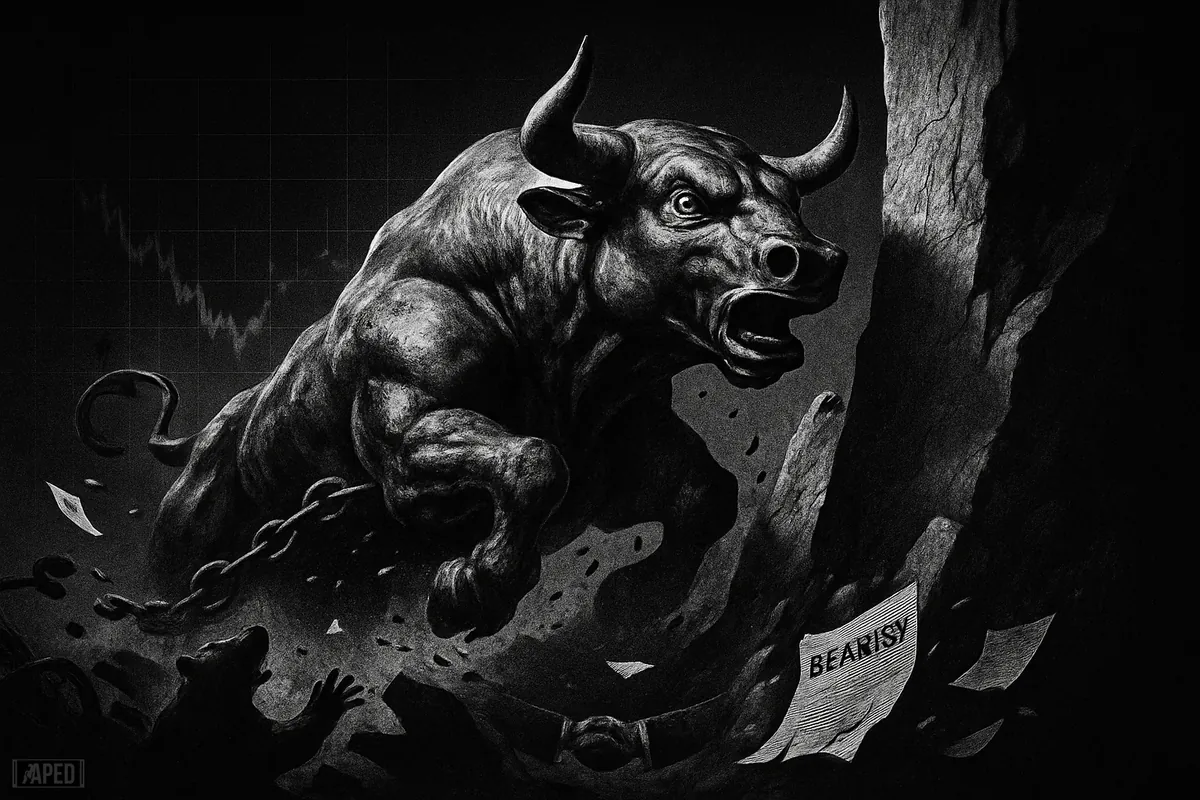
Crypto spent April 20 doing what it does best, turning one morning squeeze into a full-day argument about whether this is a real breakout or just leverage wearing a convincing hat. The bullish case had numbers behind it: Bitcoin$80,326.13 pushed back toward $75,000, Ethereum$2,326.40 tested a key breakout zone after a sharp jump, and risk appetite improved as macro headlines calmed traders. The less flattering part also showed up on schedule, with ugly Bittensor$248.25 spreads reminding everyone that "liquidity" can vanish the second it is actually needed.
Enjoy articles without ads?
Register for free and get unlimited access to all articles.
Market Moves
Bitcoin squeezes toward $75K, then the market starts extrapolating
The day's tone was set early. By 07:02 AM UTC, Bitcoin$80,326.13 was nearing $75,000 after roughly $400 million in short liquidations helped force price higher. The move was tied to stronger risk sentiment, with hopes around U.S.-Iran talks reducing some immediate macro stress and pushing traders back into risk assets. [1]
That matters because this was not a random drift upward. A short squeeze is mechanical buying, not a philosophical change of heart, but it can still reset positioning fast. Bitcoin's return toward resistance put the market back into breakout mode after April 19's broader rally, when BTC had already reclaimed the mid-$70,000 area and helped drag sentiment higher across majors.
By the evening, the narrative had widened from "squeeze" to "strategic asset," because of course it did. At 08:32 PM UTC, Bitwise argued Bitcoin could eventually challenge or even surpass gold's roughly $34 trillion market if geopolitical stress keeps pushing BTC beyond the "digital gold" label and toward use as neutral settlement infrastructure. That is a big claim, and investors should treat it like one. Still, the timing was notable: the market spent the day re-rating Bitcoin higher first on positioning, then on macro framing. [2]
Ethereum tests its breakout, but volume still wants convincing
Bitcoin may have set the tone, but Ether remained one of the cleaner reads on follow-through. At 10:31 PM UTC, Ethereum$2,326.40 was testing $2,416 after a near 10 percent jump, with traders watching for a close that could open a path toward $2,450 to $2,600.
The catch was volume. The move looked constructive on price alone, but weak participation left the breakout less than fully confirmed. That fits the broader mood of the day. Traders were willing to chase strength, but not all the way to blind conviction. ETH is now in the awkward but important zone where a sustained hold turns momentum into structure, while rejection would make the prior push look a lot more like a relief rally.
At 03:01 PM UTC, XRP$1.518 was nearing a key triangle breakout, helped by a bullish MACD crossover that improved the short-term technical picture. Resistance remained the main issue, and traders were looking for a decisive move higher before calling it a trend extension.
This was a smaller story than the BTC and ETH action, but it added to the day's pattern: large caps and liquid majors were pressing against technical inflection points at the same time. When several assets line up like that, market mood tends to shift quickly from caution to momentum chasing. Sometimes that works. Sometimes everyone rediscovers resistance together.
The day's clearest warning sign came from Bittensor's TAO market structure. At 12:01 PM UTC, cross-exchange spreads were reported as wide as 35.8 percent on April 14, signaling serious fragmentation. By 01:31 PM UTC, that picture worsened, with spreads revised as high as 37.2 percent within a 30-minute window.
That is not normal slippage. It points to badly degraded price discovery and weak arbitrage transmission between venues. In practical terms, traders looking at "the TAO price" may have been looking at multiple prices depending on where they stood. For a market that likes to talk about efficiency, this was a useful reality check.
The timing was especially awkward because the rest of crypto was busy celebrating upside. When majors rally and a thinner market still cannot maintain coherent cross-exchange pricing, it says something important about underlying plumbing. Not every token benefits equally from improving sentiment, and some are one stress event away from disorderly trading.
Hyperliquid's HYPE extends its run, but breakout risk remains two-sided
At 08:32 AM UTC, Hyperliquid$59.48 hit a 2026 high near $45 as Hyperliquid volume surged. The token was up 108 percent since January, a strong performance by any standard, and a sign that traders were still rewarding platforms with visible activity and revenue relevance rather than pure narrative inflation.
Even so, the report flagged the obvious issue: bulls still needed a clean breakout. That distinction matters after a run this extended. High volume can validate a move, but it can also mark the point where late momentum gets stress-tested. HYPE remains one of the stronger exchange-related tokens on the board, but after doubling in a few months, upside is no longer the only crowded trade.
At 10:01 AM UTC, Chainlink$9.283 launched 24/5 live U.S. stock market data for DeFi applications. The practical use case is straightforward: lower-latency pricing for tokenized equities, perpetuals, and real-world asset products that need more responsive reference data. [3]
This is one of those infrastructure stories that sounds dry until it is suddenly not. If tokenized stocks and related DeFi products are going to scale, they need pricing feeds that match market reality more closely. Slower or less reliable data creates room for stale fills, bad liquidations, and generally expensive surprises. Chainlink's update does not solve every design problem in tokenized finance, but it does improve one of the more obvious bottlenecks.
It also fits a broader theme from recent weeks: crypto's cleaner growth stories are increasingly tied to rails, not slogans. Stablecoin expansion, RWA issuance, and tokenized asset trading all depend on boring but essential components like price feeds, settlement logic, and compliance-friendly market structure. Glamorous, no. Necessary, very much yes.
Policy and Industry Positioning
Chris Giancarlo goes full-time crypto
At 07:02 PM UTC, former CFTC Chair Chris Giancarlo took a full-time crypto adviser role, leaving big law for a direct industry position. The move is symbolically important because Giancarlo has long been one of the more recognizable U.S. policy figures open to digital asset development, and his shift suggests crypto's Washington orbit is still expanding rather than retreating. [4]
The signal here is less about one executive job change and more about institutional alignment. Former regulators moving closer to industry can mean better policy fluency inside crypto firms, and more crypto fluency among policymakers by extension. Critics will see revolving-door optics, supporters will see maturation. Both views can be true at once.
Combined with the more constructive policy tone seen over the past several sessions, the appointment reinforced the sense that U.S. crypto positioning is becoming less defensive. That does not guarantee cleaner regulation, but it does suggest the conversation is no longer being framed purely around enforcement risk.
April 20 mattered because the market did more than bounce. It tested whether improved sentiment could survive contact with resistance, macro uncertainty, and actual market structure. So far, the answer is "mostly," which is better than crypto often manages.
The levels now matter more than the stories. Bitcoin needs to turn the $75,000 area from squeeze target into support. Ethereum needs stronger volume if $2,416 is going to become a base instead of a brief photo opportunity. XRP still needs confirmation, not just a promising indicator. HYPE looks strong but extended. TAO remains a warning that fragmented liquidity can turn a chart into fiction fast.
The practical takeaway is mildly unimpressed but clear: the rally is real enough to respect, not clean enough to trust blindly. Watch whether majors hold their breakout zones over the next session, and whether volume follows through instead of fading after the headlines cool. If it does, April 20 starts to look like continuation. If not, it was another day when leverage wrote checks that spot demand may not want to cash.
Your reviews help us improve the quality of both current and future articles. All reviews are public and visible to other readers. We use both ratings and comments to improve future articles and to revise any articles that do not meet our standards.
 See more like this on Google