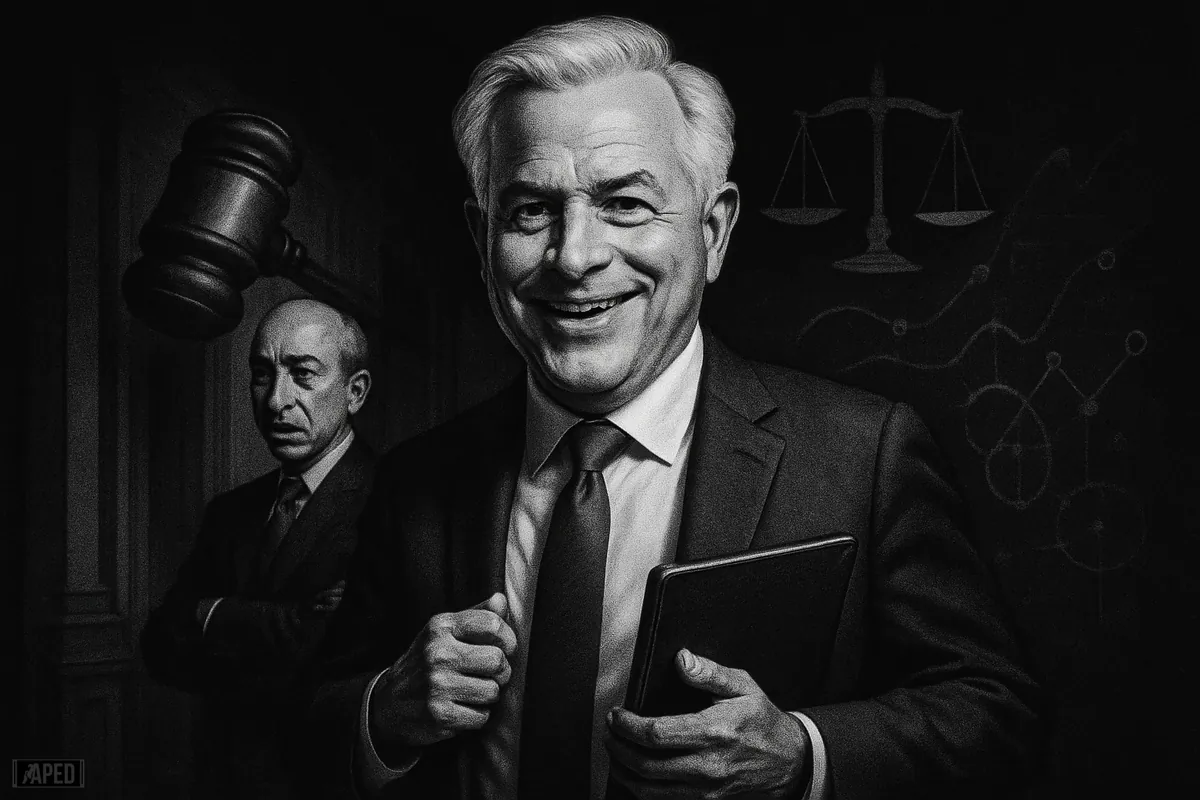
Chris Giancarlo, better known in crypto circles as "Crypto Dad," has now made the branding fully official. The former chairman of the Commodity Futures Trading Commission has left big-law life to take on a full-time advisory role in digital assets, a move that says as much about Washington's shifting posture as it does about one man's post-regulator career plan. [1]
Giancarlo's move was framed in reports as a decision to step away from law firm work and focus on advising the crypto industry more directly. The headline fact is simple: a former top US derivatives regulator is no longer treating crypto as a side portfolio. He is making it the main job. [2]
Register for free and get unlimited access to all articles.
Why this matters
Personnel stories can be pure optics. This one is more consequential than that. Giancarlo is not just a former official with a fondness for conference panels. He chaired the CFTC during a period when US-regulated Bitcoin futures launched, a milestone that helped move crypto from offshore curiosity to something traditional finance could package, clear, and sell with a straight face. [3]
That history gives his advisory work real weight. Firms looking for regulatory strategy, market structure guidance, or policy credibility now get access to someone who has already dealt with the overlap between derivatives law and digital assets at the federal level. Sure, that does not guarantee better policy outcomes. But it does mean the industry continues to stockpile former officials who know where the real levers are.
A signal from the policy cycle
Giancarlo's full-time shift lands at a moment when crypto regulation in the US has become less about existential survival and more about who gets to write the rulebook. That is a meaningful change.
Earlier enforcement-heavy eras made former regulator hires look defensive, almost like legal bunker construction. A move like this now reads more offensively: prepare for legislation, agency rewrites, licensing frameworks, and market structure debates. Advisory roles become more valuable when the question is not "will this survive?" but "how will this be shaped?"
The reported transition away from private legal practice is the key detail. Law firms often provide a broad platform for regulatory counseling, but they also diffuse focus across many sectors. Going full-time into crypto strips away that ambiguity. Giancarlo is choosing specialization, and he is choosing it publicly. [4]
That matters because former senior regulators usually preserve optionality. They sit on boards, speak at events, and keep one foot in multiple industries. Full-time commitment narrows that field. It suggests he sees durable demand for policy advice in digital assets, not just cyclical hype dressed up in blockchain fonts.
What Giancarlo brings to crypto firms
His value proposition is fairly obvious, even if the pitch decks will still overdo it. Giancarlo offers three things most crypto companies want and few can build in-house.
Regulatory fluency
He understands how agencies think, where jurisdictional boundaries matter, and how market oversight gets translated into actual rules. In crypto, that is not a nice-to-have. It is often the business model.
Institutional credibility
A former CFTC chair attached to an advisory effort can help open doors with lawmakers, financial institutions, and cautious counterparties. Reputation is not the same as trust, but in this industry it often rents the room.
Market structure experience
Crypto still has unresolved questions around custody, clearing, derivatives oversight, token classification, and cross-border supervision. Giancarlo has spent years in the exact policy lanes where those issues live.
The less romantic interpretation
There is also a colder read here. Crypto's maturation has created a well-paid lane for former officials, and Giancarlo is hardly the only one taking it. Revolving-door concerns do not disappear because the asset class is new, and skepticism is warranted whenever ex-regulators move into sectors they once influenced.
Still, there is a difference between cashing in on a logo and contributing actual expertise. Giancarlo has been publicly engaged on digital asset policy for years, including advocacy around a US digital dollar and a more tailored regulatory approach to crypto markets. This is not a random late-stage pivot because number go up. [5]
Looking Ahead
The real test is not the job title. It is whether Giancarlo can help push the industry toward rules that are clearer without simply making incumbents more comfortable and everyone else more boxed in.
Watch for where he concentrates his efforts: exchange regulation, derivatives, stablecoins, or broader market structure legislation. That will say more than the announcement itself. Another former regulator joining crypto is notable. Whether it improves the rules, rather than just the lobbying, is the part that still needs proving.
Your reviews help us improve the quality of both current and future articles. All reviews are public and visible to other readers. We use both ratings and comments to improve future articles and to revise any articles that do not meet our standards.
 See more like this on Google