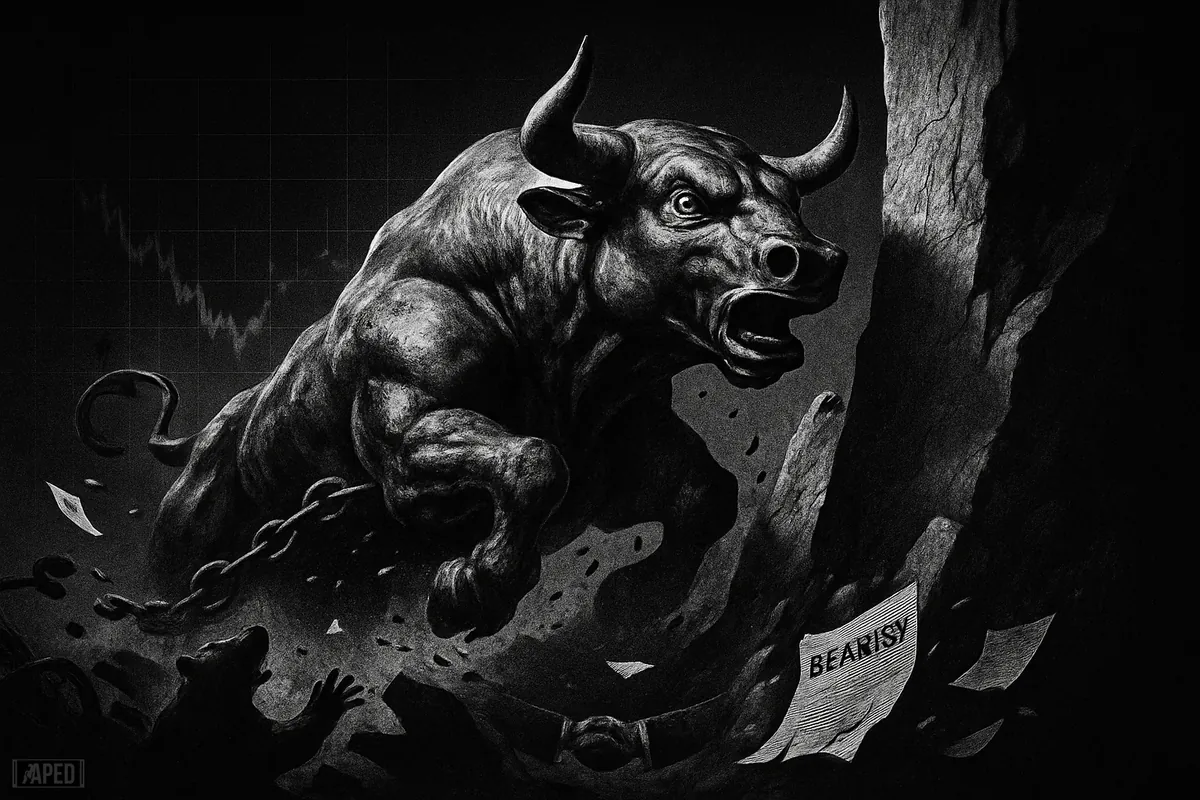
Crypto traders got the classic "just one more headline" candle. Bitcoin$80,624.99 pushed to the edge of $75,000 after a wave of short sellers got steamrolled, with roughly $400 million in bearish bets caught in the squeeze as fresh optimism around a possible U.S. and Iran diplomatic breakthrough lifted broader risk appetite. [1]
The move put BTC within touching distance of a level that has repeatedly acted like a brick wall this month. This time, though, the setup looks a little different. It is not just leverage getting washed out. Sentiment has also turned noticeably less defensive.
Register for free and get unlimited access to all articles.
A macro headline became rocket fuel for a crowded trade
Bitcoin$80,624.99 closed up 5.23% after reports that a new round of U.S. and Iran negotiations could happen as soon as Thursday, April 16, according to market commentary cited by The Kobeissi Letter. Traders read the development as a de-escalation signal, and markets broadly started pricing in a more risk-on environment. [2]
BTC briefly wicked to about $74,911, putting the psychological $75,000 mark back in play. That matters because crypto has spent the last several weeks reacting to geopolitics almost in real time. When macro stress eases, traders have shown a renewed willingness to rotate back into higher-beta assets, and Bitcoin has been first in line. [3]
This is not some abstract "number go up" story. The key mechanic was a short squeeze, which happens when traders betting on a decline are forced to buy back their positions as price rises against them, adding even more upward pressure.
The squeeze was real, and broad
According to CoinGlass data cited in the source reporting, total liquidations climbed past $530 million across the market, with nearly 82% coming from shorts. Bitcoin accounted for about $219 million of that, its largest short squeeze in a week. [4]
That helps explain the speed of the move. When price starts running into a pile of overleveraged shorts, the market can go from cautious to chaotic very quickly. CT, short for Crypto Twitter, tends to call this "getting rekt," and for once the meme fits the tape.
Still, the bigger picture is not just about one liquidation spike. Earlier this month, on April 7, Bitcoin staged a similar rally, climbing 4.48% to around $73,000 and triggering more than $200 million in short liquidations. That burst failed to break resistance near $75,000 in a lasting way. A few days later, on April 12, the reversal flushed out roughly $75 million in long positions instead.
That recent history is why traders are treating this retest with some caution. BTC has been here before. The question is whether this rally has stronger legs or is simply another leverage-driven pop into resistance.
Why $75,000 matters more than the round number suggests
Round numbers always attract attention, but $75,000 has become more than a psychological line. It has been a repeat rejection zone during the current range, where bullish momentum has repeatedly faded and positioning has flipped.
When that happens multiple times, traders start building strategies around it. Shorts lean into resistance. Bulls take profit just below it. Market makers adjust around that behavior. The result is a self-reinforcing level that requires more than a quick squeeze to break cleanly.
This is where the latest move starts to stand out. The underlying mood has improved alongside price, which was less obvious in earlier attempts.
Sentiment is no longer rolling over on cue
The Crypto Fear and Greed Index has tracked Bitcoin's recent hesitation pretty neatly. Twice since tensions around the U.S. and Iran story entered the market narrative, the index approached resistance at the same time BTC neared $75,000, and both then pulled back.
One of those moments came in mid-March, when the index fell eight points over a week. Another arrived on April 7, when it reached 47 before dropping again. In both cases, fading sentiment matched fading price action.
This time the follow-through has been different. Rather than stalling immediately, the index is now sitting only about five points below the "greed" zone. That may sound like vibes analysis, but in crypto, vibes often show up in flows first. A stronger sentiment backdrop can support spot buying and reduce the odds that every rally gets sold on first contact with resistance. [5]
The market structure may be shifting
The most interesting part of this setup is that Bitcoin$80,624.99's latest push is not happening in a vacuum. A macro catalyst lit the match, but the market's response suggests traders were already leaning the wrong way.
A crowded short trade plus improving headline risk is a dangerous combination for bears. If those conditions persist, the structure can change from "sell the rip" to "buy the breakout," at least for a while.
That does not guarantee liftoff. Peace-deal optimism is fragile, and headline-driven rallies can reverse fast if talks disappoint or stall. Crypto traders know this script well. Narrative can mint momentum, but it can also rug it. For readers outside web3, a rug is slang for a sharp reversal that leaves late buyers stuck holding the bag.
Even so, there is a meaningful difference between a rally powered only by forced liquidations and one that is also seeing sentiment improve. The latter tends to have a better chance of sticking, especially if spot demand follows. [6]
Bitcoin is back at the same doorstep, but with a cleaner story than it had on earlier attempts. Roughly $400 million in short pressure helped propel the move, while signs of easing geopolitical risk gave traders a reason to stay risk-on rather than instantly fade the rally.
For now, $75,000 remains the level that decides whether this was just another squeeze or the start of a more durable breakout. If sentiment pushes into greed and BTC can hold above resistance instead of merely tapping it, bulls may finally have more than a wick to show for the effort. If not, the market could replay the same April pattern, just with a new set of liquidation victims.
Your reviews help us improve the quality of both current and future articles. All reviews are public and visible to other readers. We use both ratings and comments to improve future articles and to revise any articles that do not meet our standards.
 See more like this on Google