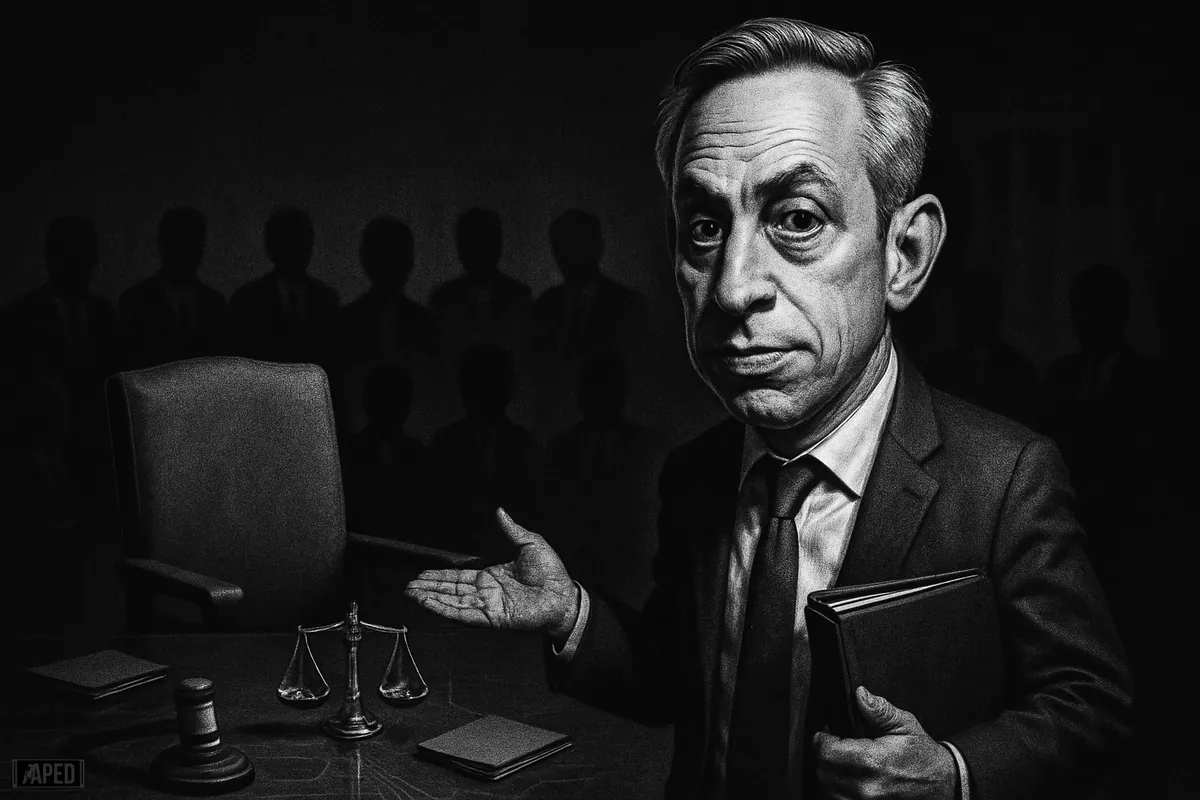
David Sacks Steps Down as White House AI and Crypto Czar
David Sacks has stepped down from his role as White House AI and crypto czar, Bloomberg reports, as his temporary appointment reaches its term limit. Sacks will continue to influence policy as a member of the President's Council on Science and Technology. The transition comes at a critical time for crypto regulation and raises questions about who will lead the administration's digital asset policy going forward.
Mar 27 05:01
David Sacks is no longer the White House's "AI and crypto czar," and the key trade for crypto markets is policy volatility, not price levels. The headline reads like a regime change, but the structure that replaces him could matter more than the person: a shift from a single coordinator to a council-based lane that is harder to unwind and easier to institutionalize.
BSCN (BSCNews) reported Friday that Sacks has stepped down from the role, citing Bloomberg. According to the post, Sacks' tenure ended because the position was temporary and hit its limit. BSCN added that Sacks will remain involved in policy discussions through the President's Council on Science and Technology, and that AI policy work will continue under his guidance.
For crypto, the immediate implication is continuity with a new wrapper. "Czar" roles concentrate coordination power, which can speed up interagency alignment, but also create a single bottleneck that markets learn to anchor on. Moving Sacks into a council seat signals the White House wants his influence without keeping policy direction tied to one named operator.
That framing showed up in the most substantive community response under BSCN's tweet. One reply argued this is "continuity, not disruption," and that the net effect is "institutionalization of AI + crypto policy rather than a single coordinating 'czar' bottleneck." That read matters because it points to process as the catalyst: councils tend to produce recommendations, standards, and interagency consensus documents that survive personnel changes and can translate into durable regulatory posture.
The risk angle for crypto is that institutionalization cuts both ways. If Sacks has been a voice for clearer rules and competitive positioning, embedding that voice in a formal council can stabilize the trajectory. If the broader White House apparatus leans more cautious on consumer protection, surveillance, or national security, a council format can also harden those priorities into longer-lived guidance that agencies reference when writing rules or bringing enforcement.
What would invalidate the "continuity" thesis is a near-term personnel swap that signals a new center of gravity: a replacement czar with a different mandate, or a clear handoff of crypto leadership to another office with more direct control over Treasury, SEC, CFTC, or DOJ coordination. Absent that, this looks less like an exit and more like a reorg.
Watchlist takeaway: traders and builders should track (1) whether the White House names a successor coordinator, (2) the first public deliverables from the President's Council on Science and Technology that touch digital assets or AI compute and identity, and (3) any synchronized messaging from major agencies that suggests tighter alignment, or a fresh split in priorities.
Listen to “David Sacks steps down as White House crypto czar: what it means for AI and crypto policy” on YouTube as we share all our news to our channel 24/7.
Be part of the conversation!
Discuss the "David Sacks Steps Down as White House Crypto Czar" article and follow us to get 24/7 updates.
Your reviews help us improve the quality of both current and future articles. All reviews are public and visible to other readers. We use both ratings and comments to improve future articles and to revise any articles that do not meet our standards.
 See more like this on Google