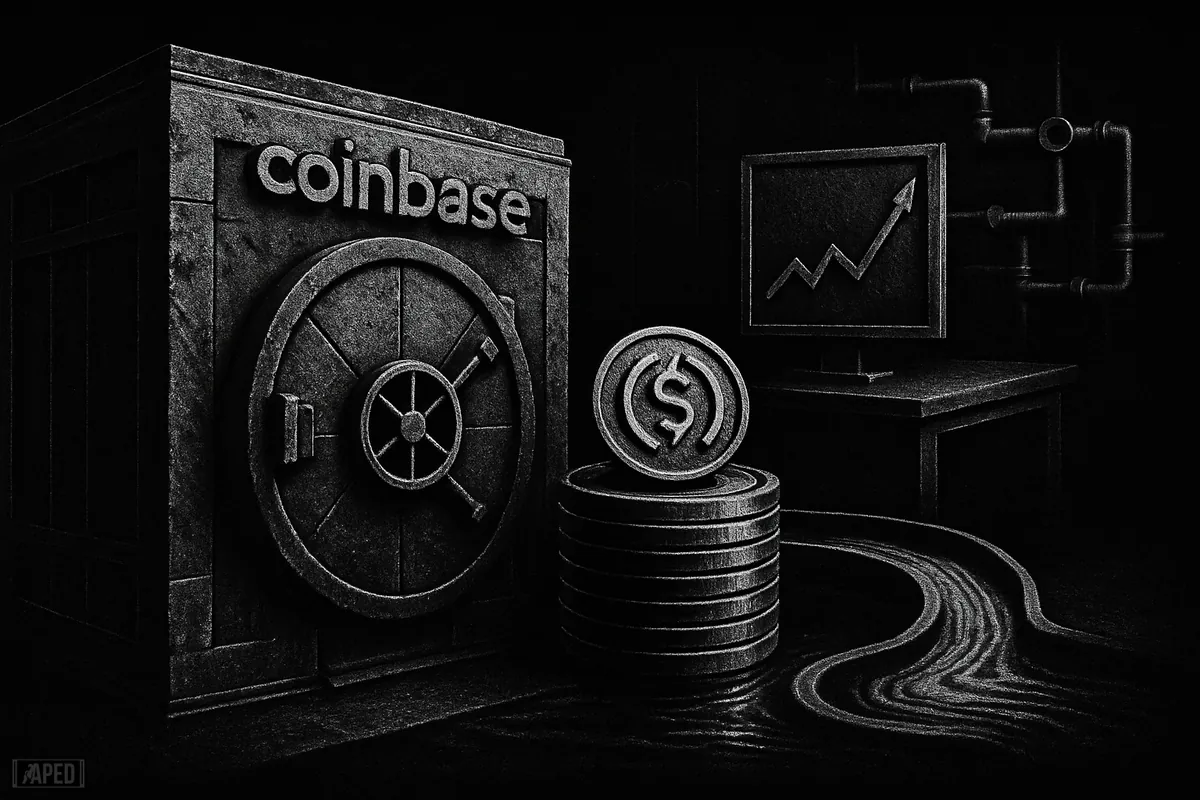
Coinbase has been sold hard enough that at least one Wall Street shop now sees the setup as cleaner, not worse. William Blair argues the pullback has effectively "de risked" the stock, while USDC$1.0005 growth is giving Coinbase a more durable earnings tailwind than pure trading volume alone. [1]
That matters because Coinbase still trades like a crypto beta name, but more of its upside is increasingly tied to stablecoin rails, subscriptions, and on-chain infrastructure. If that mix keeps improving, the market may be underpricing how much less cyclical the business is becoming.
Register for free and get unlimited access to all articles.
Why William Blair thinks the reset helps
William Blair's call is straightforward: the selloff has lowered expectations and reduced some of the valuation heat that built up when crypto equities were ripping. For a stock like Coinbase, that kind of reset can matter as much as quarterly numbers. When positioning gets crowded and sentiment runs hot, even decent results can trigger selling. After a pullback, the bar gets easier to clear. [2]
The firm's more constructive view does not appear to rest on a sudden rebound in retail trading mania. Instead, it centers on the idea that Coinbase now has more than one revenue engine, and one of the biggest is USDC$1.0005. That is a notable shift from the old Coinbase trade, where the thesis lived or died on spot volumes, take rates, and whether retail was back to aping into the market.
USDC growth is the key variable in Blair's outlook. Coinbase shares economics from the stablecoin's reserves, so a larger USDC supply can translate into higher interest related revenue and stronger subscription and services performance. That revenue stream is generally less dependent on daily market churn than transaction fees, which gives investors a different way to underwrite the name. [3]
The bullish angle is not just that USDC is growing, but that it is growing inside a broader Coinbase ecosystem. The company has been pushing deeper into payments, Base, wallet infrastructure, and on-chain consumer flows where stablecoins are not a side product but core plumbing. More USDC$1.0005 in circulation can support activity across those surfaces, creating a tighter loop between balances, usage, and monetization.
That changes the quality of earnings. A dollar of revenue tied to stablecoin balances and network utility typically gets valued differently than a dollar earned from volatile trading spikes. For equity holders, that can make Coinbase look less like a pure-cycle exchange and more like a platform with recurring rails revenue.
The recent weakness in Coinbase shares also reflects a familiar pattern in crypto-linked equities. These names often overshoot in both directions because they attract momentum traders, thematic funds, and macro tourists all at once. Once crypto prices wobble or rate expectations shift, the bid can disappear fast.
From that perspective, the selloff is not automatically a sign of broken fundamentals. It can simply mean fast money exited, valuation compressed, and the stock moved closer to a level where long-only investors are more comfortable rebuilding positions. That is essentially the de-risking argument in plain English: fewer hot hands, lower expectations, better setup. [4]
The obvious risk is that USDC growth stalls. If stablecoin balances flatten or decline, the revenue mix improvement fades and Coinbase falls back toward being judged mainly on trading trends. That would make the stock more sensitive again to crypto price swings, retail participation, and fee compression.
Regulatory pressure also remains a live variable. Coinbase may be building a broader on-chain business, but stablecoins, exchange economics, and token market structure still sit under heavy policy scrutiny in the US. Any change that hurts distribution, reserve economics, or product expansion could cap the upside Blair is pointing to. [5]
The Bottom Line
William Blair's read is less about calling a near-term moon mission and more about saying the risk-reward has improved after the flush. Coinbase still has crypto beta, but the bigger story is that USDC is becoming a more important earnings driver. If stablecoin growth keeps compounding, the market may have to value Coinbase on more than just trading fees. If that growth rolls over, the old cyclicality comes right back into focus.
Your reviews help us improve the quality of both current and future articles. All reviews are public and visible to other readers. We use both ratings and comments to improve future articles and to revise any articles that do not meet our standards.
 See more like this on Google