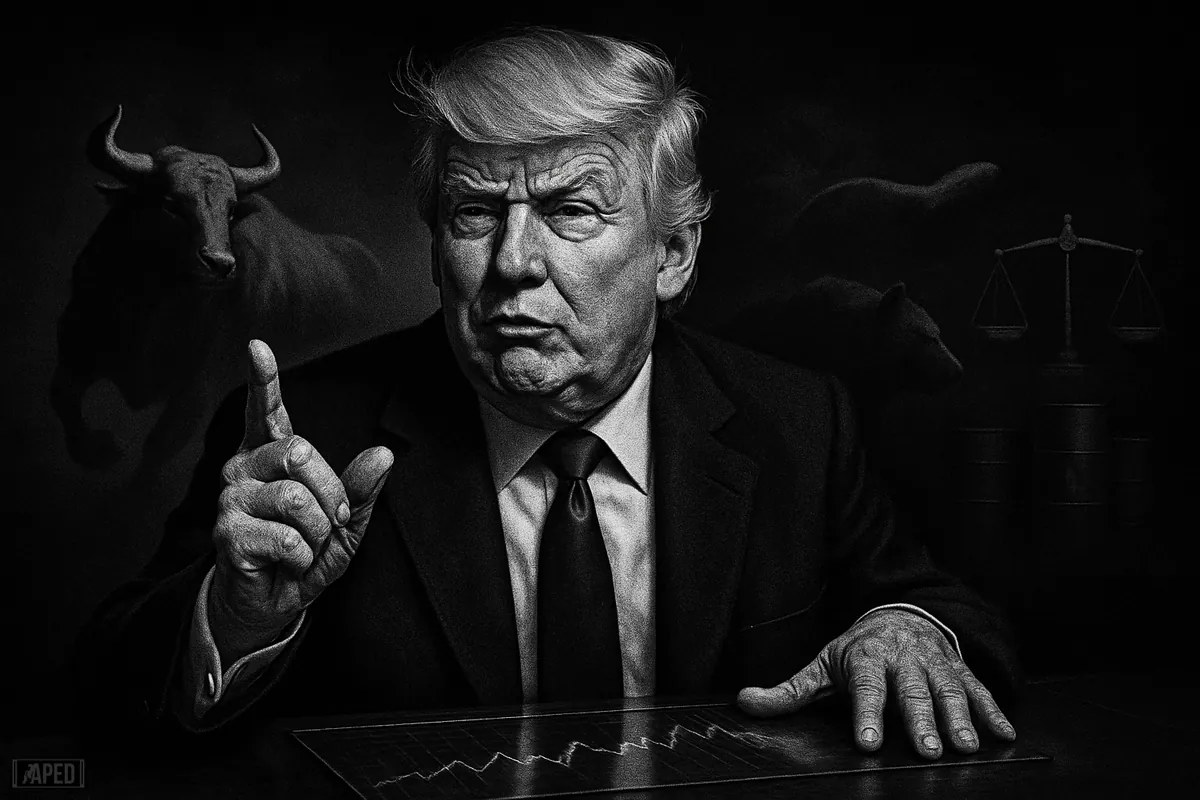
The market loves a neat macro story, right up until it doesn't. Donald Trump saying the U.S. is "very close" to a deal with Iran has given traders another geopolitical headline to trade, and Bitcoin$81,150.00 is hovering in that familiar zone where relief bids and rug risks sit uncomfortably close together. [1]
BTC was recently changing hands around $75,700, up modestly on the day, with the move looking more like a cautious repricing of headline risk than a full risk-on stampede. If traders believe an Iran deal lowers the odds of a fresh Middle East escalation, the first-order effect is straightforward: softer oil shock risk, calmer dollar flows, and a friendlier backdrop for high-beta assets, crypto included. [2]
Register for free and get unlimited access to all articles.
Why an Iran headline matters for Bitcoin
Bitcoin does not trade geopolitics in a clean line, but it does react to shifts in global risk appetite and liquidity expectations. A credible path toward a U.S.-Iran agreement could reduce immediate pressure on energy markets, tamp down inflation fears at the margin, and ease the kind of panic positioning that tends to send capital into cash and short-dated safety trades. [3]
That matters because BTC has spent much of this cycle behaving like a hybrid asset. It still gets sold in broad risk-off episodes, even as long-term holders insist it is a hedge against monetary disorder. A de-escalation narrative, if markets buy it, tends to support the "risk asset first, hard asset later" version of Bitcoin trading.
There is also a second layer here. Lower geopolitical stress can improve sentiment across equities, emerging market risk, and crypto simultaneously. When that happens, Bitcoin$81,150.00 often leads the first move and altcoins try to front-run the second. That part is familiar. The less familiar bit is whether this particular headline has enough substance to keep flows engaged beyond the first few sessions.
The near-term setup looks constructive, but not exactly carefree. BTC holding above the mid-$70,000s keeps momentum traders interested, with the psychological $80,000 area the obvious upside magnet if macro headlines continue to cooperate. [4]
Below that, traders will likely watch whether Bitcoin can defend the low-$74,000 to $75,000 zone on pullbacks. Lose that, and the move starts to look less like breakout continuation and more like another headline-driven squeeze that ran out of road. If broader risk sentiment wobbles, the market could quickly revisit deeper support around the low-$70,000s.
Those levels matter because Bitcoin has not been trading in a vacuum. It is still taking cues from rate expectations, ETF flows, and equity index behaviour. A single geopolitical headline can accelerate an existing trend, but it rarely builds one from scratch.
On-chain, the cleaner read in this sort of setup is usually whether coins are moving onto exchanges and whether large holders are distributing into strength. Heavy exchange inflows would suggest traders are preparing to sell the news, while flat or declining balances would point to less immediate spot pressure.
Derivatives are just as important here, possibly more. If open interest climbs alongside price and funding stays only mildly positive, that is usually a healthier move than a vertical spike built on crowded longs. If funding starts running hot while price stalls beneath a key resistance band, the market is practically begging for a flush. Crypto does enjoy making the obvious trade painful.
Liquidity conditions also deserve respect. Weekend books and thin offshore depth can exaggerate reactions to political headlines, especially when traders start punting direction off snippets and soundbites. A deal that is "close" is not a deal. That distinction tends to matter all at once.
The catch: this could still be pure headline beta
The bullish case is easy enough to sketch. De-escalation lowers tail risk, improves sentiment, and gives Bitcoin$81,150.00 room to challenge higher levels. The problem is that diplomatic signalling is notoriously slippery, and crypto has a bad habit of treating tentative progress as settled fact.
There is another awkward angle. Any renewed focus on Iran can also revive scrutiny around sanctions enforcement, illicit finance narratives, and U.S. actions tied to crypto-linked seizures. That does not automatically hit Bitcoin price, but it can complicate sentiment, especially if the story shifts from diplomacy to enforcement. [5]
Traders should also be careful not to overstate causality. BTC can rally on an Iran headline in the short term and still reverse because bond yields rise, ETF demand cools, or a crowded derivatives position gets unwound. Macro stories often explain the candle after the candle has already printed.
Whether Bitcoin can hold the $75,000 area on any headline fade
Whether price can reclaim and sustain a push toward $80,000
Changes in open interest and funding, especially if longs get crowded
Spot exchange inflows from large wallets, which would hint at distribution
Oil and dollar reactions, since they will show whether macro desks believe the de-escalation story
Whether Trump's comments turn into formal, verifiable progress rather than another market-moving teaser
For now, the trade is simple enough: if markets treat a possible Iran deal as genuine de-risking, Bitcoin has room to grind higher. If this turns out to be just another geopolitical feint, the bounce could unwind with typical crypto efficiency.
Your reviews help us improve the quality of both current and future articles. All reviews are public and visible to other readers. We use both ratings and comments to improve future articles and to revise any articles that do not meet our standards.
 See more like this on Google