Background and history
Slingshot Finance (slingshot.finance) appears in the provided sources as a consumer-focused Web3 trading application designed to make
on-chain swapping and
cross-chain trading feel faster and less burdensome than traditional DeFi workflows. In terms of positioning, it is frequently framed as a
non-custodial alternative to
centralized exchanges, emphasizing that users retain control of funds and access. A third-party video review explicitly frames Slingshot as an “alternative to CeFi,” motivated by the perceived risks of
custodial platforms.
[1]From an implementation standpoint, the most concrete technical context in the dataset comes from a Portal case study dated May 29, 2024. Portal describes Slingshot Finance as an “intent-based DeFi trading
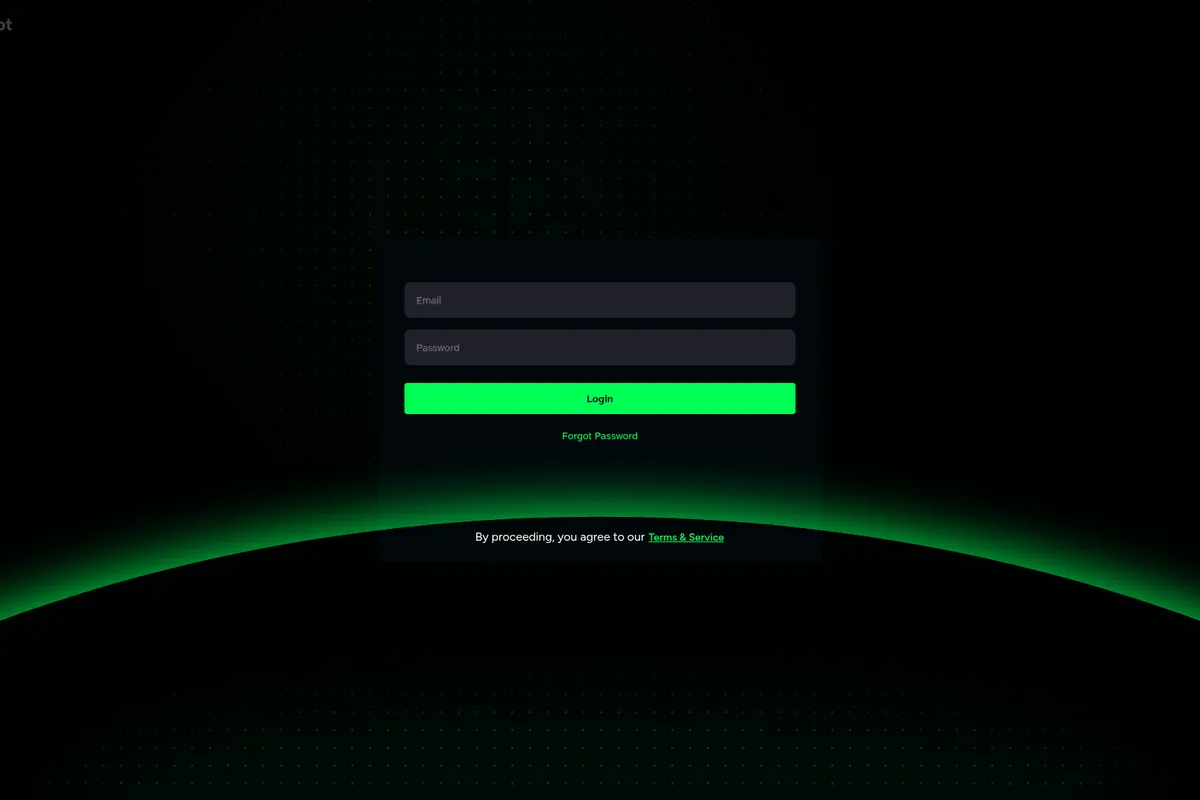
platform” focused on “high-performance cross-chain swaps,” and details Slingshot’s requirement for non-custodial key management via threshold-signature MPC (TSS MPC). The same case study references a launched progressive web app (PWA) trading experience and links to a login URL under flex.slingshot.finance.
[2]One limitation of the available research is that popular “review” style content in the dataset is incomplete. A CryptoRank page titled “Slingshot Finance Review: Legit or
Scam?” is listed, but the captured page text in this dataset mostly contains CryptoRank navigation and
market headers, not the body of the article. As a result, it does not add verifiable details about fees, the team, or
security posture beyond snippet-level framing.
[3]Key features and services
Non-custodial trading app with intent-based cross-chain swaps
Slingshot’s defining claim in the Portal case study is that it is intent-based and cross-chain, with an emphasis on “instant cross-chain trading without bridging,
token approvals,
gas, or other typical sources of DeFi friction.” This language is best read as a description of the intended user experience. The case study excerpt does not fully specify the mechanism used to deliver that experience, for example whether transactions are sponsored, abstracted, netted, or executed via specialized
settlement paths.
[2]Token coverage claims (40,000+ assets)
A third-party YouTube review claims that Slingshot lets users “trade over 40k cryptocurrencies.” The same review also repeats the “40,000+” figure in its transcript and presents Slingshot as offering broad access across chains. Since this is not corroborated by primary
documentation in the provided sources, it should be treated as an external claim that may depend on what Slingshot counts as “supported,” such as long-tail tokens discoverable via routing.
[1]Multi-chain and cross-chain support (as described by third parties)
In the same walkthrough, the reviewer describes Slingshot as multichain “from the start,” and mentions several networks visible in the app context, including Arbitrum, Arbitrum Nova, BNB Chain, Osmosis, and Polygon. These references provide directional evidence of
multi-chain intent, but the dataset does not contain an authoritative, up-to-date supported-chain list or details on how cross-chain settlement works for each route.
[1]Aggregation and trading UI features
The YouTube reviewer describes Slingshot as an aggregator that looks for the “best price” for swaps, and also mentions real-time charts, a standard chart view, and an “
order book” view as presented in the interface. These are useful UX hints, especially for users who want more than a minimal swap widget, although the dataset does not include formal documentation on order types, limit orders, or whether the “order book” view is informational versus executable.
[1]Wallet roadmap signals and “VIP” NFTs (unverified)
The same video mentions a planned
decentralized mobile wallet for iOS and Android and references a waitlist, plus an NFT collection that allegedly provides VIP access. The reviewer also cites traction numbers, including a large waitlist size, but none of these metrics are independently verified in the provided sources. If these elements matter to your decision, it is worth confirming them directly through official channels and current app documentation.
[1]Security and trust
MPC-based non-custodial key management (best-evidenced security detail)
The Portal case study provides the clearest security-relevant information in this dataset. It states that Slingshot required a non-custodial design where “users were the only party to control access to user accounts,” and that it leveraged TSS MPC
cryptography because it provides a secure design that is “truly non-custodial.” Portal also describes a “transparent 2 of 2” TSS MPC architecture, positioning it as evidence that Slingshot is not a
custodian of user funds.
[2]The same case study highlights that signing speeds were measured in seconds, which is relevant for a trading product where delays can materially affect outcomes. However, fast signing is not the same as safety. Users still need to consider
smart contract risk, routing risk, and the risk of malicious tokens or spoofed assets, particularly when a platform claims access to very large token universes.
[2]Missing in the provided sources: audits, bug bounties, incident history
What is not present in this dataset is as important as what is present. The research set does not include references to third-party smart
contract audits, formal security attestations,
bug bounty programs, exploit history, or public postmortems. It also does not include clear disclosures on how routing partners are selected, whether there are protections against sandwich attacks, or how the app handles token allowlists and malicious contract patterns.
This does not imply Slingshot is unsafe. It simply means that, based on the supplied sources alone, an evidence-based security grade beyond the MPC architecture description is not possible.
Reconciling “no approvals” and “no gas” claims with typical DeFi behavior
The Portal case study markets cross-chain trading “without bridging, token approvals, gas.” Meanwhile, the YouTube walkthrough shows typical wallet-based swapping behavior, including needing to “unlock” tokens on first use, and it references transaction speed on Arbitrum in a context that resembles standard on-chain execution. These two perspectives can both be true in different product modes, different time periods, or different transaction types, but the dataset does not explain the discrepancy. A cautious interpretation is that Slingshot aims to
abstract away some friction, but users should still expect on-chain realities to apply in many scenarios.
[2] [1]User experience
Mobile-first, PWA-based distribution
A notable implementation detail is the PWA mention in the Portal case study, which indicates Slingshot can deliver a near-app experience without the friction of native app installation, and can iterate quickly across platforms. Portal links directly to a login under flex.slingshot.finance, which supports the idea that the trading app experience is web-delivered. [2]
UX goal: reduce “DeFi friction”
Slingshot’s core UX thesis, as described by Portal, is to remove or abstract common DeFi pain points like bridging steps, repeated token approvals, and gas management. If this is delivered consistently, it can be a meaningful differentiator for users who want the breadth of DeFi without constantly context-switching between bridge UIs, swap UIs, and chain-specific gas tokens. [2]
Practical onboarding expectations
The third-party walkthrough implies a typical
wallet connection and on-chain swap flow. In practice, users should expect to evaluate and confirm transaction prompts, understand which chain they are on, and verify token contract addresses, especially when trading long-tail assets. If Slingshot provides additional abstractions, users should still verify what they are signing and what approvals they are granting.
Pricing and fees
“0% swap fees” claim (third-party)
The clearest fee statement in the dataset is from the YouTube review, which claims “0% swap fees” and “trade over 40k cryptocurrencies without fees.” This is attractive on its face, but the dataset does not include a primary fee schedule or documentation confirming the claim, and it does not
address whether there are spreads, routing fees, or embedded costs in execution. Network-level costs can also apply unless they are subsidized or abstracted, which is not fully explained in the provided sources.
[1]How to think about costs anyway
Even when an interface advertises zero swap fees, the practical total cost of a trade can include:
- Price impact and slippage.
- Aggregator or solver routing costs (sometimes implicit).
- Network costs (gas) unless sponsored.
- Cross-chain execution overhead if any part of the path requires bridging or messaging.
Because the dataset does not provide measurable execution benchmarks or disclosures, users who care about costs should compare the received amount and effective price against alternatives for the same route.
Comparison with alternatives
Slingshot’s competitive set depends on whether you primarily want best-price aggregation, deep single-chain
liquidity, or a cross-chain experience.
DEX aggregators: 1inch and Matcha
If your primary goal is aggregation and price routing, 1inch and Matcha are widely recognized category peers. In Alchemy’s Dapp Store, 1inch is described as a
DEX aggregator powering flexible swaps and trades, while Matcha is described as offering swaps and limit orders for 6+ million tokens across 9 networks. These descriptions align with the common user need to find efficient routes without manually checking multiple DEXs.
[4] [5]Where Slingshot may differ, based on the Portal case study, is in its focus on cross-chain “intent-based” execution and reducing friction, which goes beyond single-chain aggregation. Still, for many users, aggregator reliability, route transparency, and liquidity access are the deciding factors, and those are not fully evidenced for Slingshot in this dataset.
Major DEXs: Uniswap, Sushi, QuickSwap, Velodrome
If you typically trade on one chain and want deep liquidity and well-understood mechanics, major DEXs can be simpler baselines. Alchemy describes Uniswap as an Ethereum-based DEX enabling
ERC-20 swaps via liquidity pools, Sushi as a leading multichain DEX, QuickSwap as the largest DEX on Polygon, and Velodrome as a DeFi
protocol on Optimism. These platforms may require more manual chain management than a cross-chain oriented app, but they are often the default liquidity venues that aggregators route through.
[6] [7] [8] [9]Cross-chain access layers: Rhino.fi
For users who primarily care about moving value across chains quickly, Alchemy describes rhino.fi as a “
stablecoin liquidity layer” enabling instant, scalable cross-chain access. That can overlap with Slingshot’s cross-chain narrative, depending on what you trade and how you fund positions across ecosystems.
[10]Competitive landscape: many alternatives
Alchemy’s “Slingshot Alternatives” page states it found 52 alternatives, underscoring that the market is crowded. In such a landscape, differentiation tends to come from execution quality, supported routes,
trust and security posture, and the day-to-day UX of managing assets across chains. Those are exactly the areas where this dataset provides partial, but not complete, evidence.
[11]Final verdict
Based on the provided sources, Slingshot Finance looks like a promising attempt to modernize DeFi trading UX around non-custodial, cross-chain swapping, with a concrete infrastructure story centered on MPC (TSS MPC, 2-of-2) and a PWA trading app delivery. The Portal case study is the strongest piece of evidence in the dataset, and it supports the idea that Slingshot is engineered for non-custodial access control and fast signing, which are meaningful qualities for a trading-focused product. [2]
At the same time, the dataset does not contain enough primary documentation to validate several key consumer questions: the true fee model, how “no gas” is achieved (or whether it is just abstracted), comprehensive supported-chain coverage, formal audits, or incident history. There is also a notable inconsistency between marketing claims of no token approvals and a third-party walkthrough that shows typical approvals. [1]
For users, the practical takeaway is to treat Slingshot as an interesting non-custodial trading interface worth testing with small amounts first, while benchmarking execution and final received amounts against well-known alternatives like 1inch, Matcha, and major DEXs for the same routes. If Slingshot’s cross-chain “intent-based” experience is as smooth as advertised, it can reduce friction significantly. If not, established aggregators and chain-native DEXs may remain the more predictable choice. [4] [5]