 See more like this on Google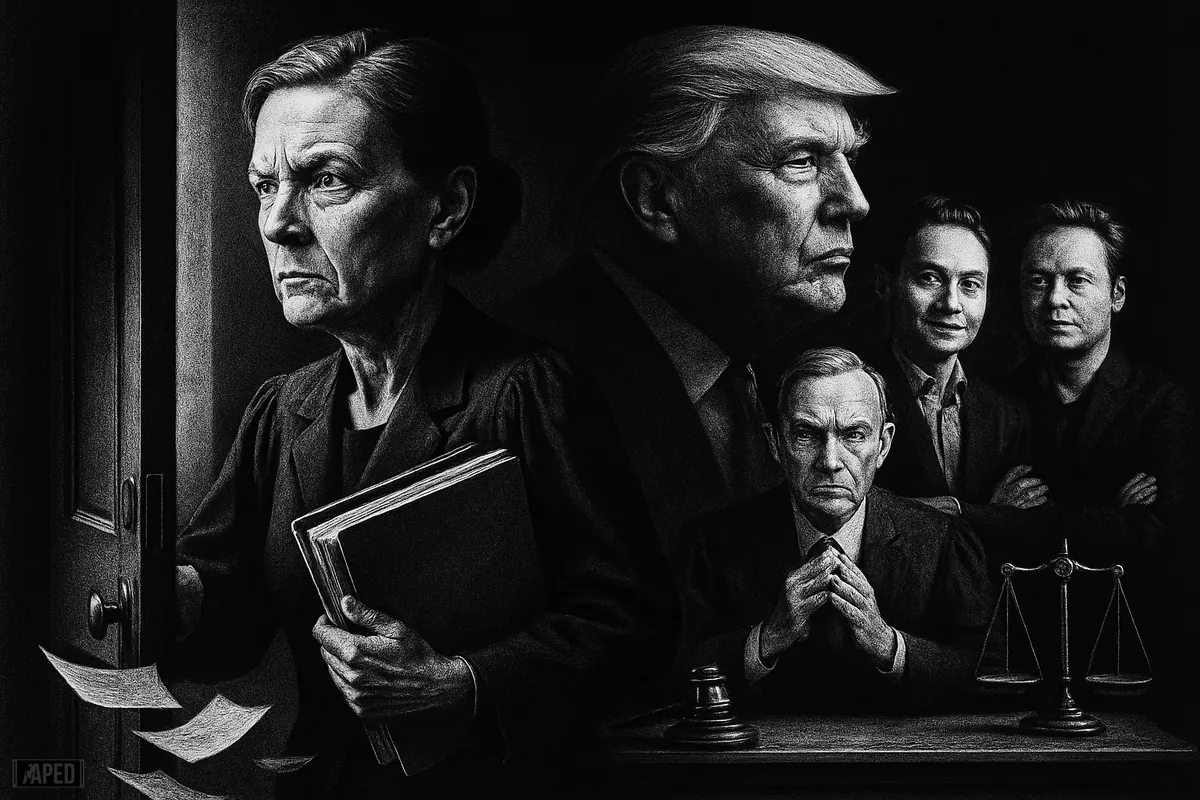
Share article
Share article
Enjoy articles without ads?
Register for free and get unlimited access to all articles.
What the report says happened
Sources cited in the report describe an internal tug of war: Ryan allegedly wanted to advance enforcement actions that touched Trump-adjacent figures, while senior leadership urged caution or delay. The friction reportedly extended to the SEC's posture in cases involving high-profile names that sit at the intersection of politics, tech, and crypto. [2]
Two specific examples referenced were matters involving:
- Justin Sun, the crypto entrepreneur associated with Tron and related entities.
- Elon Musk, the billionaire CEO with a long history of SEC run-ins and a loud public platform.
The report frames these as part of a broader dispute about enforcement priorities and appetite for politically sensitive fights, not as a narrow disagreement over one investigative step.
The SEC has not publicly detailed internal deliberations around Ryan's exit, and the report relies on unnamed sources familiar with the discussions. [3]
Why this matters for crypto (and not just for beltway gossip)
Crypto enforcement is unusually sensitive to leadership tone because so much of the rulebook is still being argued in public. When the Division of Enforcement is aligned with the chair, the agency can move quickly through investigations, Wells notices (a warning that the SEC may sue), and civil complaints. When leadership is split, investigations can slow, charges can narrow, and settlements can become the path of least resistance.
For the industry, that translates into three practical outcomes:
- More uncertainty on which cases get brought: not whether crypto is "regulated," but whether enforcement is consistent across defendants.
- Longer timelines for investigations that require political will, such as cases involving celebrities, major donors, or companies with high public visibility.
- A higher premium on optics: firms may assume that public pressure, lobbying, or political relationships matter more than clean legal analysis, whether that assumption is fair or not.
The Trump-adjacent angle: selective enforcement risk
The report's central claim is political sensitivity, not technical legal debate. That is exactly what will worry compliance teams.
What we know about the cited names (and why they show up in SEC headaches)
The report's mention of Justin Sun and Elon Musk is telling because both represent enforcement problems the SEC struggles to handle neatly.
- Sun-related matters have historically raised familiar questions: promotional conduct, disclosures, entity sprawl across jurisdictions, and whether certain token-related activities should be treated as securities transactions.
- Musk-related matters, even when not crypto-native, tend to collide with the SEC's core posture on market-moving statements, disclosure discipline, and public communications that can whipsaw investors. Add any crypto adjacency and it becomes a megaphone problem: high velocity narratives with regulatory consequences.
The common denominator is not ideology. It is the cost of suing someone who can turn the litigation into a political media event.
Takeaways
- This is a leadership story disguised as a resignation story. The reported clashes suggest enforcement decisions are being filtered through political risk assessment, not just evidentiary strength. [4]
- Crypto firms should not assume "friendlier SEC" equals "less SEC." A cautious enforcement posture in politically sensitive cases can still coexist with aggressive action elsewhere, particularly against smaller targets without leverage.
- Markets shrugged, but compliance should not. Price action can ignore governance signals for weeks, then react all at once when a delayed case finally lands or quietly dies.
What to watch next
- Who fills the enforcement director seat, and how fast. An internal acting appointment often signals continuity, while an outside pick can mark a strategic reset.
- Any visible change in tempo on marquee investigations. Watch for unusual delays, narrowed complaints, or abrupt settlements in cases tied to high-profile individuals.
- Public messaging from Chair Paul Atkins. If leadership starts emphasizing "fraud-only" priorities, that can mean fewer boundary-pushing crypto classification cases, but not fewer prosecutions overall.
- Spillover into pending crypto policy work. If enforcement is politically constrained, the SEC may lean harder on rulemaking or inter-agency coordination to regain leverage without headline lawsuits.
If the report is accurate, the SEC's enforcement agenda is now dealing with a familiar problem: the law moves slowly, politics moves loudly, and crypto sits right where they crash into each other.
People Referenced
Margaret Ryan
Former military judge who led the SEC's Division of Enforcement for six months before resigning.

Paul Atkins
Paul S. Atkins is an American businessman who became the 34th chair of the U.S. SEC in April 2025.

Justin Sun
Founder of TRON and BitTorrent, Ripple alumnus, Grenada’s WTO ambassador, known for bold crypto moves and global influence.

Elon Musk
Iconic entrepreneur steering Tesla, SpaceX, X (Twitter) and AI ventures, reshaping transportation, space, and social media.
Donald Trump
American real estate mogul, media personality, and former president who reshaped branding and politics.
