 See more like this on Google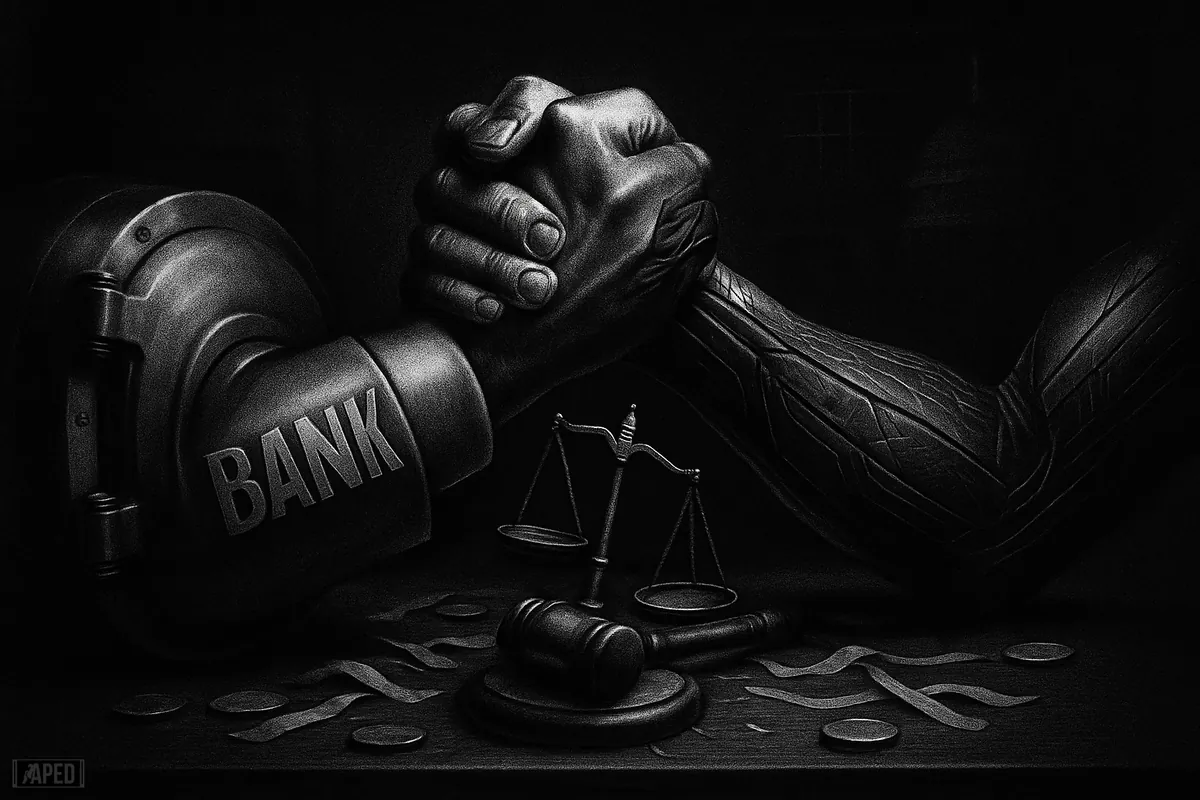

Share article
Share article
Multiple industry and policy calendars point to a run of closed-door and staff-level discussions this week around the CLARITY Act, with bank lobbyists and crypto advocates pressing lawmakers on the same handful of clauses that will decide whether US crypto regulation becomes a workable framework or a compliance maze that only the largest incumbents can afford. [2]
Enjoy articles without ads?
Register for free and get unlimited access to all articles.
Takeaways (what's actually at stake)
- Regulatory turf: The bill's core fight is still who regulates what, and how easily tokens can move between SEC and CFTC oversight.
- Banking access: The most consequential outcome may be whether crypto companies get predictable access to bank rails (accounts, payments, custody), or remain stuck in case-by-case gatekeeping.
- Stablecoin pressure point: Negotiators are reportedly circling compromises on stablecoin features like yield and redemption mechanics, because that is where "innovation" and "deposit substitute" start to look identical.
- Timing risk: While Congress negotiates, agencies can keep writing their own rules, and the SEC has shown it is not shy about doing exactly that.
What's on the table in this week's CLARITY Act talks
1) Token classification that survives contact with reality
2) Trading venue rules that do not accidentally ban the business
3) Stablecoins, because they touch payments, deposits, and politics
Where banks and crypto actually disagree (beyond the talking points)
Public messaging frames this as "consumer protection vs innovation." The real split is more mechanical.
Banks: keep issuance and custody inside the regulated perimeter
Bank policy teams are generally aligned on these goals:
- Limit who can issue widely used stablecoins, often preferring insured banks or entities with bank-like supervision.
- Tighten rules on custody and settlement, pushing crypto custody toward bank custody standards, or at least bank-adjacent oversight.
- Reduce "regulatory arbitrage," meaning fewer pathways for state-level licensing to scale nationally without a federal prudential regime.
Translation: if crypto is going to compete with bank deposits and payment rails, banks want crypto to do it on bank terms.
Crypto firms: predictable rules and neutral access to financial plumbing
Crypto advocates are pushing for:
- Clear federal preemption or harmonization so compliance is not fifty different permission slips.
- A workable route to CFTC-style oversight for non-securities tokens, with bright lines exchanges can implement.
- Non-discriminatory access to banking services so that compliance does not depend on whether a few large banks decide your business is "reputationally risky" this quarter.
Translation: crypto can live with regulation. It cannot live with discretionary denial of basic banking functions dressed up as "risk management."
Why these meetings matter more than the headlines suggest
The CLARITY Act fight is not only about crypto exchanges. The downstream impact hits three areas that determine whether the US becomes a primary venue for crypto markets or a high-friction compliance jurisdiction.
Exchange listings and liquidity
Stablecoin design and distribution
Crypto banking and custody access
Even with perfect market structure definitions, crypto firms still need bank accounts, payment processing, and custody solutions that regulators will not second-guess. This is where the CLARITY Act can quietly decide winners: not by "legalizing crypto," but by clarifying whether regulated entities can service the sector without constant supervisory anxiety. [4]
The timeline problem: Congress debates, agencies regulate
What to watch next (practical signals, not vibes)
- Text changes on stablecoin language: Watch for explicit treatment of yield, redemption rights, reserve assets, and who qualifies as an issuer. "Study" language signals delay. "Shall" language signals an actual decision.
- A defined off-ramp from SEC jurisdiction: Any section that describes when a token becomes a commodity, and who certifies it, will move markets more than most speeches will.
- Banking access provisions: Look for clauses that address custody permissions, payments access, and supervisory expectations. If the bill dodges this, crypto firms will still live and die by bank risk committees.
- Committee scheduling and markups: The moment these talks turn into scheduled markups with draft text, the probability of passage rises. If the week ends with "productive conversations," that is Washington's way of saying nothing is settled.
These meetings are being billed as a showdown. In practice, they are a negotiation over who gets to define "safe" financial innovation. The answer will determine whether the US builds a rulebook that supports competitive markets, or one that quietly reserves the best seats for institutions that already have them.
