See more like this on Google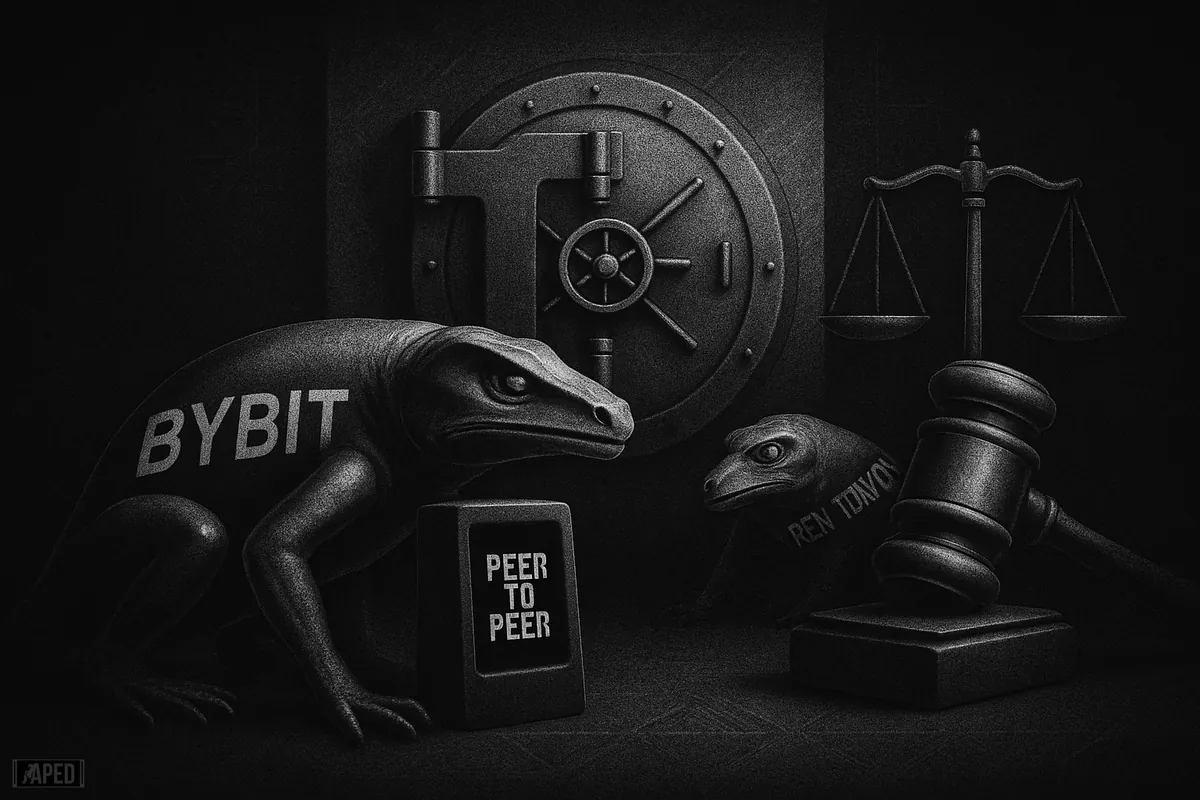

Share article
Share article
Enjoy articles without ads?
Register for free and get unlimited access to all articles.
Rwanda Says Bybit's FRW P2P Listing Is Unauthorized
BNR's message was straightforward: crypto-assets are not authorized for payments, conversion into FRW, or peer-to-peer trading under current Rwandan law. The central bank specifically pointed to Bybit's public marketing around the launch, signaling that this was not a quiet test or an ambiguous listing buried in product menus. It was a visible rollout, and regulators responded in kind. [3]
Why the Reaction Came Now
Rwanda has held a restrictive position on private crypto activity since 2018, when BNR declared cryptocurrencies illegal for domestic use. That stance has not softened into permission, even if the policy language has become more structured. [4]
Regulation then moved forward quickly. Rwanda's Cabinet approved a fuller version of the bill on March 4, 2026. The Chamber of Deputies passed its general principles on March 31, and committee review is still underway. Bybit's FRW P2P launch came on April 2, right in the middle of that process. Launching first and sorting out permission later might work in some jurisdictions. Rwanda just demonstrated that this is not one of them. [5]
The Real Story Is the Enforcement Gap
Here is where the story gets more interesting, and a little awkward for anyone pretending this is just about one listing.
That does not mean those offerings were approved. It means enforcement has looked uneven, or at least selectively public. Regulators often act when a platform becomes too visible, too promotional, or politically inconvenient to ignore. Bybit managed all three at once.
Marketing Probably Made It Worse
There is also a reputational angle. Rwanda has been moving toward a formal virtual asset framework, not a free-for-all. A major offshore exchange stepping into the market before the rules are finished can look less like innovation and more like a test of state capacity. Governments rarely enjoy that framing.
What Rwanda's Draft Framework Signals
That distinction matters. The draft framework for VASPs indicates Rwanda is willing to regulate service providers, but only within narrow boundaries. It rejects crypto as a payment instrument, bans FRW-pegged tokens, and puts restrictions around activities seen as higher-risk or harder to supervise. That is not anti-technology policy so much as a control-first model.
Why This Matters Beyond Rwanda
African crypto markets have long relied on P2P systems because formal banking integration is limited, licensing remains patchy, and users need local currency liquidity. Exchanges know this. That is why P2P has become the default workaround in markets where direct fiat channels are politically or operationally difficult.
Rwanda's warning is a reminder that this workaround only works until a regulator decides it does not. The legal ambiguity around P2P is attractive to platforms right up to the point where a central bank publicly says no. At that point, the issue is no longer product design. It becomes enforcement risk, user protection risk, and potentially bank-account risk for traders moving funds through local rails.
Users Face the Practical Risk
That is the usual problem with gray-zone access. It works right up until it very much does not.
What to Watch Next
The other question is consistency. If BNR is drawing a hard line on Bybit, market participants will want to see whether the same scrutiny extends to Binance, Remitano, and any other platform offering FRW P2P routes. Selective enforcement can chill the market just as effectively as a blanket ban, while revealing very little about the actual rules.