See more like this on Google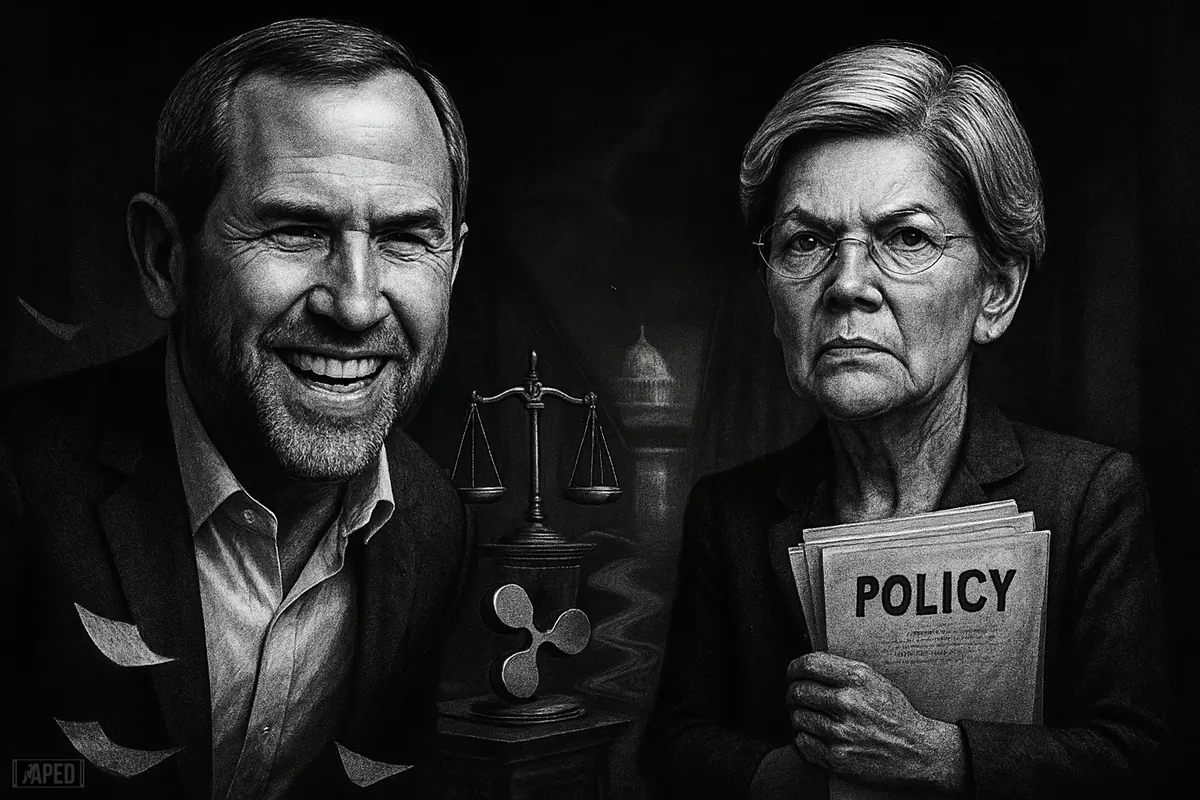
Share article
Share article
Brad Garlinghouse is pushing a simple narrative: Washington's anti crypto trade is losing, and the market structure fight is shifting from outright resistance to rule-writing. The key level to watch is not an XRP$1.518 chart line, it is policy momentum. If the current pro-framework turn holds, firms like Ripple$0.0000124 get a clearer path into the U.S. financial system. If it stalls, this victory lap could age badly.
Ripple's CEO said the "anti crypto army" has been defeated, arguing that courts and voters have both undercut the most aggressive anti-industry push. The comment came in a post on X and framed recent developments as proof that broad hostility to digital assets never made legal, political, or policy sense. His core claim was blunt: trying to block financial innovation mostly protected incumbents and a legacy system that still has plenty of broken parts. [1] [2]
Enjoy articles without ads?
Register for free and get unlimited access to all articles.
Why Garlinghouse is saying it now
The phrase "anti crypto army" is not random branding. It is a direct callback to Senator Elizabeth Warren, who used the term while advocating tougher restrictions on the sector. Her argument has been consistent: crypto can enable money laundering, ransomware finance, and sanctions evasion unless it is brought under much stricter controls.
That push translated into legislation, most notably the Digital Asset Anti-Money Laundering Act. Critics in the industry saw that bill as a maximalist approach because it would have extended bank-style compliance obligations to validators, miners, and some wallet-related actors who do not function like traditional financial intermediaries. For crypto executives, that was the policy version of using a sledgehammer on internet infrastructure. [3]
What changed
Garlinghouse's confidence reflects a broader shift in the U.S. debate. Over the last year, the center of gravity has moved away from whether crypto should be pushed to the edges and toward how it should be regulated inside the financial system. That is a meaningful difference. One approach treats the industry as a problem to suppress, the other treats it as a market to supervise.
He also pointed to legal outcomes and election results as evidence that the hardline camp lost ground. While the source comments do not list each case or race, the broader signal is clear: anti-crypto rhetoric has not translated into total policy control, and several courtroom outcomes have made blanket regulatory theories harder to sustain. [4]
Warren is still pressing the fight
Calling the battle over is probably too neat. Warren has not exactly packed up and gone home. She recently pressed the Office of the Comptroller of the Currency for detailed information about crypto-related national trust charters, including one granted to Ripple. That matters because charter access is not just symbolic. It touches custody, compliance posture, and how deeply crypto firms can plug into regulated U.S. finance.
So yes, the mood in Washington has improved for the industry, but opposition has not disappeared. It has become more targeted, focused on banking access, charters, AML controls, and systemic risk. [5]
The Bigger Picture
Garlinghouse is right about one thing: the old anti crypto playbook looks weaker than it did at its peak. The debate has moved from "ban the thing" to "write the rules," and that is a win for large, well-capitalized players like Ripple$0.0000124.
Still, traders and builders should not confuse a narrative win with permanent safety. The invalidation is simple: if lawmakers revert to punitive frameworks or agencies tighten access to charters and banking rails, this "defeat" starts looking more like a temporary retreat. Watchlist: U.S. market structure bills, OCC follow-up on trust charters, and whether anti-crypto messaging keeps losing electoral traction.