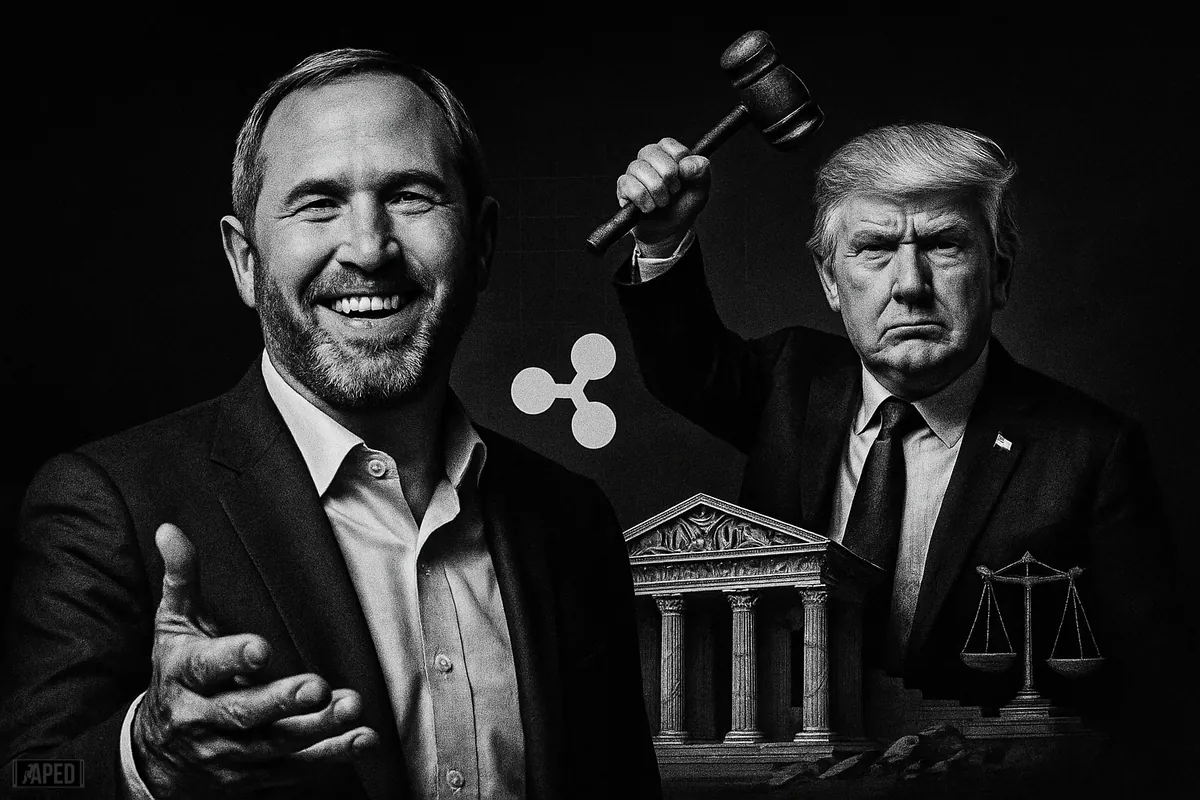
Ripple CEO Brad Garlinghouse is pushing a simple narrative: Washington's anti crypto phase is breaking, and Donald Trump helped kill it. That matters because policy, not just price action, has been one of the biggest overhangs on U.S. crypto for the past few years. If Garlinghouse is right, the trade is straightforward: less regulatory hostility could mean more room for token issuers, exchanges, and U.S. market structure plays to actually send.
Garlinghouse made the case this week that the so-called "anti crypto army" in Washington has been defeated, crediting Trump as a key political force behind the shift. The remark fits a broader industry view that the regulatory climate has become less openly adversarial than it was during the peak enforcement-heavy stretch under the prior regime. [1][2]
Enjoy articles without ads?
Register for free and get unlimited access to all articles.
Garlinghouse's message: the political tide has turned
Garlinghouse's comments were not subtle. He framed the previous policy environment as an organized anti crypto bloc and argued that bloc has now lost ground. He also tied that reversal directly to Trump's role in reshaping the conversation around digital assets in Washington. [3]
That is a loaded claim, but it lines up with a wider change in tone across the industry. Over the past year, crypto executives have moved from defensive legal posture to more aggressive political engagement. Firms that once spent most of their energy fighting enforcement actions are now lobbying for market structure, stablecoin rules, and clearer token classification frameworks. [4]
For Ripple, this framing is also personal. The company spent years in a bruising fight with the U.S. Securities and Exchange Commission over XRP$1.518. Garlinghouse has repeatedly argued that regulation by enforcement damaged innovation, pushed activity offshore, and punished companies that were willing to operate in public. [5]
Why Trump is central to the narrative
Trump's importance here is less about one quote and more about political positioning. He has become a clear reference point for pro crypto messaging inside Republican politics, especially as digital asset voters, donors, and operators gained more visibility. That gave industry leaders a candidate and a coalition to point to when arguing that crypto was no longer politically toxic. [6]
Garlinghouse appears to be using that shift as proof that the old anti crypto consensus has fractured. In practical terms, that means crypto is increasingly being treated as an electoral issue rather than just a compliance problem. Once that happens, the incentives change fast. Politicians start chasing builders, capital, and voters instead of just headlines about crackdowns.
There is also a strategic angle. By publicly crediting Trump, Garlinghouse is reinforcing the idea that backing crypto carries political upside. That may help keep pressure on policymakers from both parties to avoid returning to the kind of broad hostility the sector saw previously.
Ripple's own incentives are obvious
This is not a neutral civics lecture. Ripple has every reason to champion a friendlier regulatory regime. The company's legal battle with the SEC turned it into one of the industry's most visible opponents of aggressive U.S. enforcement. Garlinghouse's comments should be read through that lens.
A softer stance from Washington would benefit Ripple in several ways. It could reduce litigation risk, improve institutional confidence around XRP$1.518-related products, and make it easier for U.S.-based firms to build with fewer headline shocks. Even if the market does not immediately price that in, policy clarity tends to matter more over time than one-day volatility.
The current XRP price snapshot in the source material showed the token at about $1.30, down roughly 1.5% on the day. That tells you this was not some clean headline breakout for bags across the board. The market seems to view political rhetoric as useful context, not a standalone catalyst. [7]
The broader crypto industry is trying to lock in gains
Garlinghouse's statement lands at a moment when the industry is trying to convert political momentum into durable law and regulation. That is the real game. Beating back an "anti crypto" posture is one thing. Replacing it with coherent rules is much harder.
Stablecoin legislation, exchange oversight, custody standards, and token classification remain live issues. A friendlier administration or Congress can change the tone, but businesses still need actual frameworks they can operate under. Markets love vibes until lawyers show up. Then everyone wants definitions.
That is why comments like Garlinghouse's matter beyond partisan theater. They signal that major crypto executives think the window for policy wins is open right now. Publicly declaring victory is part chest-thumping, part pressure campaign. It tells lawmakers the industry expects movement, not just speeches.
What could challenge this thesis
The risk here is obvious: rhetoric is not regulation. Washington can sound pro crypto while still producing slow, fragmented, or contradictory policy. Agencies can also remain aggressive even if the political messaging changes at the top.
Another problem is that crypto's policy coalition is broad but not always aligned. Bitcoin$83,855.34miners, stablecoin issuers, DeFi builders, centralized exchanges, and token companies do not all want the same rules. "Anti crypto army defeated" makes for a clean soundbite, but the next fight is likely to be about who gets favorable treatment and who gets boxed in.
Markets should also be careful not to overread symbolic wins. Political endorsements can improve sentiment, but sentiment without implementation is how traders become exit liquidity for the narrative. If promised reforms stall, the industry could find itself back in the same loop of optimism, delay, and legal uncertainty.
Why this matters now
Garlinghouse is trying to establish a new baseline: crypto is no longer fighting for survival in Washington, it is fighting over the terms of mainstream adoption. That is a meaningful distinction. It suggests the conversation has moved from whether the industry should exist to how it should be governed.
For Ripple, that is a cleaner playing field than the one it faced during the SEC war years. For the broader market, it reinforces the view that political alignment is now a core part of crypto strategy, right alongside product launches, exchange listings, and ETF flows.
The Bottom Line
Garlinghouse's message is blunt and very on brand: the anti crypto crowd lost, Trump helped do it, and the industry should act like it knows it. Maybe that proves right. Maybe it is just smart political marketing from a CEO whose company has spent years in the regulatory trenches.
Either way, the watchlist is clear: actual legislation, agency posture, and whether pro crypto rhetoric turns into rules that firms can use. If that conversion happens, this is more than a talking point. If it does not, the headline will fade and the market will move on.
Your reviews help us improve the quality of both current and future articles. All reviews are public and visible to other readers. We use both ratings and comments to improve future articles and to revise any articles that do not meet our standards.
 See more like this on Google