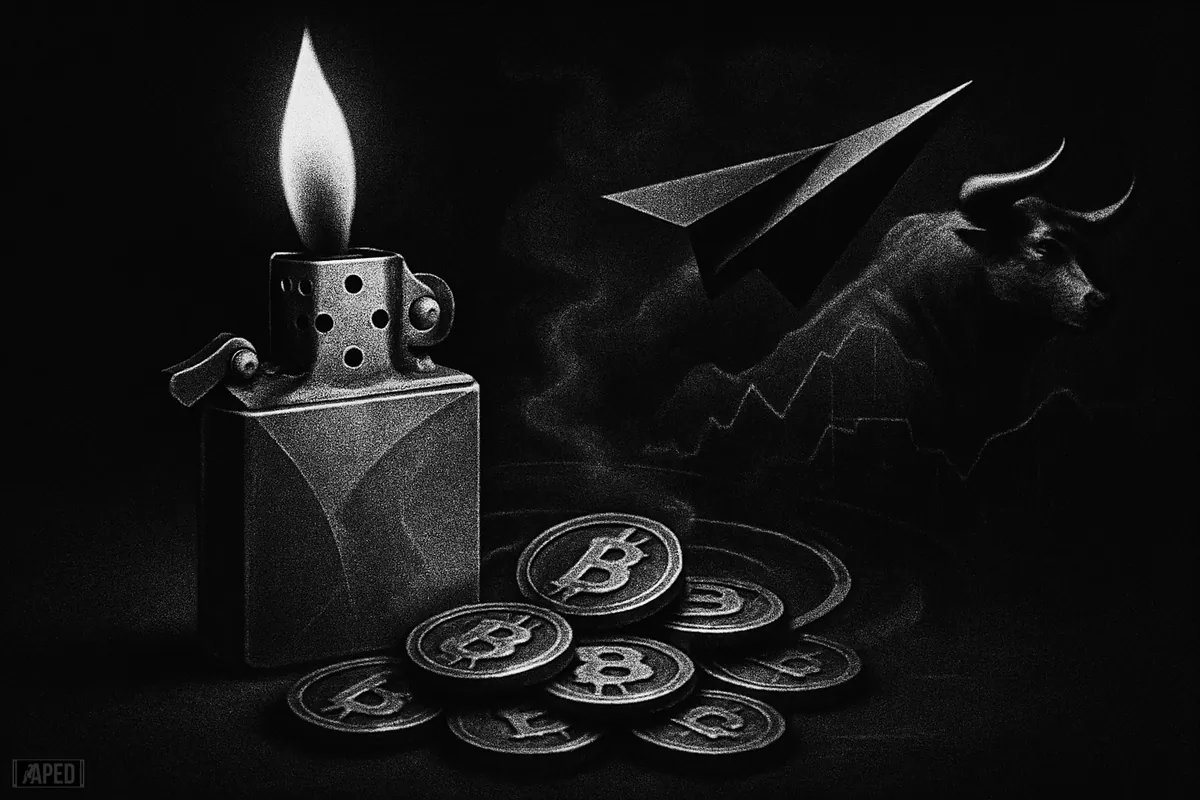
LIT$0.000000612 just caught a real narrative bid: shrinking liquid supply through buybacks, plus a distribution boost from Telegram. The token has rallied more than 40% from its late March lows, climbing from about $0.74 to above $1.13. The level that matters now is simple, bulls need to hold the breakout and reclaim the 200-day EMA as support. If they cannot, this starts looking less like a fresh trend and more like a clean reflex rally into resistance.
Register for free and get unlimited access to all articles.
Buybacks are doing the heavy lifting
The core driver is mechanical, not mystical. Lighter$0.957406, the Peter Thiel-backed perpetual DEX behind LIT, said on April 8 that it had bought back and locked 10 million LIT$0.000000612. That is roughly 4% of the currently circulating 250 million token supply. [1]
That number matters because the pace is accelerating. A month ago, the buyback program had absorbed about 3% of circulating supply. At the current run rate, Lighter is removing about 1% of the float per month, or roughly 2.4 million LIT on average. For a token with a relatively tight live float, that kind of steady demand can create a very direct price tailwind. [2][3]
The market likes buyback stories because they are easier to model than vague "ecosystem growth" promises. Revenue comes in, tokens get bought, supply gets locked. It is one of the cleaner token value accrual setups in crypto, at least on paper.
There is a catch, of course. LIT's total supply is capped at 1 billion, while only 250 million entered circulation at launch. The first unlock wave is not expected until December 2026, which gives the current structure time to work, but it also means traders should not confuse "circulating supply squeeze" with "permanent scarcity." This is a float story for now, not a full-cap story.
Buybacks lit the match, but Telegram added fuel. Lighter's recent integration with Telegram brought the DEX into a much larger user funnel by powering native trading with leverage up to 50x across crypto and non-crypto assets. [4]
That matters beyond headline value. Crypto has no shortage of partnerships that look great in a post and do nothing in the numbers. This one at least showed some early traction. Internal dashboard data from Lightalytics indicated about 40,000 new registered users after the Telegram rollout. [4]
That user growth is the bullish read. Telegram is one of the few distribution channels in crypto that can still move retail flow at scale. If even a modest share of those users become active traders, that can feed directly into fees, revenue, and by extension more buybacks.
The less bullish read is that registrations are not the same as meaningful activity. Plenty of users click through, sign up, and never touch leverage again after their first degen impulse. So the next step is checking whether the user bump actually translated into position flow.
Traction improved, but not enough to kill the skepticism
So far, the answer is "a bit, but not a ton." Open interest on Lighter rose from around $675 million to roughly $717 million after the Telegram integration. That is an increase, but not exactly the kind of explosive jump that would confirm a major step change in platform usage. [4]
For a market trying to price LIT as a revenue-backed growth token, that modest open interest move is worth noting. It suggests traders have not fully turned the Telegram deal into size yet. The signup spike is real, but the capital commitment looks more cautious than euphoric.
Revenue tells a better story. Daily revenue reportedly climbed from around $35,000 to more than $100,000 over the last seven days. That is the cleaner bullish metric because Lighter routes most of that revenue back into LIT buybacks. More fees means more token demand. This is where the flywheel starts to matter. [4]
Still, this setup needs follow-through. One good week of revenue can start a rally. It does not guarantee a durable repricing. If revenue cools while price keeps running, the token starts trading on vibes instead of cash flow, and that is where late longs usually get rekt.
Price action has reached the point where fundamentals and technicals have to agree. Traders tracking the move have flagged the 200-day EMA as a key dynamic resistance level. That is not just a line on a chart. In practice, it is often where rebound rallies stall if broader trend strength is still weak.
LIT's 40% move looks strong in isolation, but strong bounces from all-time or local lows often die at the 200-day EMA if there is no fresh demand to absorb profit-taking. Bulls need a clean flip of that level into support to argue that this rally has room to extend.
If that happens, the market likely starts treating the move as a genuine trend reversal tied to revenue-backed token sinks and fresh user growth. If it fails there, sellers will likely frame the rally as a buyback-fueled squeeze that ran into overhead supply.
This is also the zone where leverage can start distorting the picture. Tokens with low effective float and a strong narrative can overshoot quickly as traders pile into momentum. That can send price higher fast, but it also raises the risk of liquidation-driven reversals if the next catalyst underdelivers.
Why the supply story is powerful, but not bulletproof
There is a reason the market is paying attention. Lighter is one of the few projects currently offering a straightforward token support mechanism while also posting improving operating metrics. In a market still full of inflation-heavy tokenomics, shrinking float stands out.
But this is not a free lunch. The current buyback impact is strongest because only 250 million tokens are circulating. That gives every million tokens locked a bigger marginal effect on tradable supply. Once future unlocks begin, the market will need to see enough platform growth to offset that incoming supply.
That puts pressure on execution. Telegram distribution needs to convert into sustained trading volume. Revenue needs to stay elevated, or ideally expand. Buybacks need to remain credible and visible. If any piece of that slips, the market can rerate the token lower very quickly because so much of the current thesis is built on momentum in those exact variables.
Another thing to watch is whether traders start front-running the buyback too aggressively. Buybacks work best as a slow structural bid. When the market gets too crowded chasing that bid, price can detach from the underlying revenue stream. That is usually when the "send it" phase turns into the "who is exit liquidity" phase.
The Bottom Line
LIT's rally has substance behind it. Roughly 10 million tokens have been bought back and locked, daily revenue has jumped, and Telegram integration has brought a visible wave of new users into the funnel. That is a better setup than the average alt pop.
But the extension case still needs proof. Open interest has only improved modestly, and price is now pressing into a technical level that often decides whether a bounce becomes a trend. Watch three things from here: sustained revenue above recent levels, stronger open interest growth, and a confirmed hold above the 200-day EMA. If those line up, bulls may have more room. If not, this could fade into a very efficient narrative pump with good branding and impatient bags.
Your reviews help us improve the quality of both current and future articles. All reviews are public and visible to other readers. We use both ratings and comments to improve future articles and to revise any articles that do not meet our standards.
 See more like this on Google