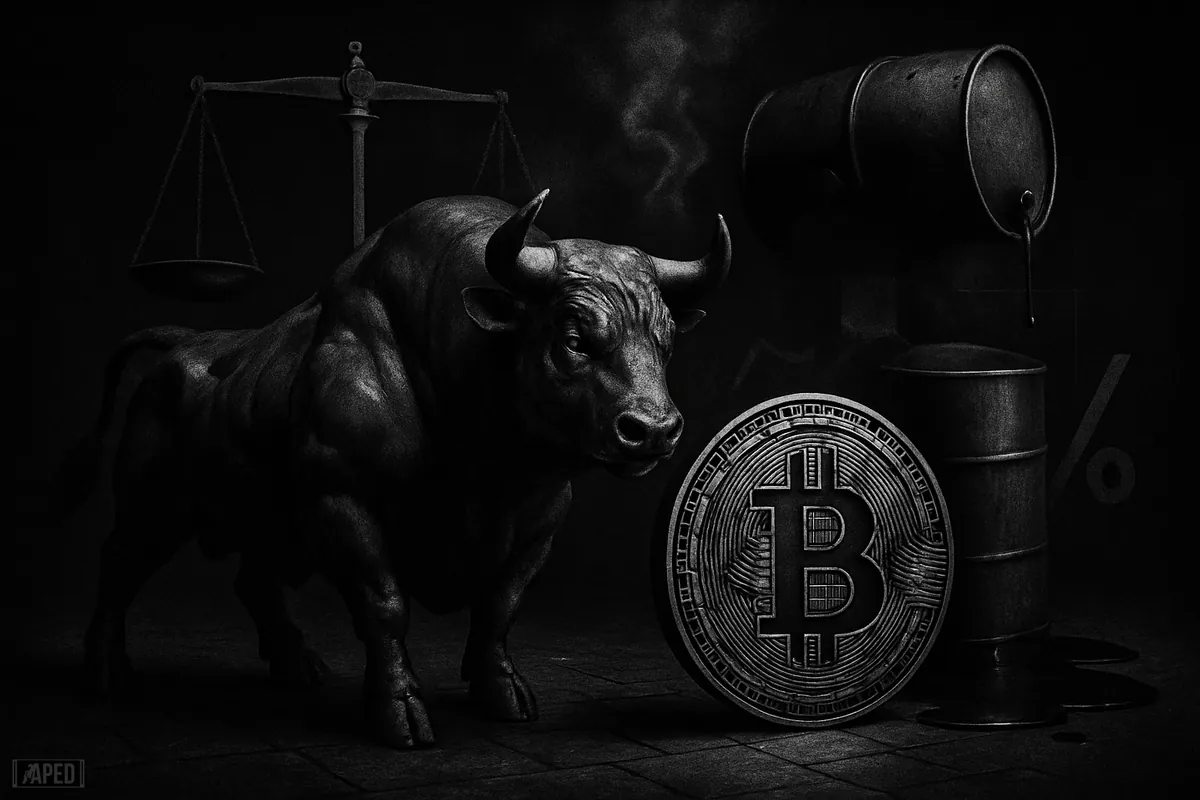
Bitcoin$80,580.49 is once again doing the thing where it pretends to be a macro asset first and a crypto asset second. This week, the key chart is not a halving model, ETF flow tracker, or some heroic rainbow band. It is crude oil.
BTC traded around $70,900 on Wednesday after rebounding from early week lows near $67,000. The move followed a broader risk-on bounce after a reported two-week ceasefire between the U.S. and Iran eased immediate supply fears and knocked oil down roughly 15% to below $100 a barrel. [1] That drop matters because energy prices feed directly into inflation expectations, and inflation expectations still run the Federal Reserve script. Crypto may enjoy talking about independence. Markets, less so.
Register for free and get unlimited access to all articles.
Why oil suddenly matters more than crypto narratives
The current setup is straightforward. If crude keeps falling, traders can revive bets that the Fed will cut rates sooner. Lower expected rates typically support risk assets, especially those with high sensitivity to liquidity conditions, which certainly includes Bitcoin$80,580.49. If crude reverses and spikes again, inflation fears return, rate-cut hopes fade, and BTC likely loses one of the cleaner macro tailwinds it has right now.
Analysts cited in the market discussion point to a sustained 15% to 16% decline in crude as the threshold that could materially change rate expectations. [2] The logic is not exotic. Cheaper oil lowers headline inflation pressure, softens the market's assumptions about future price growth, and gives policymakers a bit more room. That in turn can weaken the dollar and lift appetite for assets further out on the risk curve.
Sure, bitcoin still has its own catalysts. Spot ETF flows matter. Positioning matters. On-chain activity matters. But in the near term, the market seems more interested in whether Brent and WTI keep backing off than in any self-referential crypto story. [3]
The bullish case: lower oil, easier Fed, fast squeeze
The upside scenario is less about organic conviction and more about market plumbing. If oil continues to slide and rate-cut odds move forward, bitcoin could benefit from a short squeeze, a rapid rally caused by bearish traders being forced to buy back positions as prices rise.
That kind of move could send BTC toward the $80,000 area, according to the source reporting. [2] The mechanism makes sense. Bitcoin has already shown it can snap higher when macro pressure eases, and the move from $67,000 back above $70,000 suggests there is still responsive demand when the broader market mood improves.
A short squeeze would also fit the recent pattern of crypto price action: hesitant trend, crowded hedging, then a quick burst higher when the macro tape stops looking hostile for five minutes. As everyone definitely predicted.
Why a squeeze is plausible
BTC remains highly liquid, globally traded, and heavily used as a macro proxy by both crypto-native desks and traditional traders. That means it reacts quickly when expectations around rates, inflation, and geopolitical risk shift. It also means positioning can become one-sided fast.
If traders spent the past week leaning defensive because of Middle East risk and oil shock fears, a continued drop in crude could force a rethink. That would not require a deep fundamental re-rating of bitcoin itself. It would only require macro stress to fade enough for leveraged shorts to become uncomfortable.
The bearish case: Hormuz risk is still on the table
The problem, and it is a fairly large one, is that the oil sell-off rests on fragile geopolitics. The Strait of Hormuz remains the key pressure point. Any renewed hostilities or signs that the ceasefire will not hold could send crude back above $100 a barrel very quickly. [4]
That would reverse the macro logic almost immediately. Higher oil would push inflation concerns back into the market, harden expectations that the Fed stays tighter for longer, and undercut the risk-on mood that helped BTC recover. Under that scenario, bitcoin's rebound starts to look less like a breakout and more like a relief rally with a short shelf life.
Why bitcoin is exposed
Crypto traders often like to frame bitcoin as a hedge against monetary disorder. Sometimes that works in theory. In practice, BTC often trades like a high-beta risk asset when real-world volatility rises and liquidity tightens. Oil spiking on geopolitical stress is usually not the sort of chaos that helps speculative assets.
That is the awkward part of the current setup. Bitcoin can benefit from the inflation hedge narrative over long stretches, but on shorter horizons it tends to react first to funding conditions, Treasury yields, and the odds of central bank easing. If oil keeps those odds suppressed, the hedge story may have to wait its turn.
At current levels, BTC looks caught between improving sentiment and unresolved macro risk. The move back toward $71,000 suggests traders are willing to price in a less severe near-term inflation scare. But the reluctance to push decisively higher also shows that few are ready to assume the oil drop will last.
That is why the "coin flip" framing fits. The next directional move may come from outside crypto entirely. Not from a protocol upgrade, not from a memecoin rotation, and not from one more round of ETF enthusiasm. It may come from whether oil stabilizes lower or snaps back on fresh supply fears.
The levels that matter
The immediate bitcoin range implied by this setup is fairly intuitive. Holding above the low $70,000s would suggest the market is keeping faith with the softer-oil, easier-Fed scenario. A failure back toward the $67,000 zone would imply that traders are once again pricing macro stress over monetary relief.
For crude, the key issue is persistence, not just a one-day drop. A temporary dip below $100 is helpful. A sustained move lower is what would more seriously shift rate expectations.
What to watch next
Watch oil first, then Fed pricing, then bitcoin. That is the order, however annoying it may be for anyone hoping crypto had escaped macro gravity.
If crude extends its decline over the next several sessions, BTC has room to test higher as easing bets rebuild and short positioning gets squeezed. If tensions around Hormuz re-escalate and oil rips back above $100, expect inflation anxiety to return with it, along with pressure on bitcoin and the rest of the risk complex. [5]
For now, the takeaway is simple: bitcoin is trading like a referendum on whether this oil shock is ending or just taking a short break. That is not as fun as a narrative about digital scarcity conquering the world, but it does have the advantage of being how markets actually work.
Your reviews help us improve the quality of both current and future articles. All reviews are public and visible to other readers. We use both ratings and comments to improve future articles and to revise any articles that do not meet our standards.
 See more like this on Google