 See more like this on Google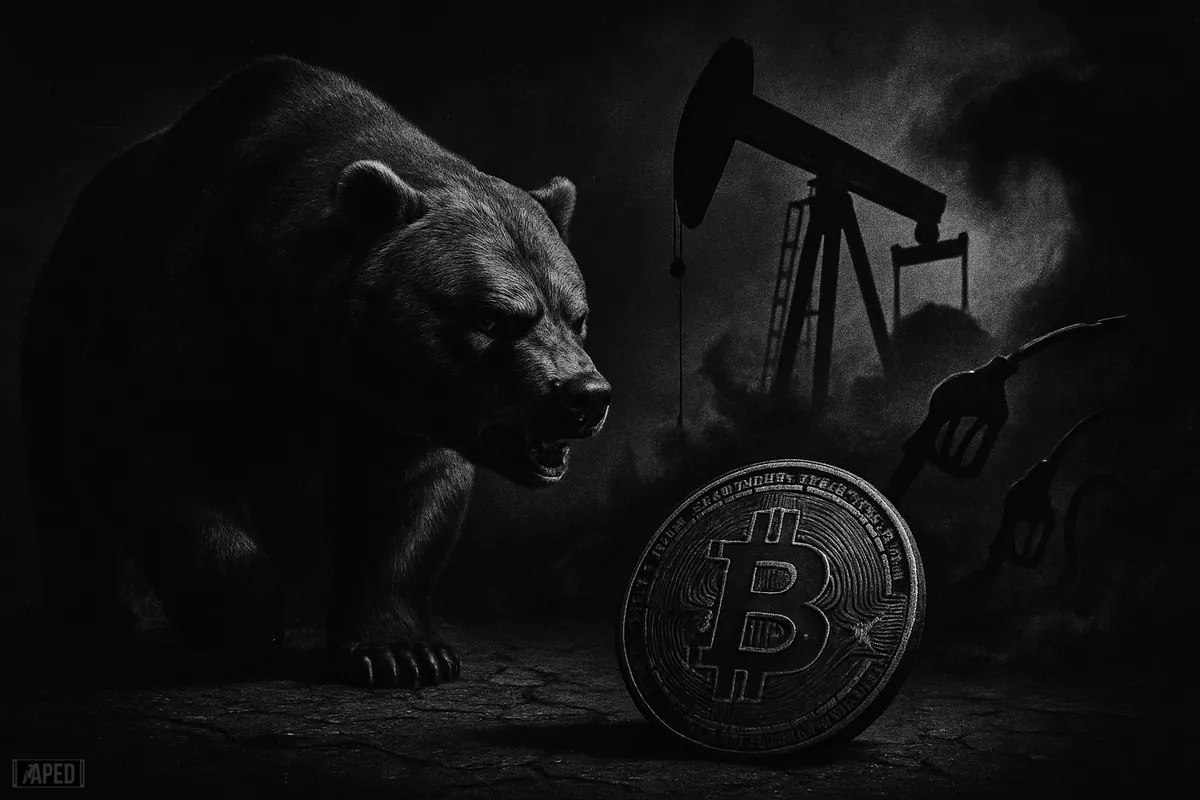
Share article
Share article
War risk is the trade, and crypto is not getting a free pass. The headline pressure point is simple: oil ripping toward $115, gasoline moving above $6 in parts of Los Angeles, and Bitcoin$80,326.14 struggling to act like a clean safe haven while traders de-risk everything that depends on loose financial conditions. The level to watch is the high $60,000s on BTC. Hold that zone and crypto can absorb the macro hit. Lose it with force, and the market probably gets another round of leverage cleanup. [1]
Enjoy articles without ads?
Register for free and get unlimited access to all articles.
Why the Iran conflict is hitting crypto now
The immediate problem is not just geopolitics. It is the inflation impulse that comes with an oil shock. When crude spikes, markets start repricing growth, consumer spending, rate expectations, and risk appetite at the same time. That is bad news for speculative assets, and crypto still trades like a high-beta macro instrument when fear gets real. [2]
Higher energy prices function like a tax on households and businesses. If drivers in major U.S. cities are staring at gasoline above $6, disposable income gets squeezed fast. That matters for crypto because retail flows are sensitive to exactly this kind of pressure. Fewer spare dollars means less spot demand, less risk-taking in altcoins, and weaker dip-buying when volatility picks up.
The other issue is positioning. Bitcoin$80,326.14 has spent the past cycle trying to graduate into a macro reserve asset, but in stress events it still often trades first as a liquid risk asset. That means funds needing to cut exposure can sell BTC and ETH quickly, even if the long-term thesis remains intact. In plain English, the market may believe in digital gold eventually, but during a geopolitical scare it still sells what it can.
Bitcoin is bending, not breaking
Recent price action shows that tension clearly. Bitcoin slipped below the $68,000 area as Middle East risk escalated, then pared some losses as the immediate panic cooled. That kind of bounce matters, but it is not the same as strength. A real bullish signal would be BTC reclaiming higher resistance with improving breadth across majors, not just a reflex rebound after traders covered shorts. [3]
Ethereum$2,327.25 has looked softer on a relative basis, which is typical when macro stress builds. ETH carries more ecosystem beta, and altcoins usually wear the worst of any broad risk-off move. If BTC dominance rises during this stretch, that would confirm what traders already suspect: capital is retreating to the least speculative part of crypto, not rotating confidently into growth trades. [4]
The oil channel is the real transmission mechanism
Crypto is not dropping because traders suddenly became energy analysts. It is dropping because oil at $115 changes the entire macro board. Higher crude raises inflation risk, complicates central bank policy, and increases the odds that rates stay restrictive for longer. That is the exact backdrop that tends to cap upside in both tech and crypto.
For miners, the oil move adds another layer. Energy costs do not map one-to-one across every Bitcoin mining operation, but sustained pressure in global energy markets can tighten margins, especially for operators already running with weaker balance sheets or less favorable power contracts. That does not automatically become a forced-selling event, but it is one more source of stress if the conflict drags on.
What traders are watching under the surface
Derivatives matter here because war headlines can turn an orderly pullback into a liquidation event. If open interest stays elevated while funding remains positive during a shaky tape, that tells you leveraged longs are still hanging around. That is usually not what you want to see in a headline-driven market. It leaves price vulnerable to a quick flush that rekt late buyers before any meaningful recovery can start.
Liquidation risk also tends to spread outward from Bitcoin into lower-liquidity altcoins. Memecoins and beta-heavy names can still bounce on isolated flows, but they are the first bags traders dump when the macro mood sours. A market that can only hold up through short squeezes and narrative pumps is not a healthy one. It is a fragile one.
On-chain flows are worth monitoring too. Large transfers from whales to exchanges during a geopolitical risk event are rarely a bullish tell. By contrast, if exchange balances stabilize while spot bids absorb the panic, that would suggest stronger hands are using the weakness as accumulation rather than heading for the exits. [5]
Why this feels different from a normal pullback
Typical crypto corrections are about leverage, regulation, token unlocks, or ecosystem-specific drama. This move is being shaped by something larger: the possibility that a regional conflict feeds directly into global energy markets and consumer inflation. That broadens the blast radius. Equities feel it. Bonds feel it. Crypto definitely feels it.
There is also a narrative problem for Bitcoin. Supporters often frame BTC as protection against fiat instability and geopolitical disorder. The long-term case may still hold, but short-term price action is exposing the gap between thesis and trading behavior. During acute stress, investors still reach for dollars, short-duration safety, and reduced exposure. That does not kill the Bitcoin story. It just means the market is not ready to price it as a pure haven yet.
What would invalidate the bearish setup
The bear case weakens quickly if oil cools off, headline risk fades, and Bitcoin can reclaim lost ground without another spike in liquidations. A move back above the recent breakdown area, especially with improving ETH and altcoin participation, would suggest this was a fear shock rather than the start of a deeper macro unwind.
Softer inflation expectations would help too. If traders decide the energy spike is temporary rather than structural, risk assets could recover faster than many expect. Crypto loves a fast narrative flip, and heavily hedged positioning can become fuel for a squeeze once the panic premium comes out of the market.
Why It Matters
This is not just about one ugly news cycle. The Iran war pressure test is showing how dependent crypto still is on global liquidity, consumer confidence, and cross-asset sentiment. Bitcoin near $70,000 sounds strong on paper, but price alone can hide fragility if oil stays hot and leverage keeps building underneath.
The watchlist is straightforward: crude around $115, gasoline prices as a consumer stress signal, BTC defending the upper $60,000s, ETH relative weakness, and any sign that derivatives are getting too crowded. If those metrics improve, crypto can stabilize. If they worsen, traders should expect more chop, more forced exits, and fewer hero trades. This is a risk management market, not a blind dip-buying market.