 See more like this on Google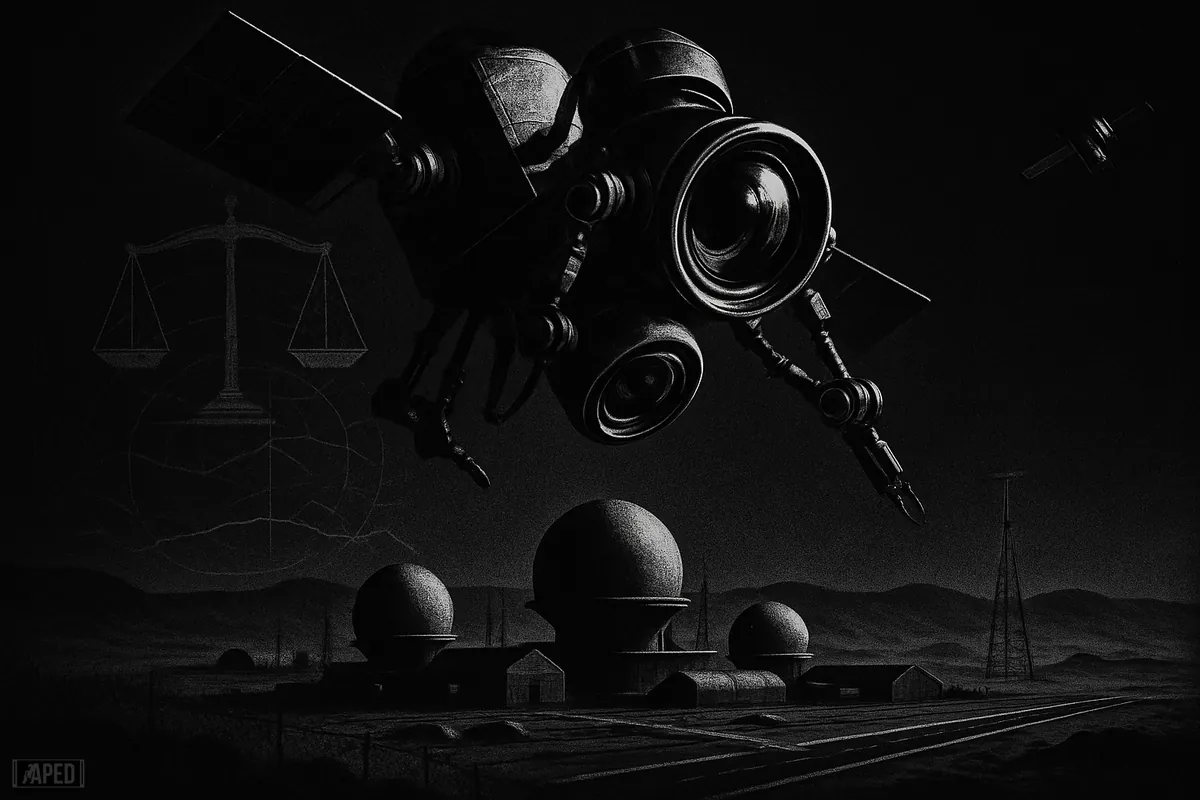
Share article
Share article
U.S. defence officials have confirmed that Iran is using Chinese commercial satellite and AI-enabled geospatial tools to monitor American military sites in the Middle East, according to reporting that cites the Defense Intelligence Agency. The core issue is not just access to pictures from orbit. It is the combination of high-frequency imagery, machine learning analysis, and a private-sector pipeline that can turn raw images into usable targeting intelligence far faster than the old model allowed. [1]
Enjoy articles without ads?
Register for free and get unlimited access to all articles.
What the DIA confirmation actually means
The significance of the DIA acknowledgement is simple: this is no longer being treated as speculative chatter about open-source imagery or dual-use tech leakage. U.S. officials are now publicly framing Chinese AI satellite services as part of Iran's intelligence picture. [2]
Reports around the issue have pointed to Chinese firms offering AI-enhanced surveillance products capable of identifying infrastructure, tracking vehicle concentrations, and flagging operational changes across military installations. That gives Iran a much cheaper route into capabilities that once required a far deeper national reconnaissance stack. [3]
Why AI satellites change the game
From imagery to targeting support
That does not necessarily mean a satellite provider is handing over a ready-made strike package. It means the provider may be dramatically shortening the time between collection and insight. For a military or proxy actor, that compression is gold.
The commercial loophole problem
This is where the story gets more uncomfortable for Washington. The most consequential military support may not come from a missile shipment or a weapons transfer, but from commercially marketed intelligence services that look legitimate on paper.
Why Iran would want it
Iran has every incentive to improve how it tracks U.S. and allied military activity across the Gulf and wider region. American bases, logistics hubs, naval facilities, and airfields are central nodes in any deterrence or retaliation cycle. Better visibility into those sites gives Tehran more options, even if only for signalling, contingency planning, or proxy coordination.
This capability is especially valuable because it reduces uncertainty. Iranian planners do not need perfect information to benefit. They only need better information than before. Knowing when a base appears unusually active, when aircraft numbers rise, or when defensive positions shift can sharpen assessments during a crisis.
It also helps offset Iran's weaker conventional intelligence architecture relative to the United States. Buying or accessing AI-enhanced overhead analysis is a shortcut. Not a magic wand, but a useful shortcut all the same.
Why China is under scrutiny
China's role here is sensitive because this is not being framed as a one-off technology leak. The broader concern is that Chinese firms are building a model in which dual-use AI infrastructure becomes a strategic export.
A proxy laboratory for future conflict
Some analysts argue that the Middle East is becoming a live testing ground for next-generation intelligence workflows: cheap sensors, commercial data fusion, machine vision, and deniable distribution channels. If that sounds a bit too tidy, the basic logic still holds. Real-world conflict zones are where companies and states learn what tools actually matter. [4]
For Beijing, even indirect exposure to how these systems perform in crisis conditions could be valuable. For Washington, that raises the prospect that commercial Chinese firms are not just selling products, but gaining feedback from hostile operating environments where U.S. assets are the object of surveillance.
Plausible deniability remains the point
That is the real structural problem. Dual-use technology thrives in grey zones, and AI satellite intelligence is almost entirely a grey-zone business.
The strategic implications for the U.S.
For the Pentagon, the immediate concern is operational security. Fixed installations have always been observable to some degree, but AI-enabled revisit analysis raises the cost of routine military exposure. Even mundane activity patterns can become intelligence signals when stitched together over time.
That could push U.S. forces toward stricter deception measures, more dispersed deployments, tighter movement discipline, and reduced visible signatures at key sites. It may also accelerate investment in counter-ISR methods, meaning counter intelligence, surveillance, and reconnaissance, designed for a world where commercial orbital tracking is always on.
There is also a policy angle. If commercial space firms in rival jurisdictions are effectively extending targeting support to adversaries, Washington may seek stronger restrictions on data brokerage, satellite service exports, and AI model access tied to military-relevant imagery. [5]
Risks to keep in mind
Some of the public reporting still leaves gaps. Officials have confirmed the broad linkage, but the exact firms, contractual pathways, and technical scope are not fully transparent. That leaves room for overstatement, especially when "AI satellite" becomes shorthand for everything from standard image classification to near-real-time military cueing.
Another caution: surveillance support is not the same as direct control over weapons or guaranteed strike accuracy. Imagery can improve situational awareness without delivering decisive battlefield outcomes. Useful, yes. Omnipotent, no.
What to watch next
- Whether the U.S. names specific Chinese companies linked to Iran's surveillance pipeline
- Any new sanctions or export restrictions on commercial geospatial AI providers
- Signs that U.S. regional bases are changing visible operating patterns or force dispersion
- Evidence that other states or proxy groups are adopting the same commercial intelligence stack
- Whether this becomes a bigger fight over dual-use AI services, not just satellites
The headline is unsettling, but the deeper story is colder than that. Intelligence capabilities that used to sit behind classified walls are leaking into the market. Once that happens, the customer list gets longer, and the excuses get tidier.