See more like this on Google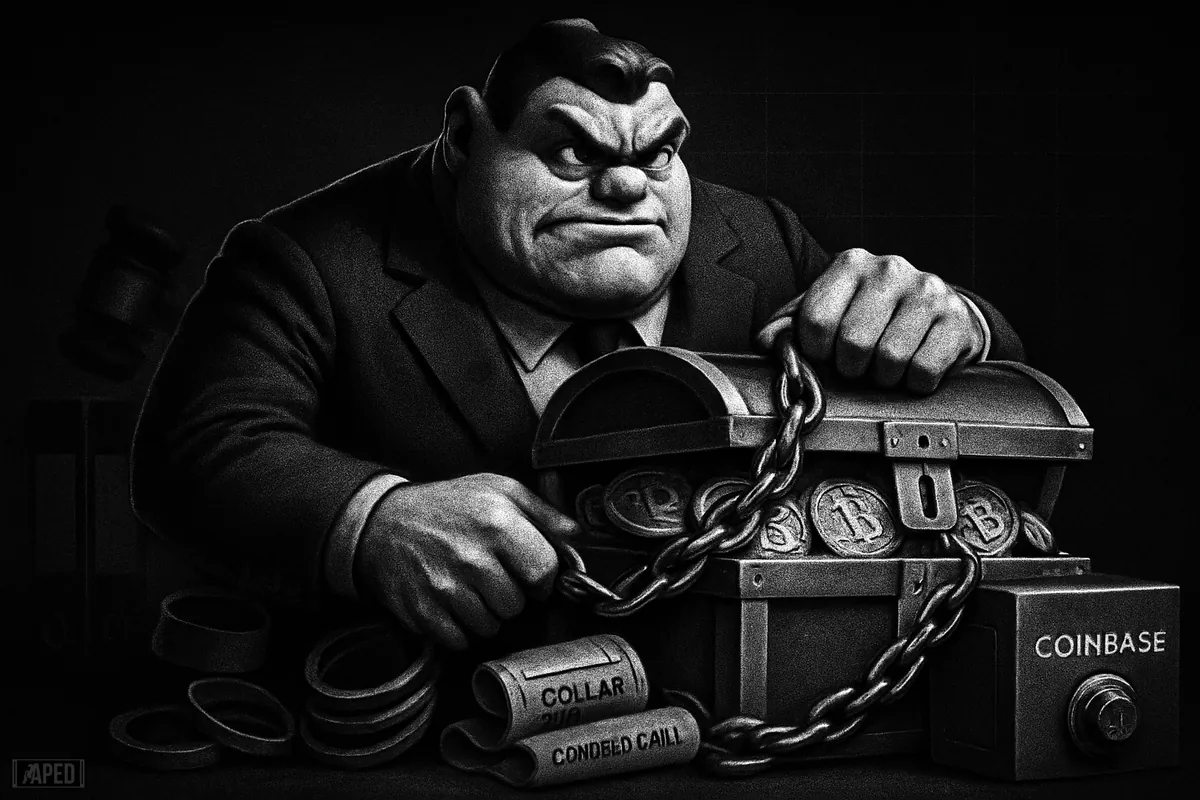
Share article
Share article
CT spent two months trying to decode a missing-Bitcoin magic trick. Turns out the coins did not vanish, they were just busy doing TradFi cosplay.
GameStop disclosed Tuesday in its annual 10-K filing with the US Securities and Exchange Commission that it still holds 4,710 Bitcoin$81,980.94, ending speculation that the retailer had quietly dumped the stack. Instead, the company said it pledged nearly all of that Bitcoin as collateral on Coinbase in January as part of a covered call strategy, a common options trade where an asset holder posts the underlying asset while selling call options against it. [1]
Enjoy articles without ads?
Register for free and get unlimited access to all articles.
What the filing actually says
The key update is simple: GameStop did not sell the Bitcoin that had sparked debate across crypto and equity circles. The filing shows the company pledged roughly its full BTC position, valued at about $325 million based on the filing's reference point, to support the Coinbase arrangement. [2]
That matters because the market had been working off incomplete clues. Earlier balance sheet treatment and the absence of explicit language around the position led some observers to assume the coins were gone. Tuesday's filing closed that loop with a much less dramatic answer: the BTC was encumbered, not sold. [3]
Why the confusion lasted so long
This was classic GameStop internet theater. A meme-stock company with a Bitcoin$81,980.94 treasury was always going to attract forensic posting from both crypto traders and legacy market watchers. Once questions surfaced about whether the 4,710 BTC had been offloaded, social feeds did what social feeds do, they filled the gaps with conviction.
The filing suggests the confusion came down to structure, not a secret exit. By using the Bitcoin as collateral in a covered call setup, GameStop effectively parked the asset inside a strategy that can look very different from simply holding spot BTC in cold storage. For traders, that is an important distinction. For CT, it was enough to fuel a small saga.
What a covered call means here
A covered call is not a rug, and it is not the same as a directional bet that Bitcoin$81,980.94 is going straight up. It is a yield-oriented strategy where the holder sells upside exposure in exchange for premium income, while still owning the underlying asset. If Bitcoin stays below the strike price, the seller keeps the premium. If it rises above that level, upside is capped because the asset may need to be delivered or settled under the option terms. [4]
That implies a more conservative treasury posture than headline readers might expect from a meme-stock icon. The company kept the Bitcoin, but it also monetized the position rather than leaving it entirely idle. That is less laser-eyes maximalism, more corporate treasury optimization.
Why this matters beyond the headline
The immediate takeaway is that holding Bitcoin on a corporate balance sheet now comes with nuance. It is no longer just buy, custody, and wait. Companies are increasingly treating BTC as a treasury asset that can be pledged, hedged, or used in structured products.
That also adds a fresh layer of risk. Once Bitcoin is posted as collateral, the conversation shifts from pure price exposure to counterparty exposure, options obligations, and liquidity management. Coinbase's role here is not incidental. It means GameStop's BTC position is tied into a broader financial arrangement, not sitting untouched as a symbolic reserve. [5]
The signal for investors
For equity investors, the update removes one uncertainty but introduces another. GameStop still has the Bitcoin, which may reassure shareholders who viewed the purchase as a strategic treasury move. At the same time, the covered call structure means the company may have limited some of its upside if BTC rallies sharply.
For crypto-native readers, the vibe is straightforward: the bag is intact, but it is not idle. That is a meaningful difference. A company can be long Bitcoin while still actively managing the position in ways that change its risk and return profile.
What to watch next
The next catalyst is not whether GameStop owns Bitcoin. That part is now clear. The real questions are how long the Coinbase collateral arrangement lasts, what strike levels were used in the covered calls, and whether GameStop expands this strategy or treats it as a one-off treasury trade.
Readers should also watch for how the company reports any gains, losses, or restrictions tied to the position in future filings. The headline mystery is solved. The more useful question now is whether GameStop wants Bitcoin as a reserve asset, a yield-generating treasury tool, or both.