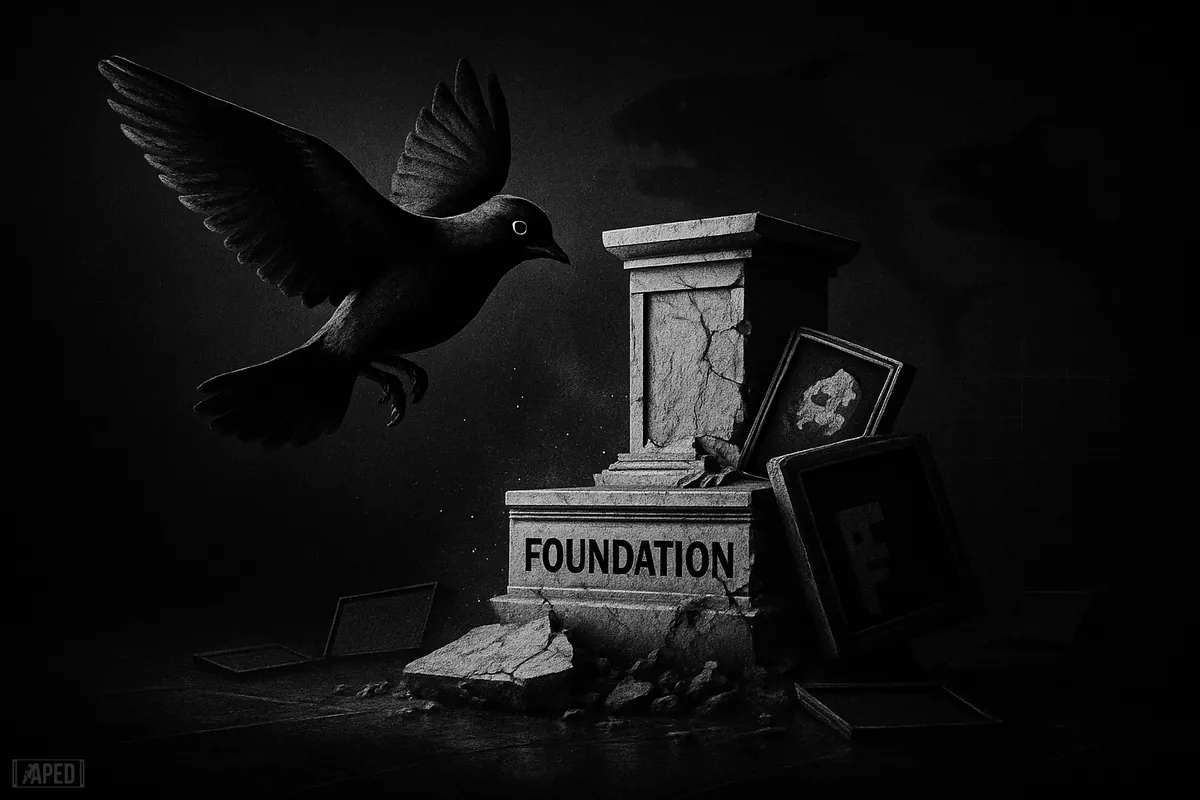
Foundation is done. The once high-status Ethereum$2,369.75 NFT marketplace said it will wind down after a planned acquisition by Blackdove fell apart, another clean signal that the old curated-marketplace model has run out of road. The headline is simple: no rescue, no runway, shutdown ahead. [1]
Foundation disclosed the closure this week, saying its attempt to continue under Blackdove ownership did not make it across the line. That left the platform with no viable path forward. For creators and collectors, the practical question is now less about brand nostalgia and more about asset access, contract continuity, and what parts of the platform experience survive after the company exits. [2]
Register for free and get unlimited access to all articles.
A high-profile NFT brand hits the wall
Foundation launched in 2021 and quickly became one of the more recognizable names in Ethereum$2,369.75 NFTs. Its pitch was curation, social capital, and an artist-first image at a time when the market rewarded exclusivity almost as much as the art itself. That worked during the boom cycle, when primary drops cleared fast and marketplace branding still mattered.
That model got squeezed hard once NFT volumes rolled over. Traders moved toward cheaper execution, broader liquidity, and ecosystems with stronger network effects. OpenSea kept scale, Blur captured pro traders with incentives, and newer chains chipped away at Ethereum's dominance on cost. A curated venue without breakout volume was always going to face a brutal math problem.
Foundation's shutdown is not just another startup obituary. It marks the decline of a specific Web3 thesis: that premium positioning alone could defend margins in a market where liquidity is mercenary and users leave fast when incentives disappear.
Why the Blackdove deal mattered
Blackdove was supposed to be the exit ramp. The company operates in digital art infrastructure, so the deal at least had strategic logic. A buyer with overlap in digital art and display technology could have given Foundation's marketplace, artist network, or brand some second life.
Instead, the transaction failed to close. Foundation did not frame the collapse as a temporary delay, and its decision to shut down suggests there was no serious fallback. When a company announces a rescue deal and still ends up winding down, that usually means the balance sheet was already deep in the danger zone. [3]
The failed acquisition also matters because it removes the most optimistic version of this story. This was not a case where Foundation simply chose to pivot. It tried to get acquired, could not complete the deal, and is now closing shop. That is a very different signal for investors looking at the NFT infrastructure stack.
For artists, the biggest issue is whether minted works remain accessible and tradable independently of Foundation's front end. In NFT shutdowns, the distinction that matters is between the company and the smart contracts. If the contracts remain on-chain and metadata is preserved, assets do not vanish just because a startup does. [4]
Collectors, meanwhile, need to pay attention to timelines. Platform closures can affect auction interfaces, creator dashboards, royalty settings, and account tools long before the underlying tokens become difficult to move. Anyone with active listings, pending payouts, or unretrieved data should assume the window for a clean exit is finite.
This is where Web3's usual slogan meets reality. "On-chain" helps, but only if users know where the contracts live, how metadata is hosted, and which marketplace alternatives can still index the assets after the original site goes dark. Decentralization is useful. It is not the same as customer support.
The broader read on NFTs in 2026
Foundation's collapse lands in an NFT market that is still alive, but far less forgiving. The easy-money phase is long gone. Surviving platforms either have scale, a strong niche with durable buyers, or infrastructure that other businesses depend on. Everything else is fighting for scraps.
That is why this closure feels bigger than one company. Foundation was part of the class of platforms that helped define the cultural side of the 2021 cycle. If even a well-known brand with strong early artist cachet cannot find a buyer or sustain operations, smaller long-tail marketplaces should not assume they are safe.
There is also a lesson here for founders still building in digital collectibles. Brand and community can get you through a mania. They do not replace distribution, recurring demand, or treasury discipline once volumes normalize. The market has stopped paying premium multiples for vibes alone.
Artists were often told that curated NFT platforms would be better aligned with their interests than mass-market exchanges. Sometimes that was true, especially during the early phase when Foundation helped creators reach collectors who were willing to pay up for discovery and status.
But platform risk is now impossible to ignore. Creators building businesses on any single marketplace are taking counterparty risk whether they acknowledge it or not. If the company disappears, the art may remain, but the audience funnel, launch mechanics, and social proof layer can disappear overnight. That is not quite getting rekt, but it is close enough for anyone counting on future drops. [5]
The Bottom Line
Foundation's shutdown after the failed Blackdove deal is a sharp reminder that NFT infrastructure remains a survival game, not a nostalgia trade. The company had name recognition, cultural relevance, and a plausible buyer, and it still could not make the numbers work.
Watchlist takeaway: artists should back up data and confirm where their works live on-chain, collectors should review any exposure tied to Foundation's interface, and marketplace operators should treat this as a warning shot. In NFTs, liquidity is king, curation helps, and rescue deals are not a strategy.
Your reviews help us improve the quality of both current and future articles. All reviews are public and visible to other readers. We use both ratings and comments to improve future articles and to revise any articles that do not meet our standards.
 See more like this on Google