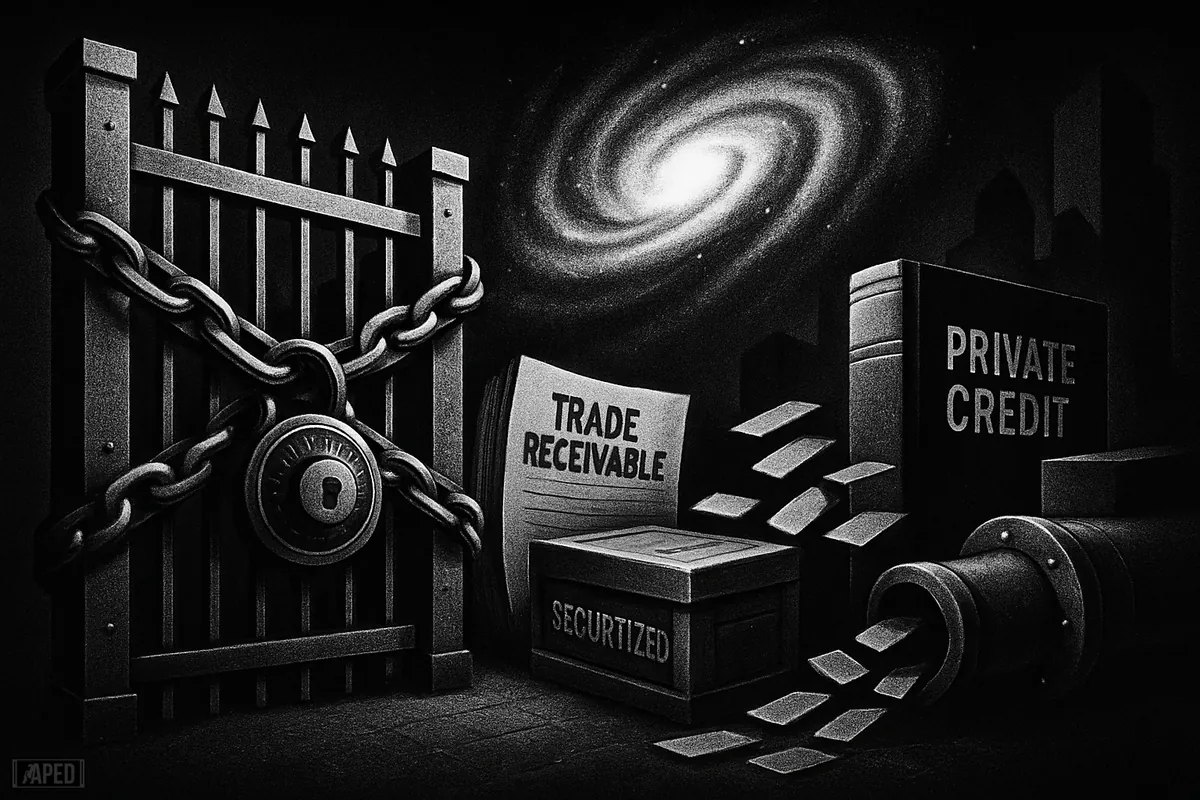
The trade here is simple: real-world assets are still one of crypto's favorite institutional narratives, and Fence just added real money to that thesis. The startup said it has raised $20 million in fresh funding, backed by Galaxy, to build infrastructure for tokenized asset-backed finance, a market it pegs at roughly $6 trillion. [1] The headline matters because this is not another generic "put bonds onchain" pitch. Fence is aiming at the plumbing behind private credit and collateralized finance, where yield, underwriting, and settlement speed actually matter.
That focus puts Fence in a crowded but still immature part of crypto. Tokenization has moved from whitepaper territory into an active capital formation race, but most of the traction so far has clustered around short-duration Treasuries, money market products, and a handful of private credit vehicles. Fence is betting the bigger unlock sits deeper in the stack, where trade receivables, invoices, and other asset-backed exposures can be structured and financed with blockchain rails.
Register for free and get unlimited access to all articles.
What Fence is building
Fence's pitch is to modernize asset-backed finance by tokenizing the underlying claims and streamlining how those assets are originated, funded, and managed. In plain English, the company wants to take a market that still runs on fragmented intermediaries, legacy documentation, and slow settlement, then move key workflows onchain without pretending credit risk disappears.
That distinction matters. Asset-backed finance is not just a tech problem. It is a trust, legal, and servicing problem. If Fence wants to capture a slice of a multi-trillion-dollar market, the product has to do more than mint tokens. It needs to connect tokenized claims to enforceable offchain rights, verified collateral data, and investor protections that survive stress. Otherwise it is just polished exit liquidity for anyone chasing the next RWA headline.
Why Galaxy's backing stands out
Galaxy's involvement gives the round more weight than a standard venture check. The firm has spent the last few years positioning itself at the intersection of crypto infrastructure and institutional finance, so this is a directional bet that tokenized structured credit may be worth building before the market is fully formed. [1]
That does not guarantee adoption. It does suggest sophisticated capital sees room beyond Treasury wrappers and stablecoin settlement. If institutional investors eventually want onchain exposure to real income-producing assets with tighter reporting and programmable cash flows, platforms like Fence are trying to be early to the rails.
Why asset-backed finance is attractive onchain
The $6 trillion figure attached to the opportunity is big enough to grab headlines, but the more interesting point is why this category fits tokenization better than many others. Asset-backed finance already revolves around packaging cash flows, monitoring collateral, and allocating risk across different investor classes. Those are areas where programmable infrastructure can reduce friction.
Tokenization can, at least in theory, improve transferability, reporting, and settlement times. It can also make participation more modular, allowing investors to access slices of exposures that were previously operationally difficult to distribute. For originators, faster financing and broader capital access are the real sell, not the token itself.
This is where most tokenization pitches get tested. Putting an invoice or receivable onchain is the easy part. Verifying that the asset exists, proving ownership, handling defaults, and enforcing claims across jurisdictions is where the work starts. The winners in this sector will likely look less like flashy DeFi protocols and more like compliance-heavy fintech infrastructure companies with blockchain settlement baked in.
Fence appears to be leaning into that reality. If it can build a credible bridge between institutional-grade underwriting and onchain distribution, it has a shot at serving both crypto-native capital and traditional investors looking for better operational rails.
Timing looks favorable, but competition is not sleeping
The raise lands at a moment when tokenized real-world assets are drawing fresh attention from both startups and large incumbents. BlackRock's BUIDL fund helped legitimize the category. Ondo, Centrifuge, Maple, and a growing list of issuers have all pushed the market toward products tied to offchain cash flows. [2] The result is a sharper conversation: tokenization is no longer a novelty, it is now about which asset classes can scale without breaking on compliance or liquidity.
Fence's edge will depend on execution. Asset-backed finance is a more complex lane than tokenized Treasury bills, but it may also be more defensible. If the company can establish reliable origination channels and investor trust, it could carve out a high-value niche that is harder to commoditize.
There are obvious failure points. Credit underwriting can go bad. Borrower performance can deteriorate. Tokenized instruments can still trade thinly if secondary demand never materializes. Regulatory scrutiny could also tighten if products are marketed globally while rights and disclosures remain uneven. [3]
That means the bullish narrative needs a practical filter. "Onchain" does not fix defaults, fraud, or bad documentation. It can make data cleaner and workflows faster, but asset quality still drives returns. Anyone allocating to this segment should care less about the token wrapper and more about the underlying pools, servicing standards, and legal recourse.
Why this raise matters
Fence's $20 million round is a signal that investors still see asymmetric upside in bringing private credit style infrastructure onchain. The story is less about crypto replacing traditional finance and more about crypto trying to upgrade one of its messier back offices.
If Fence executes, it could help push tokenization beyond the current comfort zone of cash-equivalent products, often funded and settled with stablecoins like USD Coin$1.0011 and Tether$0.999021, and into a part of finance where blockchain rails might actually earn their keep. If it stumbles, it will reinforce a harsh lesson the market keeps relearning: slick token wrappers do not turn complex credit into simple software.
The Bottom Line
Fence now has the capital, the narrative, and a heavyweight backer. The next thing to watch is not hype, it is proof. Watch for live issuance volume, quality of originator partnerships, legal structure, and whether investors show up for more than the press release. That is the real scoreboard.
Your reviews help us improve the quality of both current and future articles. All reviews are public and visible to other readers. We use both ratings and comments to improve future articles and to revise any articles that do not meet our standards.
 See more like this on Google