 See more like this on Google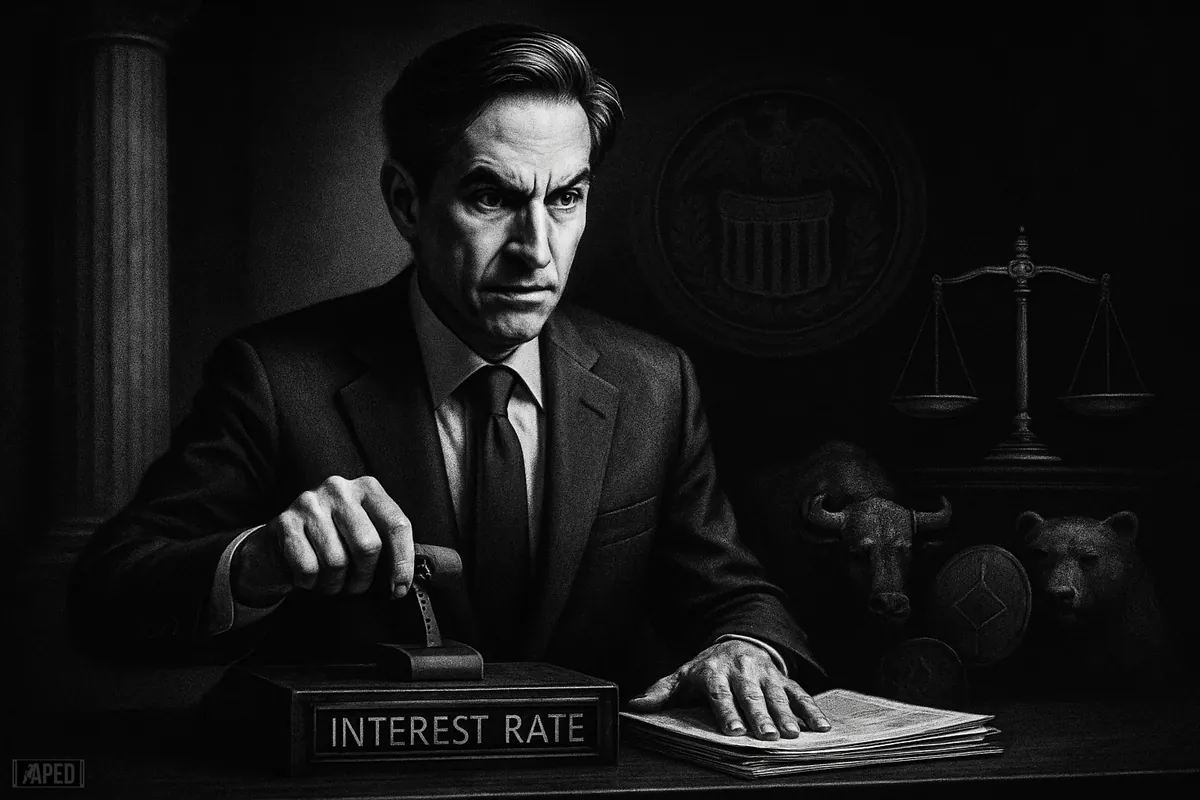
Share article
Share article
Markets spent weeks gaming out fireworks from Jerome Powell's final Fed meeting, and got a hold instead. Central banking remains committed to its favorite genre, suspense dressed up as caution.
Enjoy articles without ads?
Register for free and get unlimited access to all articles.
Rates stay put as the Fed balances inflation and weaker growth
Why Powell's final meeting matters
Powell's likely exit gives this hold extra weight. A routine pause would have been one thing under stable leadership. A pause at the end of a chair's term invites markets to parse not just the statement, but the institutional transition behind it.
Warsh's committee approval suggests the June meeting could be led by a new chair. That raises an obvious question: will the next phase of policy look materially different, or will the personnel drama matter less than the inflation data? Investors love a clean regime-change narrative because it is easier to trade than nuance. The Fed, irritatingly for everyone, usually runs on nuance. [3]
The message markets were looking for
Crypto's reaction function is still macro first
Bitcoin near $76,000 suggests the market did not interpret the meeting as an immediate threat. But stability in the first few hours is not the same thing as conviction. The more durable effect will come from rate-path expectations, dollar strength, and bond-market repricing over the next several sessions. If traders push back expected cuts, speculative assets may struggle to build momentum from here.
Ethereum's position near $2,280 tells a similar story. The second-largest crypto tends to be more sensitive than bitcoin to shifts in risk appetite and liquidity conditions, especially when investors are evaluating whether to lean into beta or retreat into larger, more defensive exposures. No fireworks here either, just a continued wait for macro to stop being the main character.
What this means for liquidity-sensitive trades
Stable rates do remove one immediate source of uncertainty, which can help support leveraged positioning and carry trades across crypto markets. But that support is conditional. If Powell's messaging, or incoming inflation data, implies that cuts are further away than hoped, short-term relief can fade quickly.
That is especially relevant for altcoins, which typically need more than a neutral Fed to sustain rallies. They usually need a clear improvement in financial conditions plus fresh narrative fuel. A central bank saying "we are still worried about inflation" is not exactly premium meme-coin fertilizer.
Leadership transition could matter more in June
The next meeting now carries more event risk than this one. If Warsh takes the chair as expected, markets will have to evaluate both his policy instincts and how much continuity he intends to preserve. Even if the actual framework changes little, a new communication style alone can move expectations.
Warsh is widely seen as more hawkish than the market's dream version of a replacement. Whether that proves true in office is another matter, but perception often trades first and verifies later. Crypto markets, which are especially sensitive to shifts in broad risk sentiment, may not wait around for a full academic review.
Why policy continuity is not guaranteed
What to watch next
Three things deserve more attention than the headline hold. First, inflation prints. If price pressures stay stubborn, the market's cut expectations may keep slipping. Second, Powell's final guidance and how explicitly he framed upside inflation risks. Third, how Warsh signals continuity or change before the June meeting. [4]