Legal overhang stayed in the room, then Canada added a fresh regulatory jab late in the day. There was not much in the way of bullish catalyst flow on May 6, so sentiment stayed soft and defensive rather than properly risk-on.
Enjoy articles without ads?
Register for free and get unlimited access to all articles.
Market Mood
The day's tone was largely inherited from the credibility damage hanging over crypto since the previous day's headline cycle. APED.ai's May 5 summary had already flagged how Sam Bankman-Fried's failed retrial bid kept old trust issues front and centre, and that negative backdrop mattered because there was no stronger counter-narrative today to shift attention back to growth, adoption, or fresh inflows. [1]
That left the market in a familiar spot: not necessarily panic, but a bit of a grind. When the lead story in the previous cycle is still courtroom-adjacent, traders tend to treat rallies with suspicion, especially in thinner parts of the market where momentum can look stronger on CT (Crypto Twitter) than it does in actual liquidity.
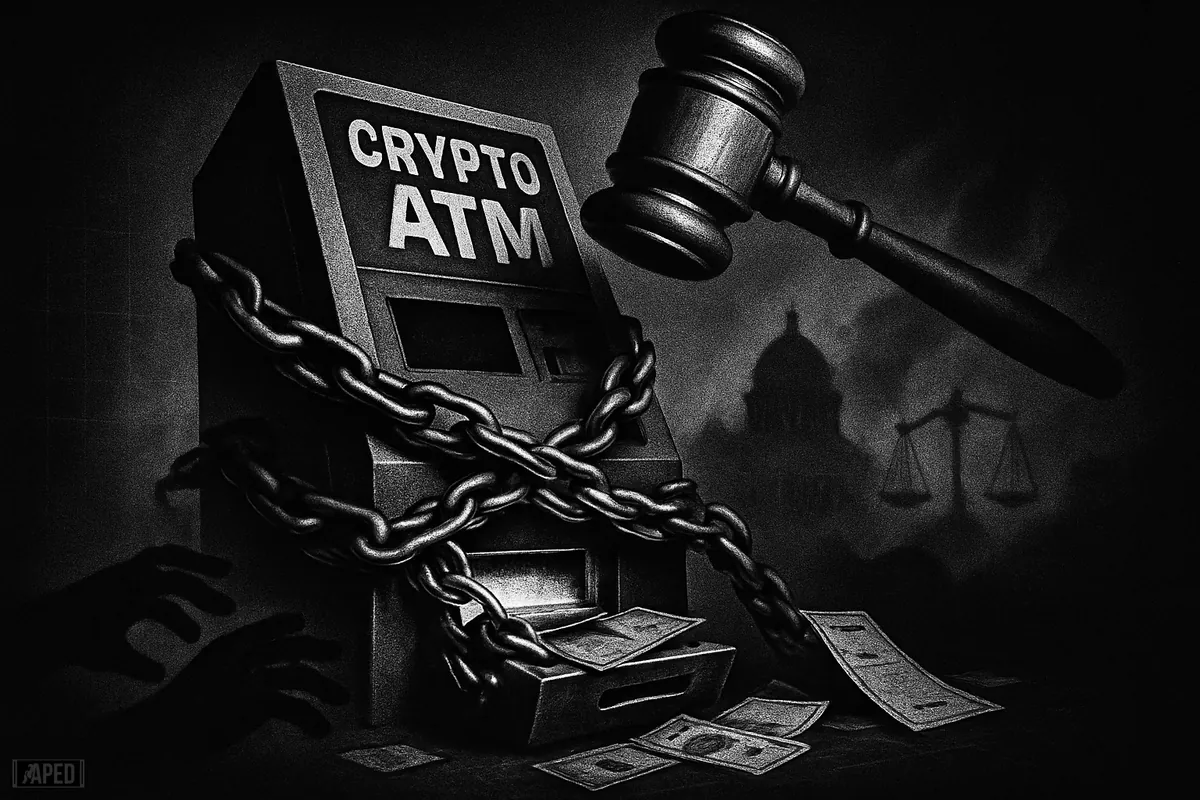
The main fresh development landed at 6:01 PM UTC, when Canada's proposed Spring Economic Update 2026 measures drew attention for targeting crypto ATMs. The government's April 28 update said these kiosks are being used as key infrastructure for scams and money laundering, and proposed banning them outright. [2]
That is a notable escalation because it goes beyond tighter compliance or enhanced monitoring. A ban frames the machines not as a manageable risk, but as a structurally problematic retail on-ramp. For the industry, that is the awkward bit: crypto ATMs have long been pitched as an access tool for everyday users, yet regulators increasingly see them as a consumer harm vector.
The political logic is easy enough to follow. ATM scams have become a recurring talking point across multiple jurisdictions, especially where elderly or less digitally native users are pressured into sending funds under false pretences. Canada's proposal suggests policymakers think the abuse is not incidental, but central enough to the model that supervision is no longer the preferred fix. [3]
For market participants, this is not a direct systemic event on the scale of an ETF ruling or major exchange action. Still, it adds to the broader compliance drag facing retail-facing crypto businesses. Firms tied to kiosk networks, cash conversion, and physical access points may now face a tougher operating climate well beyond Canada if the proposal encourages copycat scrutiny elsewhere.
Why this matters beyond kiosks
The bigger read-through is regulatory posture. Governments are showing less patience for parts of crypto that are easiest to connect to fraud headlines. That means businesses with weak compliance optics, patchy user protections, or obvious scam exposure are increasingly likely to be treated as expendable.
It is also a reminder that adoption metrics need context. A large ATM footprint can sound bullish in a headline deck, but if usage is driven in meaningful part by bad actors or mis-sold access, the number is not a sign of healthy growth. It is a liability waiting for a policymaker to notice.
Although not a new May 6 event, the previous day's fallout remained the clearest frame for interpreting market sentiment. Sam Bankman-Fried's failed retrial bid kept the sector's long-running credibility problem alive, and that sort of story tends to bleed into everything else: regulation, public trust, and how quickly institutions are willing to engage with the next wave of products. [1]
That matters because reputational damage compounds. When policymakers see fresh evidence of retail scams on one side and old fraud-era headlines on the other, the case for a lighter-touch regime gets harder to make. Even legitimate operators end up trading under a cloud created by the sector's worst actors.
The result was a fairly muted mood across the day's news flow. No proper breakout narrative emerged, and the most relevant development was another example of the state trying to close off a crypto access point it sees as dodgy.
Key Takeaways
May 6 was a light headline day, but not a neutral one. The absence of strong positive catalysts left crypto exposed to lingering reputational weakness, and Canada's proposed ATM ban reinforced the sense that regulators are still most energised when the story is fraud prevention rather than innovation.
That does not automatically translate into broad market damage. Crypto ATMs are niche compared with exchange volumes, ETF flows, or on-chainstablecoin activity. But the signal is still bearish at the margin: retail access channels with poor optics are becoming easier political targets. [4]
The simple invalidation line for this mood shift is clear enough. Crypto needs a cleaner headline stack, stronger evidence of compliant growth, and fewer reminders of the industry's scam-heavy edges. Until then, even small regulatory stories can carry outsized weight because the market has not yet fully rebuilt trust.
Your reviews help us improve the quality of both current and future articles. All reviews are public and visible to other readers. We use both ratings and comments to improve future articles and to revise any articles that do not meet our standards.
 See more like this on Google