 See more like this on Google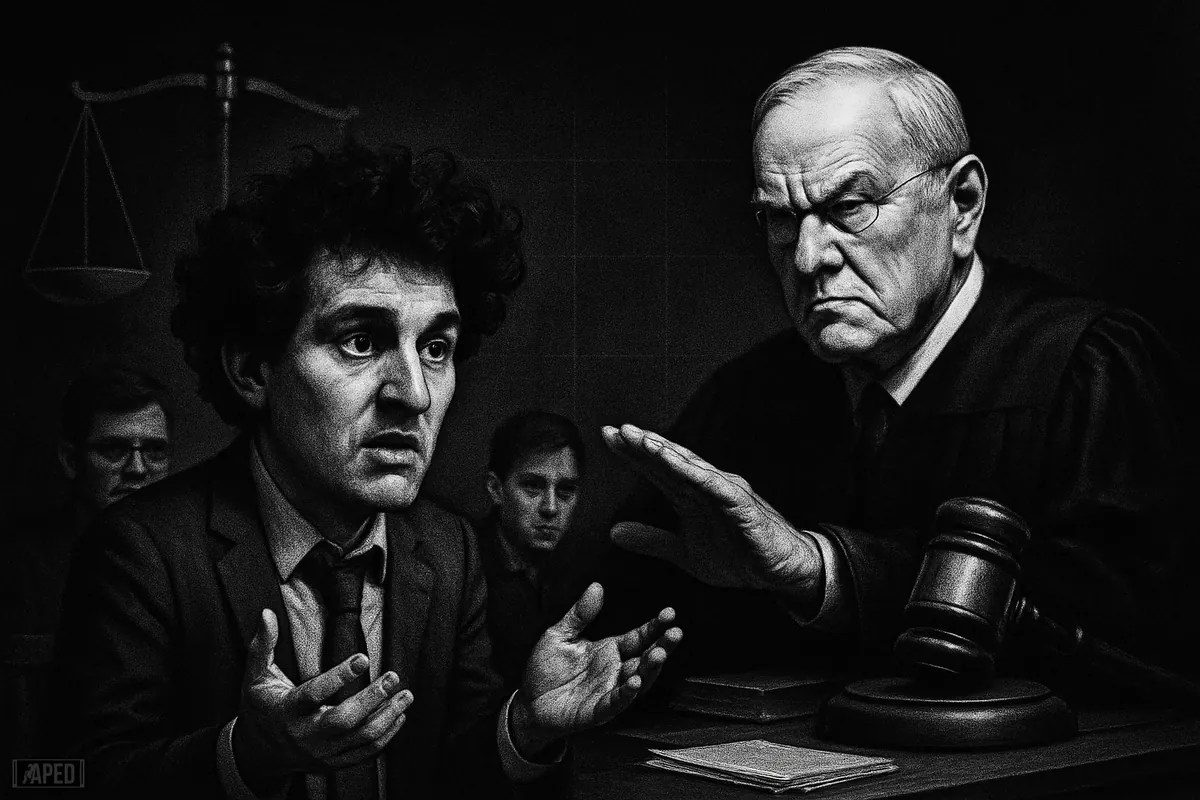
Share article
Share article
Enjoy articles without ads?
Register for free and get unlimited access to all articles.
Kaplan's message was simple: the motion was ready, and it failed
The immediate procedural point mattered almost as much as the substance. Kaplan noted that prosecutors had already filed a detailed opposition to the retrial request and that the court had given Bankman-Fried extra time to answer it. He did not meet that deadline. [2]
With that, the judge said the motion was "ripe for decision," legal language that translates pretty cleanly: enough briefing, time's up, ruling incoming.
Kaplan then denied the request in full. That means no evidentiary hearing, no partial reopening, and no second swing at the underlying criminal trial through this motion.
What SBF was actually asking for
Despite his pending appeal, he separately filed for a new trial on Feb. 5, 2026, claiming he had uncovered evidence that had not been available earlier and that could have changed the outcome. He submitted the motion pro se, meaning on his own behalf, though Kaplan suggested the filing appeared to have had some professional help. [4]
That detail is not just courtroom trivia. Pro se filings can sometimes earn a little extra leeway from judges because they come from defendants without counsel. Kaplan's order suggests he was not inclined to treat this as a naïve solo filing that deserved special indulgence.
The "new evidence" argument did not move the court
Kaplan's answer was effectively no. Bankruptcy recoveries after the fact do not erase the conduct the jury found criminal at the time it happened. That distinction remains one of the most important through-lines in the entire FTX case. [5]
Why the proposed witnesses fell flat
Singh, the former FTX engineering chief, had already testified during the original trial. Kaplan said nothing in the new presentation altered the equation enough to justify a fresh trial. That is a high bar in any criminal case. A defendant cannot simply recycle a witness, reframe old testimony, and call it newly discovered.
Kaplan treated that turn with open skepticism. His point was blunt: if Salame's current version were true, then Salame lied under oath when he entered his plea before the court. Judges tend not to be especially charmed by witness narratives that require them to believe earlier sworn testimony was fake but the new podcast-era version is the real one. [6]
That reasoning cuts deeper than this one filing. It signals that the court is unlikely to view post-conviction media campaigns as inherently credible evidence, especially when they conflict with prior statements made under oath.
This does not end SBF's legal fight, but it narrows the path
The denied motion is not the same thing as losing the appeal. Bankman-Fried still has appellate options, and that remains the more conventional route for challenging his conviction and sentence.
That leaves SBF leaning more heavily on arguments his appellate lawyers can make at the circuit level, rather than on any theory that newly surfaced witnesses or bankruptcy developments should reset the board. [4]
The broader read-through for crypto cases
That may play well in community chats, where solvency, treasury management, and "everyone got paid back" narratives often blur together. It plays much worse in fraud cases. Criminal courts ask what happened, what was represented, and where the money went. They do not usually treat later recovery work as a magic eraser.
Why Kaplan's tone matters
The order appears to reflect more than procedural cleanup. It carries a level of judicial impatience with arguments the court has effectively heard before in different packaging.
That tone matters because district judges create the factual and rhetorical record that higher courts later review. A sharply reasoned rejection can make it harder for a defendant to frame a denied motion as unfairly brushed aside. Kaplan went out of his way to note the government's thorough opposition, the extra time already granted, and the weaknesses in the witness arguments. He built a record that says this was considered, not casually dismissed.
The Bottom Line
Bankman-Fried's retrial bid is over, at least in this court. Kaplan rejected the motion across the board and made clear that neither missed deadlines nor recycled witness narratives were enough to reopen one of crypto's most consequential criminal cases.
The practical takeaway is pretty straightforward: if you are tracking SBF's odds, the center of gravity now shifts back to the appeal. The catalyst to watch is not another social media claim from a former insider, but whether appellate judges see a meaningful legal flaw in the original proceedings. For now, Kaplan's message is the opposite of bullish for SBF's comeback thesis.
People Referenced

Sam Bankman-Fried
Founder of FTX and Alameda Research, once a crypto darling, later convicted on fraud charges.
Lewis A. Kaplan
Lewis A. Kaplan is a U.S. District Judge (senior status) for the Southern District of New York, serving since 1994.
Nishad Singh
Nishad Singh was FTX’s former engineering chief, later convicted and fined for fraud tied to the exchange’s collapse.
Ryan Salame
Former co-CEO of FTX Digital Markets (FTX’s Bahamas unit), later convicted and sentenced for related fraud and political-contribution crimes.