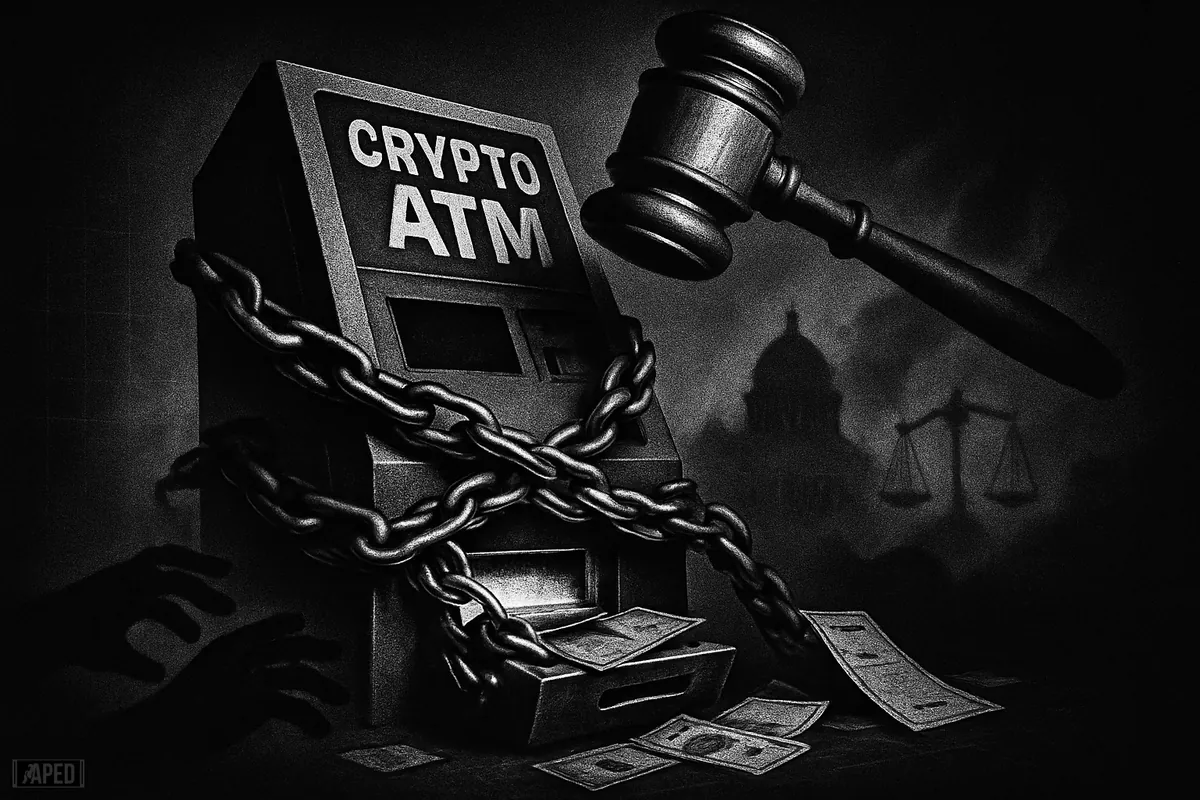
Crypto ATMs went from "easy on-ramp" to "scammer vending machine" in Ottawa's telling. Now Canada wants them gone.
The federal government has proposed banning crypto ATMs as part of its Spring Economic Update 2026, published April 28. The pitch is blunt: these kiosks have become a major tool for fraud and money laundering, not a useful retail bridge into digital assets. [1]
Ottawa's language is unusually direct for a budget document. It says crypto ATMs are a "primary method" used by scammers to steal from victims and by criminals to move cash tied to crime. On that basis, the government says it proposes to ban them outright. [2]
That would mark a sharp policy turn in a country that helped popularize the format. Canada hosted the world's first public Bitcoin$80,671.00 ATM in a Vancouver coffee shop back in 2013. More than a decade later, the same machine category is being treated less like fintech and more like a compliance headache with a meme-worthy body count. [3]
Register for free and get unlimited access to all articles.
What the proposal actually does
The plan targets standalone crypto ATMs, the kiosks found in malls, gas stations, convenience stores and other high-footfall retail locations. Under the proposal, Canadians would still be allowed to buy crypto through brick-and-mortar money services businesses. The difference is that the quick, anonymous-feeling kiosk experience would be phased out. [4]
That matters because Ottawa is not proposing a blanket retail ban on buying digital assets. It is trying to shut down a specific cash-to-crypto channel that regulators see as structurally high-risk.
For users, the practical effect would be simple. No more walking up to a machine with cash and leaving with Bitcoin$80,671.00 or another token sent to a wallet. Anyone still wanting an in-person purchase route would need to use a registered money services business with tighter controls.
Why Ottawa is moving now
Fraud is the main driver, and the government is leaning hard into that framing. Authorities say crypto ATMs are repeatedly used in scams that target ordinary Canadians, especially victims pushed by fraudsters to deposit cash into a machine and send crypto to a wallet controlled by the scammer. [5]
That pattern has become familiar across North America. The ATM is not the scam itself. It is the payment rail scammers prefer once they have social-engineered the victim. It is fast, hard to reverse, and final enough to leave people rekt before they realize what happened.
Money laundering concerns are the second leg of the case. Crypto ATMs offer a straightforward cash entry point into digital assets, which is exactly why they attract scrutiny. Regulators appear to believe the risk-reward equation has broken down: too much abuse, not enough public benefit.
Canada is a big crypto ATM market, which cuts both ways
This is not a symbolic ban on a tiny niche. Canada has one of the highest concentrations of crypto ATMs in the world. Data from Coin ATM Radar puts the country at about 10.1% of global crypto ATM installations, second only to the United States. [6]
That scale helps explain the urgency. A country with a dense kiosk network also has a larger attack surface for fraud, especially when the machines are placed in everyday retail settings where access is friction-light and oversight can be patchy.
It also makes the proposal politically easier to sell. When a product is visible in local neighborhoods and linked to scam reports, it becomes easier for policymakers to frame action as consumer protection rather than anti-innovation.
The bigger regulatory signal
The ATM proposal is part of a broader federal push to tighten oversight around the retail edge of crypto. Ottawa is increasingly separating institutional or registered activity from high-friction, consumer-facing channels that can be abused by bad actors.
That distinction matters. The government is not saying all crypto activity is illegitimate. It is saying some access points create too much downstream harm to justify keeping them open in their current form.
Expect that logic to travel. If Canada follows through, other jurisdictions may use the same playbook: preserve regulated access, cut off the rails most associated with scams, then point to fraud data as cover. Whether that actually reduces scam losses or just reroutes them is the harder question.
What this means for operators and users
For ATM operators, the threat is existential. A full ban would wipe out the business model in Canada unless firms can pivot into more traditional money services or compliant over-the-counter setups. Operators that relied on convenience-store and mall placement would be hit hardest.
For users, the immediate losers are people who valued cash access and simplicity. Not every ATM customer is a scam victim or money launderer. Some just wanted a quick way to convert bills into BTC without wiring money through a bank. That use case is real, but Ottawa seems to think it is outweighed by the abuse.
For the crypto industry, this is another reminder that retail UX does not get a free pass if compliance is weak. "Adoption" sounds great until the adoption channel becomes the preferred exit liquidity for criminals.
Canada is not just any market here. It is the birthplace of the Bitcoin$80,671.00 ATM, and now it may become the first major market to actively push the format toward extinction.
That symbolism is hard to ignore. When one of crypto's early-friendly jurisdictions says the kiosk model has become more harmful than useful, regulators elsewhere will notice.
If Ottawa moves from proposal to law, watch whether scam losses tied to ATM use actually fall. If they do, expect copycats. If fraud simply migrates to other rails, this ban may look more like optics than a fix.
Your reviews help us improve the quality of both current and future articles. All reviews are public and visible to other readers. We use both ratings and comments to improve future articles and to revise any articles that do not meet our standards.
 See more like this on Google