Markets spent most of May 15 doing their best impression of a waiting room, then the Federal Reserve reminded everyone that boredom can still be expensive. Stablecoin rails picked up a meaningful adoption win, tokenized finance attracted fresh capital, and crypto mostly held together until late-day macro nerves pushed Bitcoin$80,565.33 under $76,000. So, yes, another day where the "uncorrelated" asset class kept one eye firmly on Washington.
Enjoy articles without ads?
Register for free and get unlimited access to all articles.
Visa expands its stablecoin pilot to Base and Polygon
The clearest constructive headline arrived early. Visa added Base$0.00000115 and POL (ex-MATIC)$0.09195 to its stablecoin settlement pilot, extending a program that had already been testing blockchain-based payment flows. The company said annualized settlement volume reached $7 billion, a figure that matters less as a trophy number than as evidence that the rails are being used for something other than conference slides. [1]
Base and Polygon are not interchangeable picks. Base gives Visa exposure to Coinbase-linked Ethereum$2,362.96 scaling infrastructure, while Polygon remains one of the more established networks for low-cost payment activity and enterprise experimentation. Together, the move suggests Visa is optimizing for throughput, lower transaction costs, and optionality across ecosystems rather than betting on a single chain winner. Sensible, really.
The market tone around the story was positive because it pointed to actual transaction demand rather than speculative token narratives. For crypto, that distinction matters. Stablecoins remain one of the few sectors where product-market fit no longer needs a dramatic explainer. The bigger read-through is that major payment firms are still expanding crypto-linked infrastructure despite a choppy macro backdrop and uneven token prices.
Fence raises $20 million to push beyond onchain Treasuries
Later in the European morning, Fence announced a $20 million raise led by Galaxy to build tokenized asset-backed finance infrastructure. The pitch is straightforward: tokenization has spent a lot of time clustering around onchain Treasury products, while much larger pools of real-world collateral remain mostly untouched. Fence is targeting that gap, aiming at a market it sizes at roughly $6 trillion.
That target is ambitious, and the usual skepticism applies. Tokenization decks often jump from "this asset exists" to "therefore it should be onchain," skipping over legal enforceability, servicing, underwriting, and the mildly important question of who absorbs losses when the real-world borrower stops paying. Still, Galaxy backing the round gives the effort more weight than a generic infrastructure announcement.
The financing also fits a broader shift in crypto venture appetite. Capital continues flowing toward picks-and-shovels businesses tied to revenue-bearing financial workflows, especially where tokenization can improve settlement speed, transparency, or collateral mobility. That is a different mood from the pure consumer-token cycle, and probably a healthier one.
Powell's final meeting initially lands as a non-event
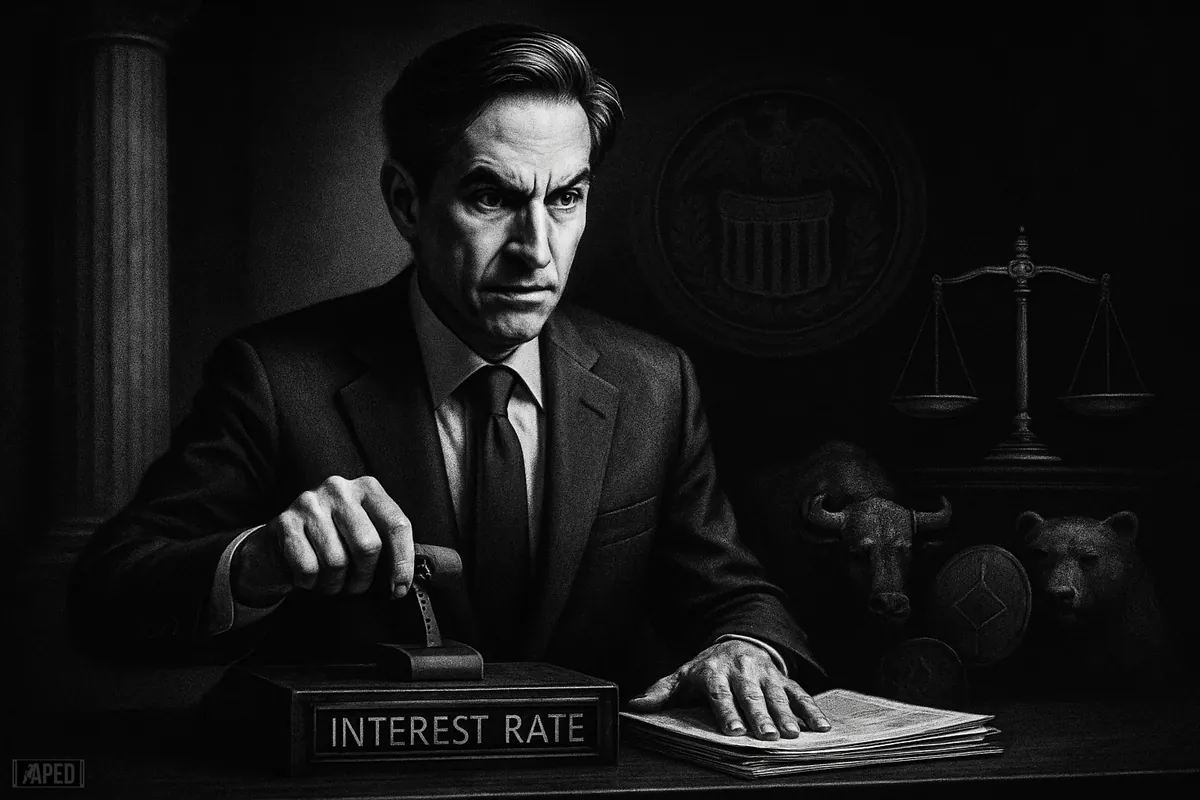
By early afternoon UTC, the Federal Reserve held rates steady at 3.50 percent to 3.75 percent in Jerome Powell's final meeting as chair. The initial market read was muted. Bitcoin$80,565.33 and Ethereum stayed relatively steady, consistent with a decision that had been widely expected. The statement signaled caution around both inflation and growth, which is central-bank language for "we are not in a hurry, and no, that is not the same as confidence." [2]
For crypto traders, the first phase of the reaction looked familiar. No surprise cut, no hawkish shock, no immediate directional conviction. Risk assets largely absorbed the headline without a dramatic repricing, and the day's earlier constructive stories helped keep sentiment from rolling over right away.
The late read was harsher, and dissent did the damage
That calm did not last into the evening. A second Fed-focused development highlighted that the hold came with unusually sharp internal disagreement: three dissents, a historically notable split that suggested weaker consensus around the policy path ahead. Instead of reading the meeting as stable, markets started reading it as fragile. [2]
Risk assets turned lower as traders recalibrated for fewer or later cuts. Bitcoin fell below $76,000 after the dissent story circulated, a meaningful shift from the post-statement steadiness seen earlier in the day. The move underlined a point crypto keeps making, whether it wants to or not: macro sensitivity remains high, especially when policy uncertainty rises rather than falls.
The dissents matter because they complicate the usual "Fed hold equals relief" trade. A unanimous pause can imply patience. A fractured pause can imply policy confusion, stickier inflation fears, or both. None of those are especially supportive for speculative assets in the short run. Bitcoin's move lower reflected that change in interpretation more than the rate decision itself.
Earlier context also mattered. The prior day's roundup described a sideways market with Bitcoin holding key support and one standout venture deal in an otherwise quiet tape. That setup carried into May 15: stable prices, selective optimism around infrastructure and payments, and very little broad risk appetite. In other words, the market was stable, not strong. There is a difference, and the evening selloff exposed it. [2]
Sentiment across today's stories tracked that arc closely. Visa's expansion scored strongly positive. Fence's raise added another constructive signal around institutional and enterprise-facing crypto infrastructure. The first Fed story was neutral because markets were steady and the policy outcome was expected. The late Fed dissent story flipped the day's tone darker, dragging overall mood back toward caution.
Today's most useful distinction is between sector strength and market strength. Stablecoins and tokenized finance infrastructure both saw credible progress. Those stories point to continued buildout in the parts of crypto tied to payments, settlement, and real-world assets. They also arrived with actual numbers: $7 billion annualized stablecoin settlement volume for Visa's pilot, and a $20 million raise aimed at a multi-trillion-dollar asset-finance market.
Price action told a different story. Crypto could digest steady rates, but it struggled once the Fed hold looked less like consensus and more like disagreement. Bitcoin slipping below $76,000 on the dissent news suggests traders remain highly sensitive to shifts in expected liquidity conditions. Adoption can keep improving while token prices wobble. The market has been making that point for months, because of course it has.
Looking ahead
Watch whether Bitcoin quickly reclaims the $76,000 area or turns it into resistance over the weekend. That will say more about risk appetite than any single headline. Also watch whether stablecoin and tokenization stories continue attracting capital and integrations even as macro pressure builds. If they do, the underlying industry picture stays healthier than the tape suggests. If not, then today's split personality, real utility up, prices down, may start looking less like a temporary mismatch and more like the whole story.
Your reviews help us improve the quality of both current and future articles. All reviews are public and visible to other readers. We use both ratings and comments to improve future articles and to revise any articles that do not meet our standards.
 See more like this on Google