Bitcoin$80,660.10 stayed quiet, Ethereum$2,370.18 took the heat, and traders spent the day rotating between forced selling headlines, whaledip buys, and a few low-cap momentum punts. The key tells were pretty clear: Bitcoin on-chain activity cooled hard, miners kept selling into post-halving margin pressure, and Ethereum held up better than the tape probably deserved thanks to whale accumulation and Korean spot demand. If there was a level that mattered most today, it was ETH around $1,930. That was the line buyers kept defending while broader conviction still looked thin.
Enjoy articles without ads?
Register for free and get unlimited access to all articles.
Market Structure
Bitcoin cooled off on-chain as fees hit a six-year low
Bitcoin$80,660.10 transaction fees dropped to their lowest level in six years, a sign that speculative demand on the base layer has thinned out materially. That matters less as a short-term price catalyst and more as a signal about market phase. Low fees usually mean less urgency, fewer retail bursts, and less crowding in block space. In plain English, the casino floor got quieter. [1]
That does not automatically turn bearish, but it does fit a late-reset or consolidation regime. When paired with muted headline flow and selective alt action, the message was that BTC is not leading with momentum right now. It is digesting.
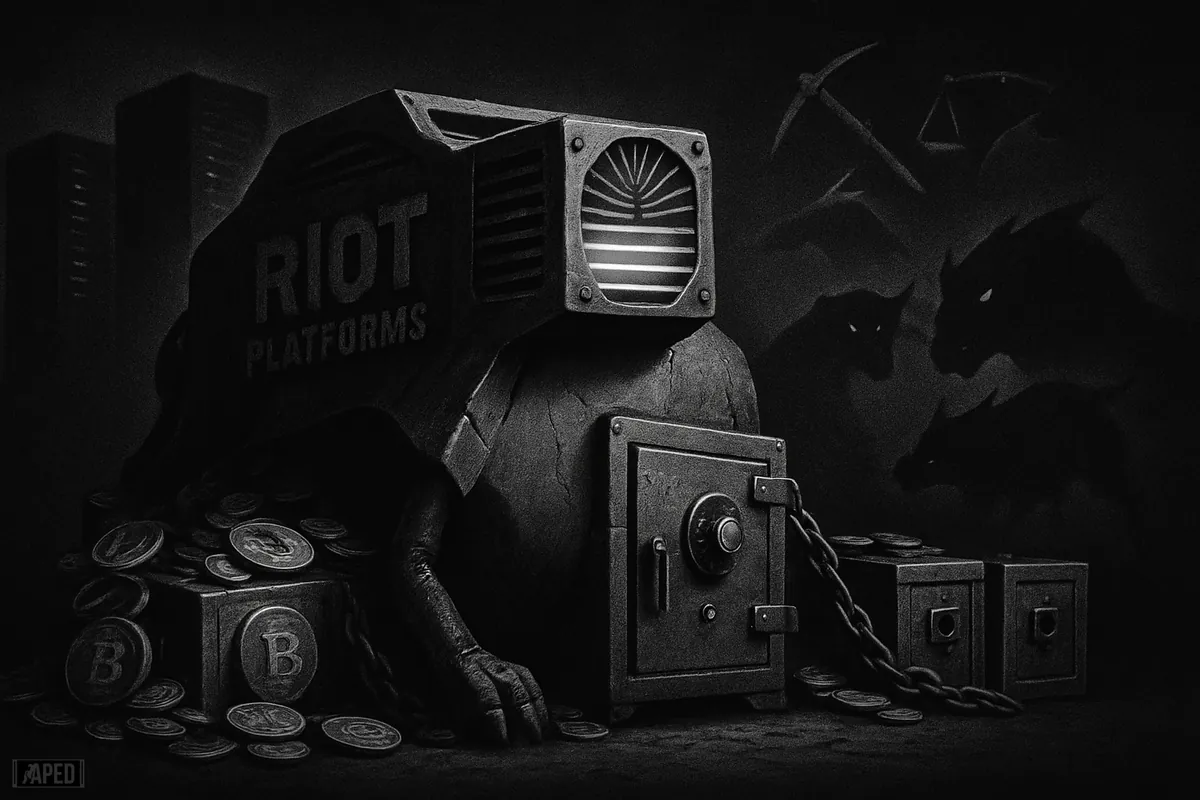
Riot sold 3,778 BTC in the first quarter for about $289.5 million, even though it only produced 1,473 BTC in the same period. That gap is the story. This was not routine treasury management, it looked like a liquidity-first response to tighter post-halving economics. [2]
Miner selling is not new, but the scale versus production is worth noting because it reinforces how squeezed the industry remains. If BTC chops instead of trends, miners with weaker balance sheets could keep acting as a source of supply. That does not break the market by itself, but it caps upside enthusiasm unless spot demand absorbs it cleanly.
Whales stepped in near $1,930 after the early drop
Ethereum$2,370.18 dropped more than 5 percent early, then found aggressive buyers near the $1,930 support zone. Major wallets and institutions added nearly $165 million in ETH around the dip, making this one of the day's clearest accumulation signals. [3]
That buying mattered because it came before later data points on activity and exchange balances. The sequence here is important. Price weakened first, deep-pocketed buyers stepped in, and only after that did the broader market start framing the move as a defended support rather than a breakdown.
Network activity rose, but price still failed to clear overhead resistance
Ethereum daily active addresses reached 788,000, while new wallet creation increased and exchange balances kept falling. On paper, that is constructive. More usage, more wallets, less exchange supply. Normally that is the kind of setup bulls like to flex. [4]
The catch is price. ETH remained pinned below the $2,180 resistance area, which tells you on-chain improvement has not yet translated into trend strength. This is the classic disconnect traders keep dealing with this cycle: decent structural metrics, mediocre price response. Until resistance breaks, it is still a range, not a send.
Binance-linked sell pressure hit derivatives, Korea helped catch the knife
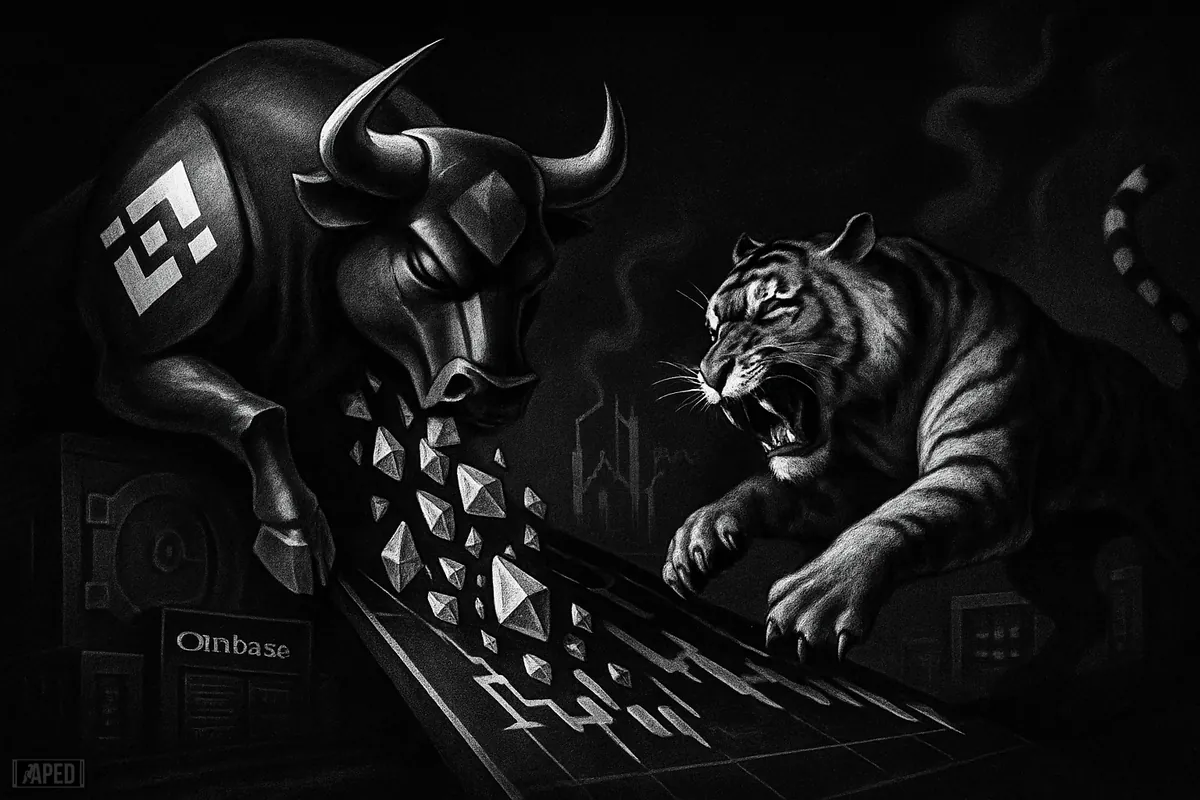
Later in the session, Ethereum faced another stress test as nearly $1 billion in Binance sell pressure hit derivatives markets. That pushed ETH lower again, but South Korean traders bought the dip, helping prevent a full washout. [5]
This split flow was the best summary of ETH sentiment today. Offshore leverage looked shaky, but spot buyers were not gone. That is healthier than pure short-covering, though not enough on its own to flip market structure. Bulls defended $1,930, but they still need to reclaim higher levels and prove those whale buys were accumulation, not just a temporary absorption event.
Todd Blanche's move to interim AG reinforced the softer DOJ turn on crypto
Todd Blanche, the author of the Justice Department memo seen as dialing back aggressive crypto prosecution, is now interim attorney general. For the market, this read as continuity. The main implication is not some instant policy moonshot, but a lower probability of the kind of ad hoc enforcement shocks that used to hit sentiment out of nowhere. [6]
That is quietly bullish for US market structure because it reduces one layer of legal uncertainty. Crypto firms still face rules, scrutiny, and political risk, but the message from Washington looks less like regulation by ambush and more like a slower institutional reset. Traders may not bid that aggressively in one day, but this is the kind of backdrop shift that matters over time.
South Korean exchange Bithumb delayed its IPO until after 2028, saying it wants stronger internal controls and clearer digital asset regulation before going public. That is a long delay, and it says plenty about how even major venues are still waiting for cleaner rulebooks before making big public-market moves. [7]
The takeaway is not panic, it is caution. Korea remains one of crypto's most active retail markets, but major exchange operators still do not see the regulatory environment as stable enough for a near-term listing. That keeps institutionalization moving, just not at the speed the last cycle promised.
High-beta movers
StakeStone showed how fast low-float momentum can turn into liquidation fuel
StakeStone$0.15736's STO ran from $0.11 to $1.87 in two days, then slid toward $0.76 as the squeeze broke and leverage unwound. That is the whole playbook in one chart: thin supply, aggressive chasing, whale activity, then the air pocket once late longs become exit liquidity.
The token's collapse was a reminder that vertical moves in low-float names are often structural, not fundamental. When supply is constrained and derivatives pile in, price discovery becomes a stress test. Once the unwind starts, support levels become suggestions. Traders who caught the move early got paid. Traders who bought the narrative at the top got rekt.
Plasma's XPL kept its momentum bid
Plasma$0.09993's XPL rose 14 percent in 24 hours as spot volume jumped 128 percent, putting $0.1263 in view. Unlike a pure wick-fest, this move had enough volume expansion to at least look more durable than the average microcap pop.
Still, this is a low-cap trade, so the rule stays the same: momentum is valid until liquidity disappears. If XPL loses volume, the setup weakens fast. If it holds participation and clears the next resistance cleanly, it stays on watch for follow-through.
OpenAI bought TBPN to control distribution, not just product messaging
OpenAI's acquisition of TBPN signaled a direct move into owned media and narrative control. For crypto readers, the relevance is broader than AI corporate strategy. Tech giants are increasingly treating communication channels as strategic infrastructure, especially when policy pressure, public trust, and platform narratives all affect product adoption.
That could matter for crypto-adjacent AI tokens and infrastructure plays, but only indirectly for now. The more immediate read is that narrative supply chains are getting professionalized. If you thought media cycles were chaotic before, expect them to get more managed.
Quantum risk returned to the Bitcoin conversation
A separate report revived concern about quantum computing and the theoretical vulnerability of older Bitcoin holdings, including coins linked to Satoshi-era wallets. This is not a near-term market-moving issue, but it remains a credible long-range protocol question. [8]
The market mostly treats quantum risk like a future governance problem rather than a current trading input, and that is reasonable. Still, the discussion matters because it forces the network to think about migration paths, signature exposure, and how much complacency exists around dormant coins. Not a catalyst for tomorrow's candle, but not something serious builders can ignore forever.
Today's tape was not about broad risk-on expansion. It was about absorption. Bitcoin looked sleepy, miners looked pressured, and Ethereum spent the day proving it still has committed buyers even when leverage gets messy. That is a better setup than outright capitulation, but it is not clean trend strength yet.
The watchlist is straightforward. For BTC, monitor whether low-fee, low-activity conditions turn into a healthy reset or a sign demand is fading too much. For ETH, $1,930 remains the obvious support that bulls cannot afford to lose, while $2,180 is still the ceiling that must break before anyone starts talking trend reversal with a straight face. In alts, selective momentum is alive, but low-float names are still one bad unwind away from pain. Keep the bags light and the risk tighter than the timeline.
Your reviews help us improve the quality of both current and future articles. All reviews are public and visible to other readers. We use both ratings and comments to improve future articles and to revise any articles that do not meet our standards.
 See more like this on Google