Bitcoin$80,585.34 and Ethereum$2,366.44 spent April 22 digesting yesterday's ETF-supported bid while the uglier plumbing story kept surfacing elsewhere. The cleanest tells were a whale taking nearly $48 million off ETH longs near $2,400, and Bittensor$248.25's TAO market getting even more disorderly as cross-exchange spreads blew out past 33 percent.
Enjoy articles without ads?
Register for free and get unlimited access to all articles.
Market Structure and Trading
Ethereum whale de-risks into strength
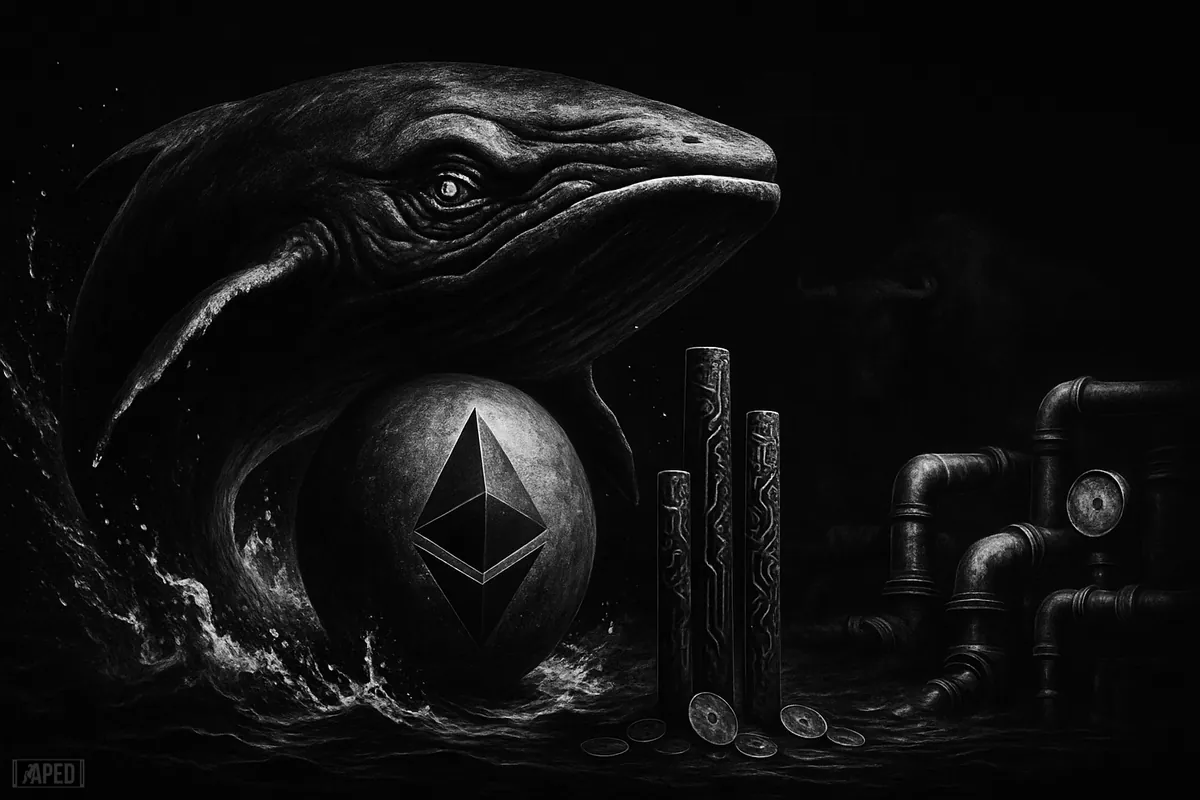
A cluster of Matrixport-linked wallets trimmed roughly 95,000 ETH in long exposure by 12:01 PM UTC, crystallizing about $48 million in profit as Ethereum$2,366.44 pushed toward $2,400 before cooling off. The timing matters: this was not forced selling into weakness, it was profit-taking into a rally, which usually reads as disciplined de-risking rather than panic. [1]
That also gave traders a clearer map for positioning. If size is happy to unload into the low-$2,400 area, that zone looks like real overhead until fresh spot demand proves otherwise. The move did not break market structure by itself, but it showed that at least one large player preferred cashing out over pressing open interest higher.
Bittensor TAO liquidity stress gets worse, not better
TAO's market structure was the day's clearest red flag. At 1:01 PM UTC, reported cross-exchange spreads had already widened to 33.3 percent. By 6:01 PM UTC, that dislocation had worsened to 33.8 percent, confirming that the issue was not a momentary bad print but a deeper liquidity crunch and fractured price discovery problem. [2]
For anyone trading alt liquidity, this is the receipt. A 30 percent-plus venue spread means quoted price can be almost meaningless unless you know where the book is real, where withdrawals are open, and how much size can actually clear. It also reinforces the fragility flagged in the April 21 roundup, where TAO stress and exchange plumbing issues were already on the radar. Today's update made that trend worse.
Prediction markets added a quieter but revealing market-structure story. A bot on Polymarket has kept profiting by repeatedly buying "No" on overhyped event contracts, leaning into fuzzy resolution criteria, low base-rate outcomes, and retail overexcitement.
The takeaway is less about one bot and more about how crypto-adjacent markets still misprice boring probabilities. When traders ape into headline risk and narrative momentum, someone systematically taking the other side can keep clipping value. It is the same old lesson from memecoins and perps, just wrapped in event contracts: hype often overpays for possibility.
Adoption and Product Expansion
SHIB gets a Japan payments lane through Rakuten Wallet
Shiba Inu$0.00000613 picked up a meaningful distribution win in Japan. Rakuten Wallet launched SHIB support on April 15, with JPY trading and a possible path into the broader Rakuten ecosystem, including Rakuten Pay's reported 44 million users and 5 million merchants. [3]
This is the kind of meme coin headline worth separating from pure CT noise. The immediate impact is not that millions of merchants suddenly accept SHIB today. The real signal is regulated consumer-finance distribution in a major market. If Rakuten expands the integration beyond wallet trading into actual payments rails, SHIB moves one step closer to utility that can be measured in transaction flow instead of social engagement.
Bitwise brings staked Avalanche exposure to NYSE Arca
Bitwise's BAVA launch on NYSE Arca pushed the ETF wrapper a little further out on the risk curve. The product holds spot Avalanche$9.279 and passes through staking rewards, making it more than simple price exposure and putting regulated packaging around a yield-bearing layer of the Avalanche trade. [4]
That matters for two reasons. First, it shows investor appetite for exchange-traded crypto products is broadening past Bitcoin and plain-vanilla spot structures. Second, staking income inside listed products is becoming a more serious part of the value proposition, especially for assets where network yield is part of the core thesis.
LGIM tokenizes $68 billion of liquidity funds via Calastone
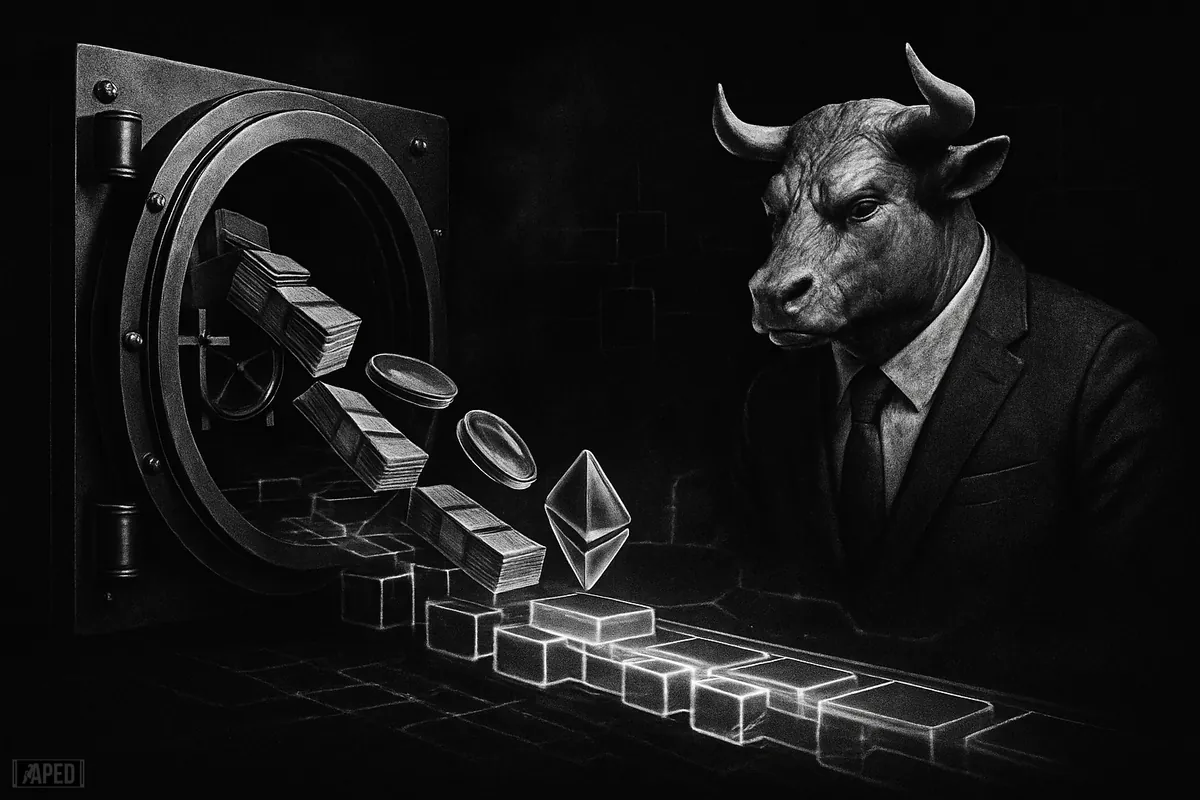
The biggest institutional adoption story of the day came at 4:32 PM UTC, when Legal & General Investment Management moved $68 billion of liquidity funds onto Calastone's tokenized network. That is not a pilot-sized sandbox headline. It is a conservative asset-management giant putting real fund infrastructure onchain-adjacent rails. [5]
The significance is less about token speculation and more about process. Liquidity funds are operationally boring by design, which is exactly why this is a strong signal. When low-volatility, institutional cash products migrate to tokenized rails, the sector gets a credibility boost that no memecoin breakout can provide. It also strengthens the case that blockchain adoption in 2026 is increasingly being driven by back-end efficiency, not just front-end trading.
Cross-Border Rails and Real-World Experiments
Ripple and Kyobo deepen the Asia rails thesis
Ripple's bond-settlement deal with Kyobo in Korea put fresh attention on SBI CEO Yoshitaka Kitao's broader strategy of connecting Japanese and Korean financial rails with digital-asset infrastructure. This was less a single isolated partnership than another piece in a regional network buildout.
For XRP$1.518 market watchers, the notable point is that utility narratives are still finding traction in institutional corridors where settlement speed and interoperability matter more than token culture. Whether that translates into token demand is always the harder question, but the business-development footprint is clearly still expanding.
Valerie AI runs a real vending machine in San Francisco
One of the odder but more tangible AI x crypto-adjacent stories came from San Francisco, where Valerie, an AI agent powered by OpenClaw, is operating a real vending machine. The test is simple on paper: can an autonomous agent handle physical-world retail tasks, not just chat interfaces and dashboards?
It is early, but these experiments matter because they give AI agents a measurable environment with inventory, payments, and customer interactions. That is much more falsifiable than abstract "agent economy" talk. If the model works, the next question is not philosophical, it is operational: uptime, fraud handling, restocking logic, and whether the unit economics beat a normal vending stack.
Risk, Politics, and Equity Spillover
Solana treasury firms take heavier pain than BTC and ETH peers
Public companies using Solana$76.56-heavy treasury strategies saw deeper drawdowns than comparable Bitcoin or Ethereum treasury names. The driver looks straightforward: SOL exposure is more volatile, and the investor base chasing these equities is more speculative, which amplifies downside once sentiment turns. [6]
This is a useful reminder that treasury-company wrappers do not remove token beta. They often multiply it through equity-market structure, thinner floats, and momentum-driven shareholders. For traders, that means these stocks can behave less like proxies and more like leveraged expressions of crypto risk.
Crypto PAC spending draws scrutiny over Tether-linked ad firm
Late in the day, a crypto PAC reportedly sent $3 million to an ad firm linked to Tether$0.999021. The political spend itself is material, but the stronger angle is governance optics. As crypto money gets more organized in elections, counterparty relationships and disclosure trails are going to matter almost as much as the spend totals. [7]
That is not a market-moving catalyst on the same timescale as ETF flows or liquidation cascades, but it does feed a broader narrative risk. The industry wants policy influence and mainstream legitimacy at the same time. Transactions that look too cozy, too opaque, or too insider-driven make that balancing act harder.
The Bigger Picture
April 22 split into two tracks. One track was constructive: SHIB gained regulated distribution in Japan, Bitwise expanded the ETF playbook with staked AVAX, and LGIM delivered the day's strongest institutional validation by moving $68 billion of funds onto tokenized rails. The other track was a stress test: an ETH whale sold into strength, TAO's market structure deteriorated further, and Solana-linked treasury equities showed how fast speculative wrappers can underperform when the bid fades.
The clean takeaway is that crypto keeps maturing at the edges while still breaking in the middle. Infrastructure, tokenization, and listed products are moving forward. Liquidity quality in parts of the alt market is not. If that divergence continues, the winners are likely the assets and platforms with real distribution, deep books, and transparent rails. The invalidation is simple: if institutional adoption headlines keep landing but trading conditions worsen under the surface, sentiment can flip fast. Watch ETH around the $2,400 supply zone, and treat any market with double-digit venue spreads as a rug-risk-adjacent environment until proven otherwise.
Your reviews help us improve the quality of both current and future articles. All reviews are public and visible to other readers. We use both ratings and comments to improve future articles and to revise any articles that do not meet our standards.
 See more like this on Google