See more like this on Google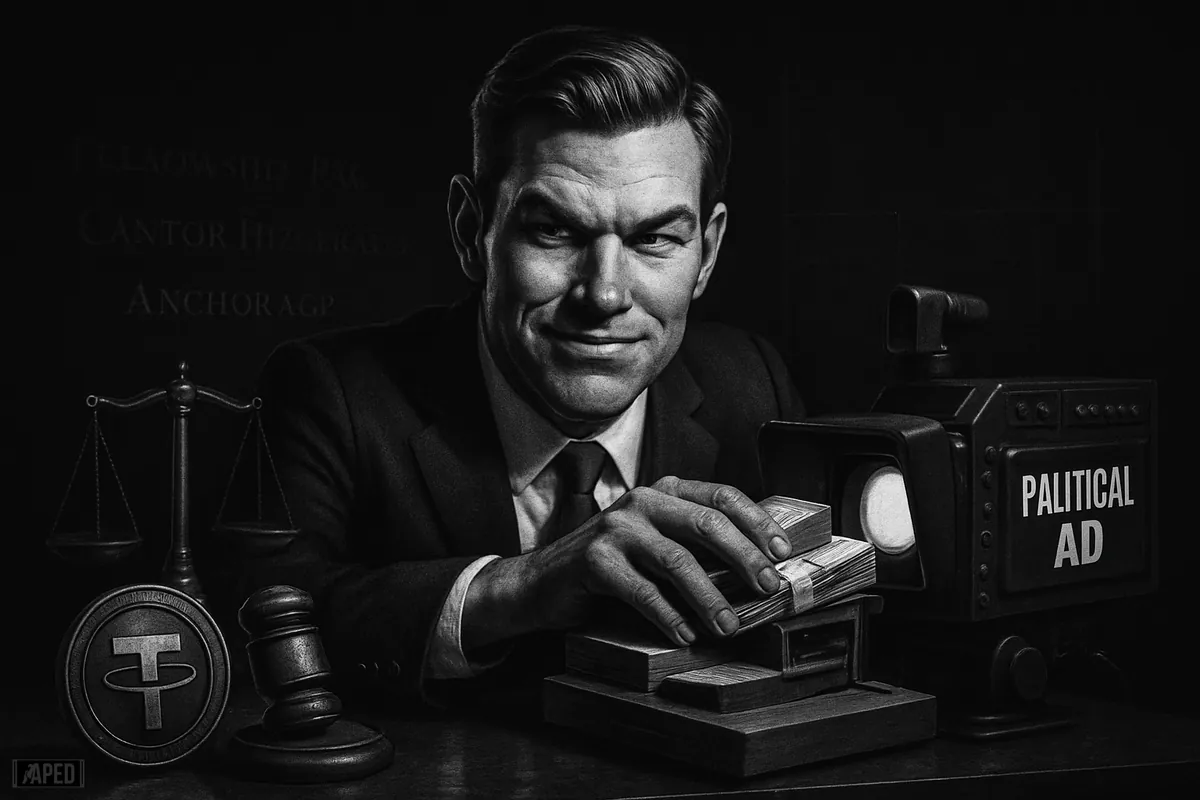
Share article
Share article
The disclosure, first reported last week, adds a fresh layer to crypto's growing Washington playbook: raise big, move fast, buy influence, and hope no one asks too many questions about who is connected to whom. People, regrettably, keep asking. [2]
Enjoy articles without ads?
Register for free and get unlimited access to all articles.
The money trail, in plain numbers
Fellowship PAC launched this month with $11 million in early backing. According to the reported filings and bookings, roughly 27 percent of that opening war chest has already been committed to advertising services through the Tether-linked firm. [3]
Those are not the same issue, but they live in the same neighborhood.
Why the Tether connection matters
Bo Hines is central to the story because of his role as Tether's US CEO and his connection to the ad company used by the PAC. Even without a direct Tether contribution identified in the early funding, the association is politically sensitive.
A PAC built for speed
The pace of the spend is notable on its own. New PACs often spend early on consulting, digital strategy, donor development, and voter targeting. Booking $3 million in ad services almost immediately suggests Fellowship PAC is not testing the waters. It is operating like a vehicle built for a near-term campaign push.
Not just a branding exercise
This is also bigger than one firm invoice. Crypto PACs have evolved from novelty projects into serious financing tools. The sector has spent heavily in recent election cycles, and the tactics are getting more conventional, not less. Large donor pools, specialized media firms, targeted political messaging, and policy-aligned candidates are now standard operating procedure.
Cantor and Anchorage in the frame
What the disclosures do, and do not, show
The current reporting does not indicate that Tether provided the opening funding for the PAC. It also does not, based on the available facts, establish that the ad spending was improper. A firm can be linked to a high-profile executive and still provide legitimate campaign services. [5]
But political finance scrutiny rarely turns on legality alone. It turns on alignment, incentives, and whether the structure appears designed to concentrate influence within a tight network of corporate and political insiders. On that test, Fellowship PAC has handed critics plenty to work with.
The key open questions are straightforward:
Questions still hanging over the PAC
What services justify the $3 million spend?
Who ultimately benefits from the messaging?
If the ads are designed to back candidates, pressure lawmakers, or shape public opinion around stablecoin or market-structure bills, the policy beneficiaries could become clearer quickly.
How deep are the personnel ties?
A co-founded firm is one layer of connection. Operational control, ownership stake, and ongoing involvement are separate questions. Those details often determine whether a politically awkward relationship remains awkward or becomes something more serious.
Why this lands at a sensitive moment
Crypto is pushing hard for durable US legislation, especially around stablecoins and market structure. That campaign has moved from broad industry slogans to detailed legislative trench warfare. At this stage, who pays, who places media, and who has access all matter more than polished speeches about innovation.
And because this is crypto, the sector will likely argue that such spending simply reflects political maturity. Sure. So does learning that optics are part of the cost.
The bigger picture
Fellowship PAC's first big disclosure offers a compact lesson in how crypto power works in 2026. The capital comes from major institutional names. The spending moves quickly. The vendor relationships sit close to the industry's most influential executives. The public explanation is likely to stress normal process. The private objective is influence, because of course it is.
What to watch next is not whether crypto keeps spending in politics. That answer is already yes. The live question is whether Fellowship PAC becomes a durable policy weapon, and whether additional filings show an even tighter web between donors, operators, and firms tied to major crypto companies.
If more of the same appears in future disclosures, this will look less like a one-off awkward booking and more like the industry's preferred model for buying political reach.