Bitcoin's institutional case got a real-world credit-market test just after midnight, while the broader tape stayed shaky enough for the Fear and Greed Index to sink to 8 by 07:01 UTC. That split defined April 1: constructive long-term signals for BTC and ETH, but weak near-term risk appetite, alt overhangs, and policy noise kept traders defensive.
Enjoy articles without ads?
Register for free and get unlimited access to all articles.
Macro mood and market tone
The day opened under the shadow of yesterday's weak setup. The March 31 market recap, published at 00:01 UTC, had already framed the backdrop: Bitcoin$80,326.14, Ethereum$2,327.25, XRP$1.518, Dogecoin$0.09301 and Cardano$0.1782 were trading against soft macro sentiment, ETF outflows, and headline-driven volatility. That matters because most of today's moves looked like continuation, not clean reversal.
At 01:01 UTC, markets got a modest geopolitical relief headline when Trump said the US could end its Iran campaign in two to three weeks. That signaled a potentially faster de-escalation path and likely helped cap some overnight risk-off pressure. Still, crypto never fully flipped into risk-on mode, which suggests traders were treating the comment as provisional rather than enough to reprice the entire macro board. [1]
By 07:01 UTC, the mood had worsened again. The Crypto Fear and Greed Index fell from 11 to 8 in 24 hours, deep in extreme fear territory. When sentiment gets that washed out, short squeezes become more likely, but so do forced exits, thin liquidity, and exaggerated reactions to any token-specific supply event. [2]
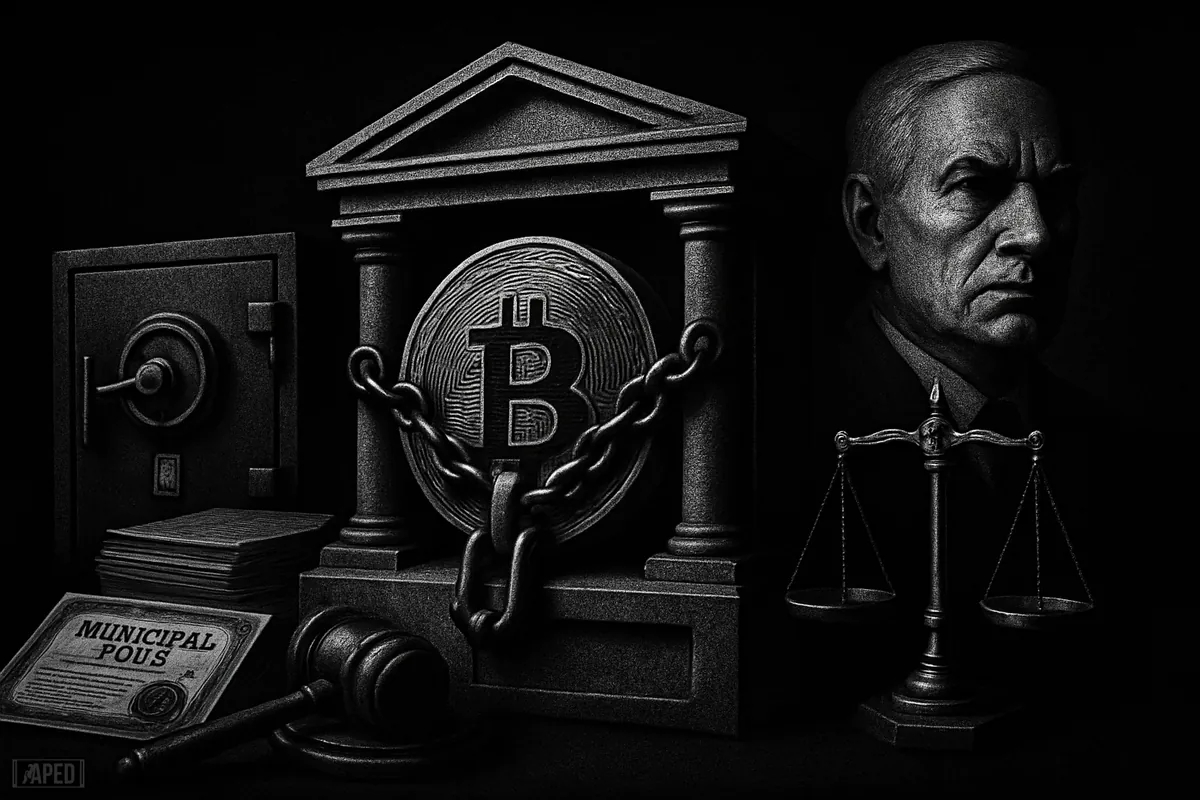
The cleanest bullish headline of the day landed at 00:03 UTC, when Moody's assigned a provisional Ba2 rating to the first bitcoin-backed public bond. That is not investment grade, but it is a serious milestone for BTC's role as collateral in traditional debt markets. The key point is not just the rating itself, it is that a major credit agency is now putting structured assumptions around bitcoin-backed risk instead of dismissing the asset class outright. [3]
For market structure, this matters more over months than hours. A rated bond does not suddenly create spot demand the way an ETF flow does, but it expands the universe of allocators who can analyze bitcoin exposure through familiar fixed-income frameworks. If this product performs, it could open the door to more BTC-linked credit instruments and tighter integration with mainstream capital markets.
Another bitcoin-adjacent theme emerged later in the session with renewed debate over quantum risk. At 04:33 UTC, CZ argued that crypto can migrate to post-quantum cryptography, but warned that older coins, including Satoshi-linked BTC, could be vulnerable if networks move too slowly. At 06:31 UTC, that concern got more weight from Caltech-led research suggesting useful quantum machines may require only 10,000 to 20,000 qubits, putting a plausible crypto-security threat on the table by 2030. [4]
The immediate trade impact was limited, but the discussion is becoming less theoretical. For Bitcoin$80,326.14, the takeaway is that protocol resilience is increasingly part of the long-term investment case. Markets are not pricing a near-term existential threat, but they are starting to acknowledge that legacy walletsecurity and chain upgrade coordination could become material issues this decade.
Ethereum$2,327.25 got one of the day's stronger fundamental signals at 01:32 UTC, when the Ethereum Foundation staked another $46 million in ETH, bringing its staked holdings to roughly $50 million. The market read is straightforward: more ETH locked, less liquid supply, stronger alignment with the network's yield-bearing security model. In a market starved for conviction, treasury-level staking activity carries more weight than routine ecosystem commentary. [5]
That said, the short-term chart picture remained mixed. Just two minutes later, a technical setup for Shiba Inu$0.00000613 highlighted the tension in the broader ETH complex. SHIB was approaching a key resistance level with a possible 16% squeeze in play, but Ethereum's bearish crossover threatened to limit follow-through. That is a useful snapshot of the day's alt environment: traders were still hunting reflexive upside, but majors were not offering the kind of clean trend support needed for sustained meme beta.
Ethereum's own supply story looks constructive, but sentiment was too fragile to let that theme dominate price action. In a stronger tape, a fresh staking headline might have triggered a cleaner rotation into ETH and high-beta tokens. On April 1, it mostly reinforced the medium-term bull case while leaving short-term traders cautious.
Altcoins, unlock pressure, and political friction
LayerZero$1.574 delivered the day's clearest example of how fast supply overhang can hit a token in a fearful market. At 03:34 UTC, ZRO dropped 8.4% after Alameda transferred 7.93 million tokens, worth about $15.3 million, to Wintermute. Even before confirmed distribution, that kind of transfer is enough to widen the ask, scare momentum buyers, and push support into focus. The key level being tested was $1.80, and in this sentiment regime, support breaks tend to accelerate because bids sit thinner than usual. [6]
XRP was steadier, but not exactly strong. At 05:34 UTC, it was holding around $1.34 even as 7.03 billion tokens had left exchanges and Binance scarcity hit a 2024 high. Normally, that kind of exchange outflow would support a stronger bullish narrative. The catch was persistent seller pressure, which kept capping upside despite tighter visible supply. That suggests either off-exchange inventory is still available into rallies or traders are using strength to de-risk rather than add.
Policy drama added another layer to XRP's backdrop. At 04:11 UTC, Cardano founder Charles Hoskinson accused Ripple of lobbying to reshape the CLARITY Act around XRP's interests. The public clash deepened an already messy US crypto policy debate, and while it did not trigger an immediate breakdown in XRP, it is the kind of headline that can harden tribal lines and complicate sector-wide lobbying efforts at a time when regulatory clarity still matters for valuations.
Taken together, the XRP and Cardano stories show the limit of token-specific bullish inputs in this market. Supply tightening can help. Political visibility can help. But if the market suspects distribution overhead or legislative infighting, upside tends to stall before it turns into trend.
Public miners and equity-linked crypto trades
Bitfarms offered a different kind of risk appetite signal at 02:33 UTC. Its shares rose 6.6% even after reporting a $284.5 million net loss for 2025, as investors focused instead on the company's pivot from pure bitcoin mining toward HPC and AI infrastructure. The equity market's reaction suggests investors are willing to forgive ugly backward-looking numbers if management can sell a credible compute-transition story. [7]
That is relevant beyond one stock. Public miners are increasingly trading as hybrid vehicles, part crypto beta, part power-and-compute infrastructure optionality. On a day when spot token sentiment was weak, Bitfarms' move showed that equity investors are still willing to price future narrative shifts aggressively, especially where AI demand could re-rate legacy mining assets.
Key takeaways
April 1 was not a clean bull day, even with solid headlines for Bitcoin and Ethereum. Moody's Ba2 rating for a bitcoin-backed bond and the Ethereum Foundation's additional staking both strengthened the institutional and supply-side case for the two largest assets. But those positives landed in a market still dominated by extreme fear, thin liquidity, and token-specific overhangs.
The tape also kept reminding traders where the fragility sits. LayerZero sold off on Alameda transfer fears, XRP held support but could not convert exchange scarcity into breakout momentum, and quantum-security concerns continued to move from fringe topic to serious long-range risk discussion.
For the next session, the important tells are straightforward: whether BTC can turn institutional validation into sustained bids, whether ETH can build on the staking narrative without losing technical structure, and whether fear metrics stabilize from washed-out levels. If sentiment remains pinned near extremes, expect rallies to be sold quickly and supply events to hit harder than fundamentals would suggest. If that fear starts to unwind, the strongest setups are likely to be in majors first, not the more crowded alt bags.
Your reviews help us improve the quality of both current and future articles. All reviews are public and visible to other readers. We use both ratings and comments to improve future articles and to revise any articles that do not meet our standards.
 See more like this on Google