 See more like this on Google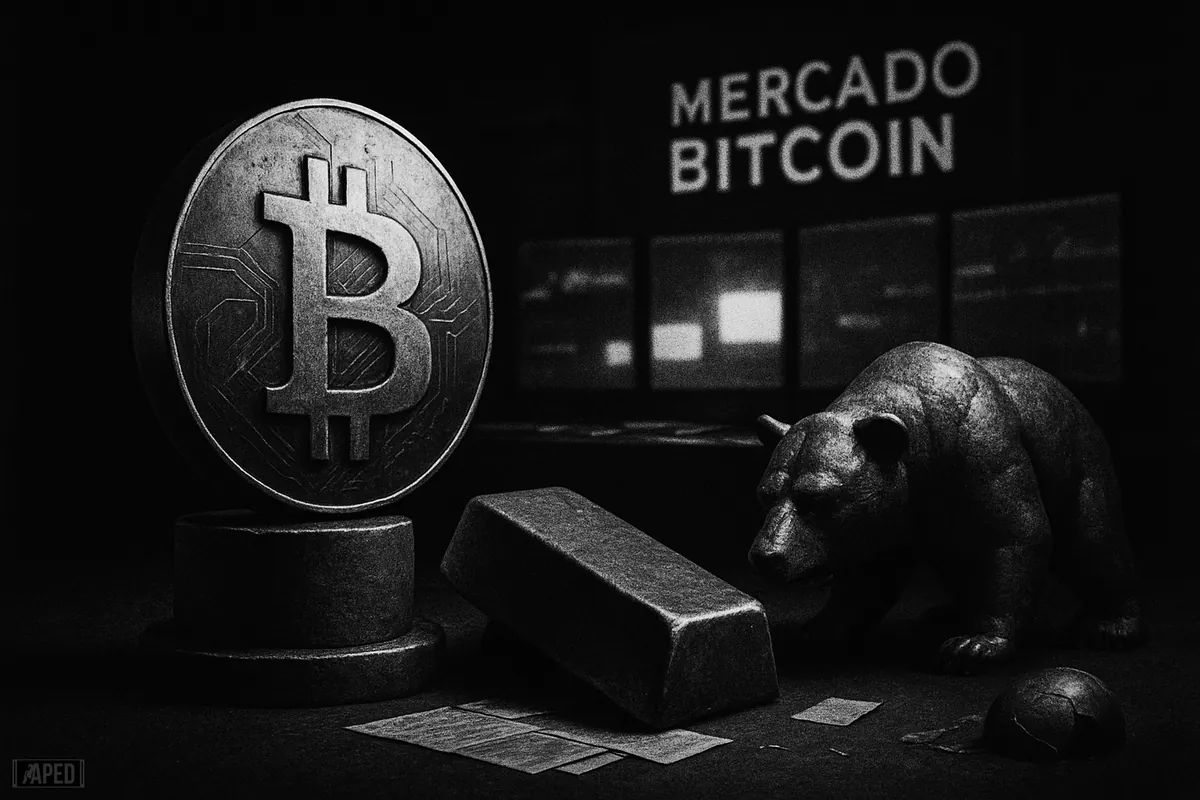
Share article
Share article
Enjoy articles without ads?
Register for free and get unlimited access to all articles.
What Mercado Bitcoin actually found
Mercado Bitcoin's analysis focused on two month windows following episodes of global stress. Rather than measuring the immediate panic phase, when nearly everything can sell off at once, the study looked at what happened after the first shock hit and markets began repricing risk.
Why the 60-day window matters
This is the important nuance, and it is where the headline gets less meme-y and more useful.
Bitcoin is not being presented here as the thing investors sprint into during the first hour of a crisis. Historically, that role still belongs more naturally to dollars, short-dated government debt, and in some cases gold. During acute stress, bitcoin often trades like a risk asset because investors sell what they can, not just what they want to.
Mercado Bitcoin's point is different. Once the forced deleveraging and headline panic settle down, bitcoin has tended to rebound harder than older safe-haven assets and major stock indexes. In other words, it has not consistently won the fear trade, but it has often won the recovery trade. [3]
Bitcoin versus gold, different jobs, same conversation
Gold and bitcoin keep getting thrown into the same group chat, even though they do different things.
Gold is slow, liquid, globally recognized, and boring in a way many allocators find comforting. Bitcoin is scarce by design, highly liquid, politically neutral in theory, and still volatile enough to ruin a good night's sleep. Comparing them is useful, but mostly because it shows how investor behavior is changing.
Why this narrative is gaining traction now
That wider ownership base gives studies like Mercado Bitcoin's more relevance than they might have had a few cycles ago. A decade ago, bitcoin outperforming after a crisis could be dismissed as a niche market anomaly. Today, with broader access and more cross-market participation, the post-shock pattern is harder to wave away.
There is also a cultural angle. Crypto's core crowd has spent years framing bitcoin as antifragile, meaning it gets stronger through stress rather than despite it. The Mercado Bitcoin study does not fully prove that thesis, but it does hand the community a cleaner data point than the usual vibes-only posting.
The catch: volatility still changes the equation
None of this turns bitcoin into a textbook haven.
A higher return over 60 days says nothing about the path taken to get there. Investors can still face violent swings, liquidity squeezes, and sentiment whiplash along the way. A pension fund, treasury desk, or conservative allocator may still prefer a slower, steadier asset even if the eventual return is lower.
There is also a sample-size issue that always comes with event studies. Which shocks were selected, how the windows were defined, and what baseline dates were used can all shape the result. Mercado Bitcoin's conclusion is directionally interesting, but it is still one framework, not a universal law of markets.
What traders and allocators may take from it
For crypto-native investors, the report reinforces a familiar playbook: major fear events often create opportunity once panic selling cools. That does not mean catching the exact bottom, because nobody does that consistently outside of screenshots. It means watching whether bitcoin regains relative strength faster than equities and whether flows rotate back into the asset before broader risk markets recover.
For traditional investors, the more relevant takeaway is that bitcoin may deserve analysis as a post-crisis recovery asset, not just as a speculative side bet. If it continues to beat gold and stocks in these windows, portfolio managers may start treating it less like a fringe holding and more like a tactical macro instrument.
That shift would be meaningful because it changes the debate. The old question was whether bitcoin could survive stress. The newer one is whether stress is one of the conditions that ultimately strengthens its market position.
The Bottom Line
Mercado Bitcoin's study does not say bitcoin is safer than gold or steadier than stocks. It says that after the initial shock phase, bitcoin has tended to recover more aggressively than either.
