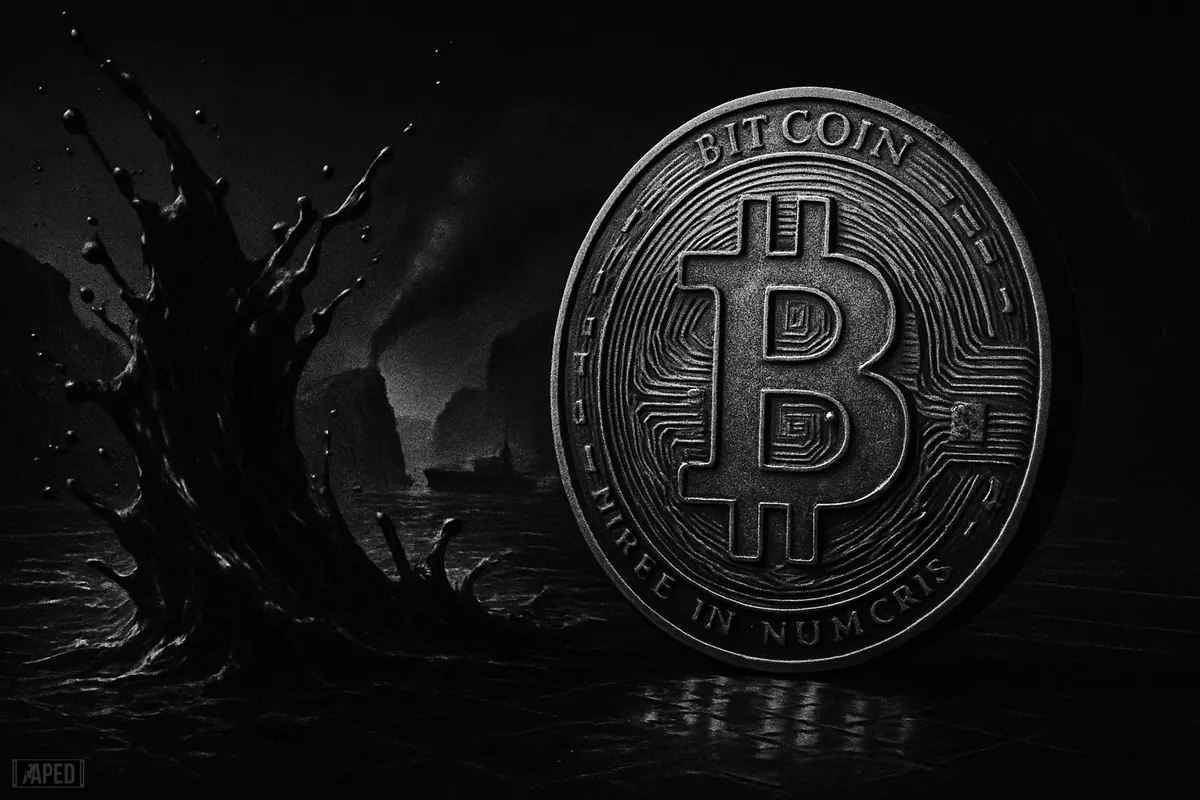
Bitcoin$80,593.08 is doing that classic CT thing again: acting weirdly calm while the macro timeline looks like it was written by an overcaffeinated doom-poster. The key setup this week is simple. Oil jumped roughly 8% after US-Iran negotiations broke down, the Strait of Hormuz was reportedly blockaded, and traders were forced to reprice geopolitical risk fast. [1]
Bitcoin still managed to hold a weekly close above $70,000, a useful psychological line even if it has not exactly turned into clean support. Early-week price action suggests BTC is absorbing the shock better than some risk assets, but the mood is hardly relaxed. A spike in energy prices tends to feed straight into inflation expectations, which matters because crypto is still trading inside a macro liquidity story whether people on X want to admit it or not. [2]
Register for free and get unlimited access to all articles.
Oil, Iran, and the macro headache
The immediate catalyst is the renewed escalation around Iran. Crude pushing above $100 per barrel changes the tone across global markets because it raises the odds of stickier inflation, weaker consumer demand, and a more cautious central bank path. [3]
For Bitcoin$80,593.08, that creates a split narrative. One camp sees BTC as a hedge against geopolitical stress and fiat debasement. The other sees it as a high-beta asset that can wobble when liquidity conditions tighten. Both takes have some truth, which is why the asset has been choppy rather than decisively trending.
Why crypto traders care about oil
This is not just an energy market story. Higher oil can ripple into transportation, manufacturing, and household costs, which then feeds inflation data. If inflation re-accelerates, rate-cut hopes get pushed further out. That is usually not great for speculative positioning across crypto.
The market now heads into fresh US Producer Price Index data with that backdrop in mind. If PPI runs hot, traders may read the oil move as the start of a broader inflation problem, not a one-off geopolitical premium.
Closing the week above $70,000 matters. It shows buyers are still willing to defend headline levels even as macro risk ramps. But BTC has repeatedly struggled to stay comfortably above that zone, and analysts continue to flag the possibility of another leg lower before a cleaner breakout attempt. [4]
That hesitation appears tied to profit taking. Onchain and exchange-flow commentary suggests some holders are selling into strength instead of chasing upside. In plain English: every pop is meeting supply.
Sell pressure is easing, just not gone
There is a more constructive detail under the surface. Broader sell-side pressure appears to be cooling compared with earlier phases of the correction. At the same time, long-term holders have reportedly been increasing BTC exposure on Binance, a signal that stronger hands may be accumulating while short-term traders stay jumpy.
That does not guarantee immediate upside, but it does shift the texture of the market. When long-term participants add while forced selling fades, downside can become less aggressive even if price remains range-bound.
The vibe across crypto right now is not full risk-off capitulation. It is more defensive positioning, with traders watching macro headlines, inflation prints, and key support levels at the same time. That usually leads to fast rotations and fake-outs rather than clean trends. [5]
For Bitcoin, the near-term question is whether $70,000 can become a base instead of a ceiling with good PR. If oil keeps climbing and inflation data worsens, macro funds may stay cautious. If geopolitical tensions cool quickly, the market could treat this week's stress as a temporary shock and rotate back into higher-beta trades.
The Bottom Line
Bitcoin starts the week in a decent technical spot and a messy macro one. Holding $70,000 after an 8% oil spike is not nothing. But the real test is whether BTC can keep that level while energy-driven inflation fears and geopolitical uncertainty remain elevated. For traders, this is a headline-sensitive tape. For investors, the useful signal is not the noise, it is whether long-term demand keeps showing up when the market gets uncomfortable.
Your reviews help us improve the quality of both current and future articles. All reviews are public and visible to other readers. We use both ratings and comments to improve future articles and to revise any articles that do not meet our standards.
 See more like this on Google