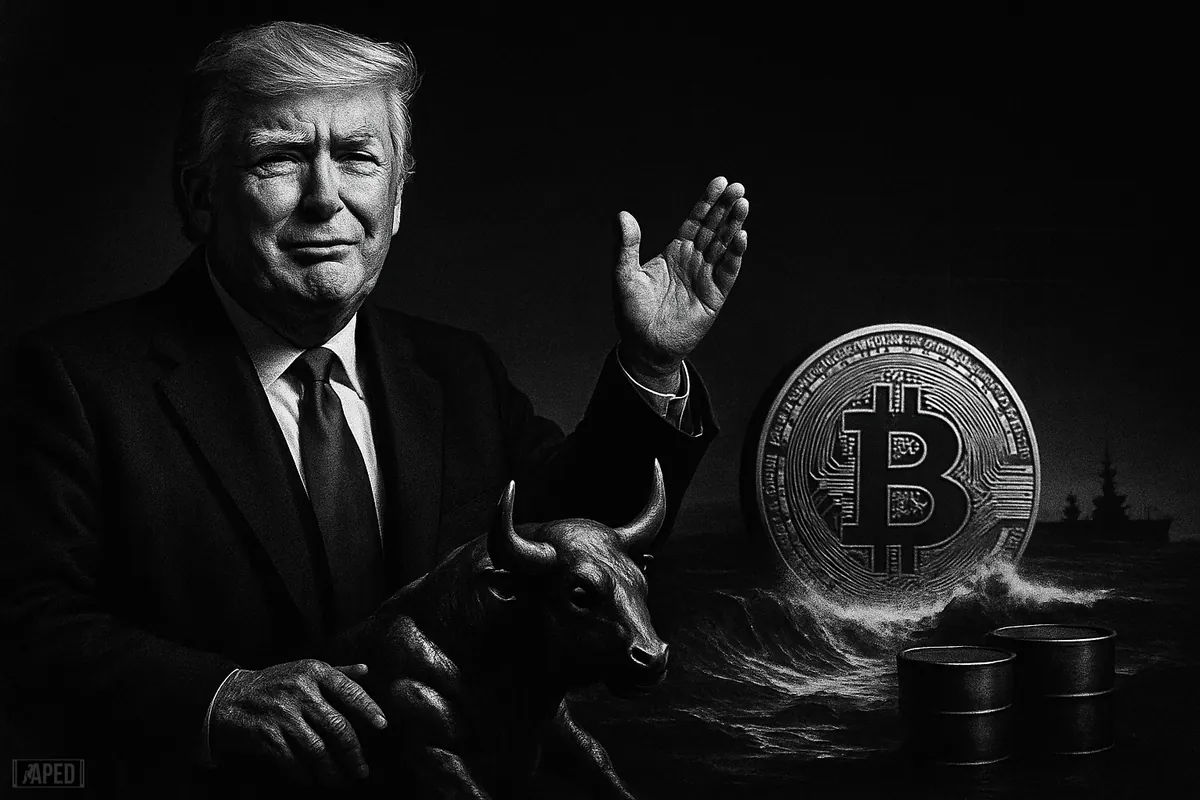
Bitcoin$83,899.99 did the thing again: a macro panic knocked it lower, a headline reversed, and the market promptly decided risk was back on. After dropping below $71,000 during the brief Strait of Hormuz blockade scare, BTC snapped back above $74,000 once President Donald Trump announced the naval action had ended. [1]
At the time reflected in market data tied to the move, Bitcoin$83,899.99 was trading around $73,700 to $74,000, up roughly 1.3 percent on the day. The rebound erased the bulk of the drawdown triggered by fears that the Hormuz chokepoint, a critical artery for global oil flows, could remain disrupted. For a market that still likes to market itself as uncorrelated, Bitcoin was once again trading like a very online geopolitical risk asset. [2]
Register for free and get unlimited access to all articles.
The move was fast, and headline-driven
The price action appears to have followed a clean sequence. Bitcoin fell under $71,000 as traders reacted to news of the blockade, then reversed sharply after Trump said the operation was over. Reports cited BTC reclaiming $74,000 shortly after that announcement, implying a swing of more than $3,000 from intraday lows. [3]
That kind of move is not unusual for crypto during macro shocks, but the speed matters. It suggests positioning had become defensive quickly, with traders cutting exposure on escalation risk, then rushing back in when the immediate threat faded. This was not some grand thesis repricing. It was a classic relief rally, just with more leverage and fewer brakes.
Why Hormuz mattered to crypto traders
The Strait of Hormuz is not a crypto market variable in any direct sense. It matters because it is a major global energy transit route, and any threat there can ripple through oil, inflation expectations, bond yields, and broader risk sentiment. Bitcoin$83,899.99 may be many things to many people, but during sharp macro stress it often behaves like a high-beta barometer for investor nerves.
If oil traders see supply risk, equities wobble, and liquidity-sensitive assets tend to feel it fast. Crypto usually gets there first, because it trades nonstop and because it is packed with momentum-driven positioning. Sure, decentralization does not make traders immune to fear.
The same pricing snapshot showed Ethereum$2,543.43 near $2,027, up about 2 percent, while Solana$76.56 traded around $82.42, up roughly 1.8 percent. BNB$547.09 added about 0.8 percent and XRP$1.518 edged higher as well. The pattern points to a broad relief move across large-cap crypto rather than a Bitcoin-specific catalyst. [4]
That matters because it helps distinguish this rally from one driven by spot ETF flows, protocol news, or on-chain demand changes. Nothing in the reported move suggests a fundamental shift in Bitcoin network activity or long-term holder behavior. The market got a geopolitical headline, sold first, then bought the reversal. Elegant? Not especially. Effective? Clearly.
Reclaiming $74,000 so quickly indicates traders were willing to fade the fear once the blockade ended. It also shows the market still has underlying bid support near the low $70,000 range, at least during short-lived shocks. A full unwind back to pre-panic levels tends to mean participants viewed the event as temporary, not as the start of a broader crisis.
Still, a relief bounce is not the same thing as renewed trend strength. Fast recoveries after news-driven dips can burn out just as quickly if follow-through volume is weak or if another macro headline lands. Crypto remains exceptionally good at confusing a short squeeze with conviction.
Why it matters
This episode is a reminder that Bitcoin's "digital gold" label remains situational. During acute geopolitical stress, BTC can trade less like a hedge and more like a liquid proxy for global risk appetite. When the panic lifted, the rebound was equally reflexive. [5]
For traders, the key takeaway is simple: macro event risk is now inseparable from crypto price action, especially at large-cap scale. For everyone else, the lesson is even simpler. Bitcoin may ignore the old rules right up until the moment it absolutely does not.
What to watch next
The next signal is whether Bitcoin can hold the $74,000 area without another external catalyst. If it does, the market may treat the Hormuz scare as a brief liquidation event and move on. If it slips back toward the low $70,000s, that would suggest the rally was mostly headline relief and short covering.
Either way, this was a useful reality check. Crypto still trades 24/7, reacts instantly, and overdoes everything. Some traditions survive every cycle.
Your reviews help us improve the quality of both current and future articles. All reviews are public and visible to other readers. We use both ratings and comments to improve future articles and to revise any articles that do not meet our standards.
 See more like this on Google