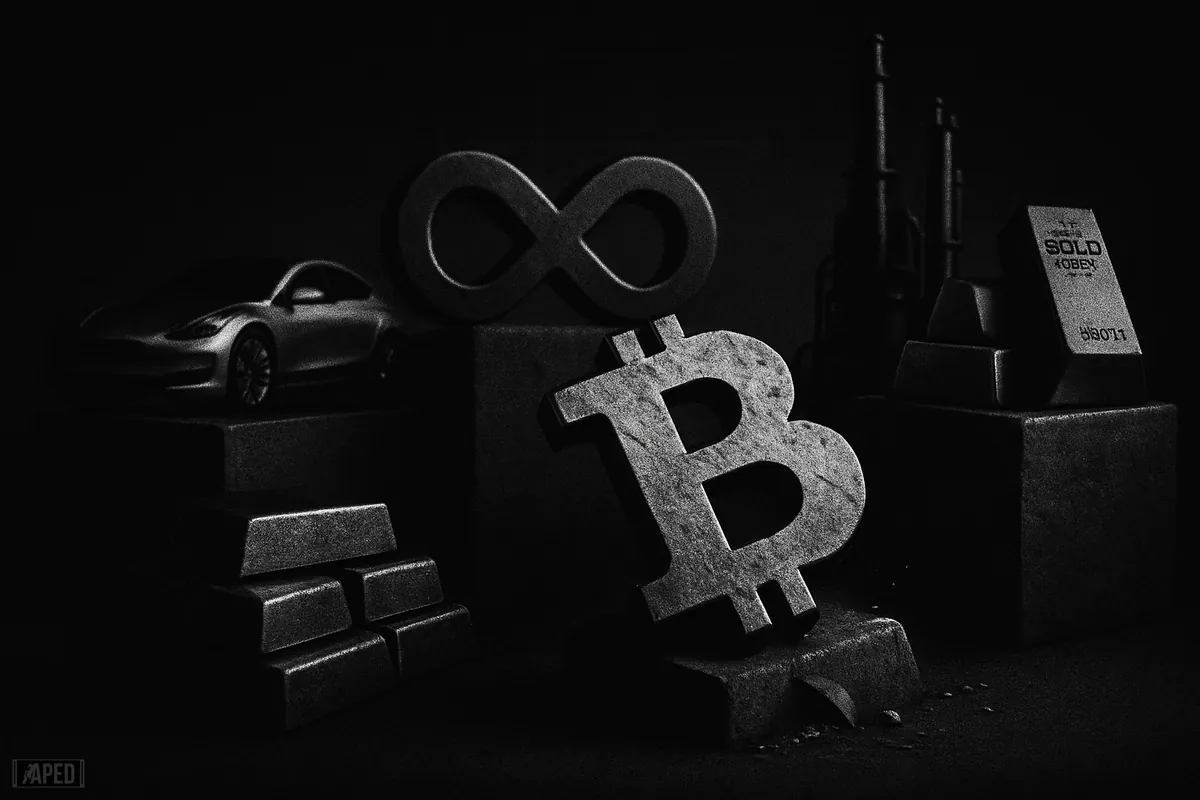
Bitcoin$80,323.74 has spent years being marketed as a rival to the world's biggest assets. This week, the scoreboard got less flattering.
After sliding from roughly $83,000 in early May to about $72,400 on May 29, Bitcoin$80,323.74's market capitalization fell to around $1.45 trillion, down from about $1.66 trillion. That drop pushed BTC out of the global top 10 assets by market cap and down to 13th place, according to market cap rankings cited in the source reporting. [1]
Register for free and get unlimited access to all articles.
The numbers behind the drop
The move below the $1.5 trillion threshold matters because it changes Bitcoin's standing not just inside crypto, but across the broader asset universe. At $1.45 trillion, Bitcoin now sits behind large-cap names including Saudi Aramco, Tesla and Meta Platforms. [2]
That ranking shift says less about some dramatic collapse in Bitcoin and more about relative performance. Other assets kept climbing while BTC did not. Markets can be rude like that.
What outperformed Bitcoin
Capital appears to have rotated into both traditional safe havens and high-growth equities. Precious metals were a major beneficiary. Gold had surged to a record $5,600 per ounce earlier this year before easing to around $4,486, while silver also posted a strong run after touching as high as $120 per ounce.
At the same time, AI-linked equities continued to attract flows, helping keep mega-cap tech names elevated. Bitcoin, by contrast, lost ground amid a mix of geopolitical stress and macro uncertainty, two forces that do not always produce the clean "digital gold" narrative crypto bulls like to advertise. [3]
The decline came alongside renewed geopolitical tensions and fresh concerns around inflation and broader economic stability. Source reporting linked the move to both Middle East escalation and hotter macro data, which helped drive investors toward more established defensive assets. [4]
That matters because Bitcoin$80,323.74 often trades less like a pure hedge and more like a high-beta risk asset, meaning it tends to move more sharply than broader markets. When liquidity tightens or risk appetite fades, BTC usually notices.
A market cap story, not just a price story
A fall from $83,000 to the low $72,000s may look like a standard crypto drawdown. But with Bitcoin's supply profile and size, that price change erased more than $200 billion in market value. That is enough to reshuffle its place in the global asset rankings very quickly. [5]
For institutional allocators, that ranking can influence perception even if it does not directly alter Bitcoin's fundamentals. Falling out of the top 10 weakens the "too big to ignore" pitch, at least temporarily.
Why this matters for crypto markets
Bitcoin remains the largest cryptocurrency by a wide margin, so this is not a leadership crisis inside digital assets. It is, however, a reminder that BTC still competes for capital against everything else, not just Ether, Solana or the latest token with a heroic ticker.
The source material also pointed to a possible realized price death cross, a technical signal some analysts associate with further downside risk. Technical indicators are not destiny, of course, but they can shape trader behavior when sentiment is already fragile. [6]
The immediate question is whether Bitcoin can reclaim the $1.5 trillion market cap line and move back up the global rankings. Price wise, that means watching whether BTC can stabilize above recent lows and reverse the trend that started in early May.
Just as important, investors should track whether flows continue favoring gold, silver and AI stocks. If that rotation persists, Bitcoin's slide down the leaderboard may prove less like a brief embarrassment and more like a useful reality check. Sure, "store of value" sounds great in a pitch deck. Markets still want proof.
Your reviews help us improve the quality of both current and future articles. All reviews are public and visible to other readers. We use both ratings and comments to improve future articles and to revise any articles that do not meet our standards.
 See more like this on Google