 See more like this on Google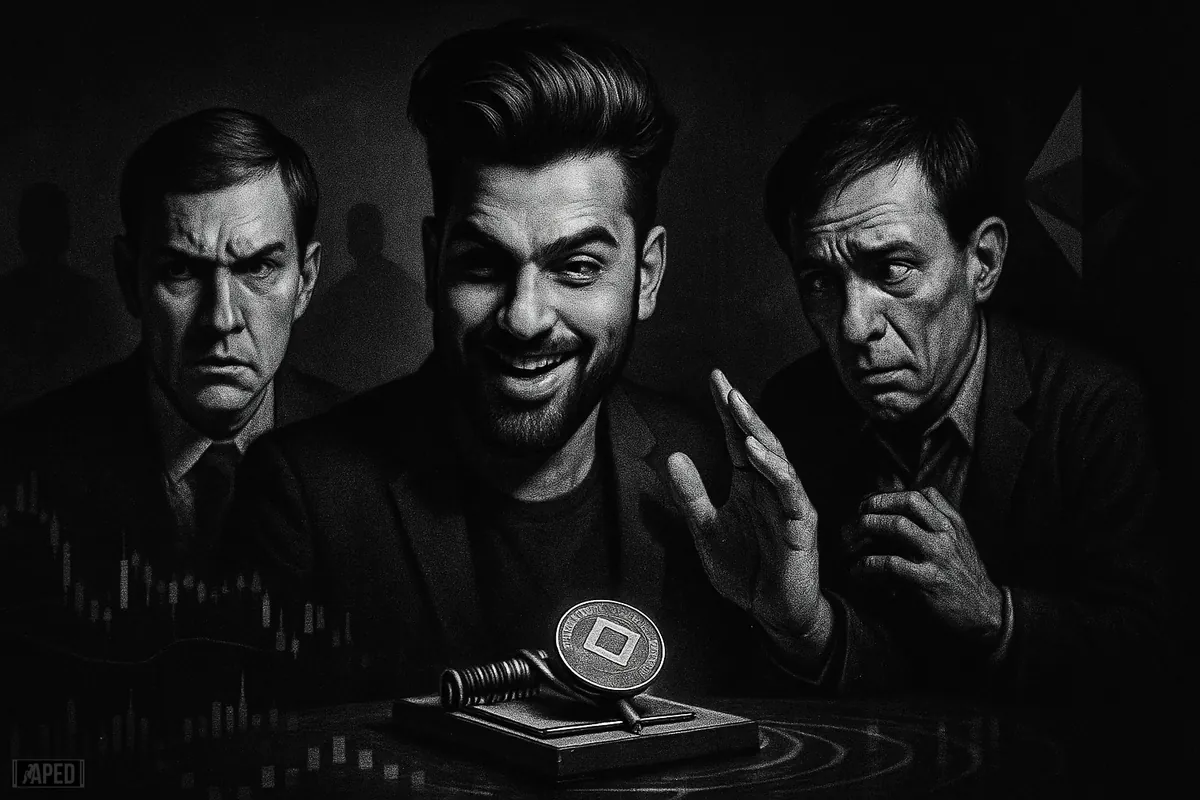

Share article
Share article
Enjoy articles without ads?
Register for free and get unlimited access to all articles.
How a law enforcement sting became a tradable pump
Then crypto did the most crypto thing possible.
Why the token existed in the first place
The original point of NexFundAI was not fundraising, community building, or product development. It was evidence collection.
The alleged market manipulation playbook
The FBI operation, as described in the source article, was aimed at firms and individuals willing to manufacture fake trading activity for crypto projects. That included market makers who allegedly offered to inflate daily volume and create the appearance of organic demand.
The core issue was wash trading, a tactic where the same parties effectively trade with themselves or coordinate fake activity to make a token look liquid and popular. In low-cap crypto, that optical trick can pull in real retail buyers who assume volume equals legitimacy.
Restitution was already part of the story
This was not some obscure token with a confusing history. The source article notes that the government had already set up a restitution portal tied to losses involving the operation. That detail matters because it undercuts any idea that traders simply did not know what they were buying. [1]
At minimum, the token's backstory was radioactive. Yet the market response suggests that for some participants, "radioactive" now doubles as a marketing hook.
The 19x pump was hype, not validation
Price action can make bad ideas look temporarily smart. That does not make them less bad.
What this says about the market right now
This was not a sophisticated misunderstanding. It was a stress test for whether the market still rewards spectacle over substance. It passed, unfortunately.
Attention is still the main exchange rate
A normal market would treat a token tied to an FBI sting as untouchable. Crypto, especially on the speculative fringe, often treats notoriety as a catalyst. If the ticker is live and the float is thin, some degens will convince themselves that ethics, utility, and legal context are someone else's problem.
Enforcement does not automatically create deterrence
There is an awkward lesson here for regulators and law enforcement. Exposing market manipulation does not stop speculative behavior if traders think they can front-run the attention cycle.
That does not mean the FBI operation failed. If anything, it revealed how parts of the industry actually function when incentives are stripped bare. But the token's later pump shows that public enforcement narratives can themselves become market bait.
AI branding still works on a shocking number of people
The fake project reportedly leaned on AI-themed language, which tracks perfectly with the era. Slap "AI" into the name, add passive income promises, and a chunk of the market stops asking basic questions.
The real risk for retail
Retail traders love asymmetric upside. Fair enough. But buying a token whose main claim to fame is "the FBI made this to catch scammers" is not asymmetric upside. It is a dare.
That is how nonsense gets monetized.
Why this matters beyond one bizarre token
The sting also pulled back the curtain on the service layer that props up many questionable launches. Market makers willing to manufacture activity, operators selling optics instead of real demand, and promoters turning controversy into momentum are not edge cases. They are part of the plumbing.
That is the uncomfortable read-through. The token pumped not because the market disproved the FBI's point, but because it proved it.
The Bottom Line
NexFundAI's 19x move was not a comeback story, a product milestone, or a sign that traders had discovered hidden value. It was a hype spike on a token explicitly created as bait.
That should be funny. It should also be clarifying.
If attention keeps outranking due diligence, expect more trades like this, more retail losses, and more easy ammo for regulators who already think the space is a casino with better graphics. If hype holds, watch copycat meme pumps around notorious tickers. If it breaks, expect this token to be remembered for what it actually was: evidence.
People Referenced
Evan Luthra
Evan Luthra is a global venture capitalist and entrepreneur who invests in AI and fintech companies and posts on X about NexFundAI.
Gotbit operator
Gotbit operator Aleksei Andriunin, a crypto market-making founder accused and convicted of market manipulation and fraud.
MyTrade operator
Liu Zhou, founder and primary operator of MyTrade, pleaded guilty to conspiracy to manipulate crypto markets and commit wire fraud.