 See more like this on Google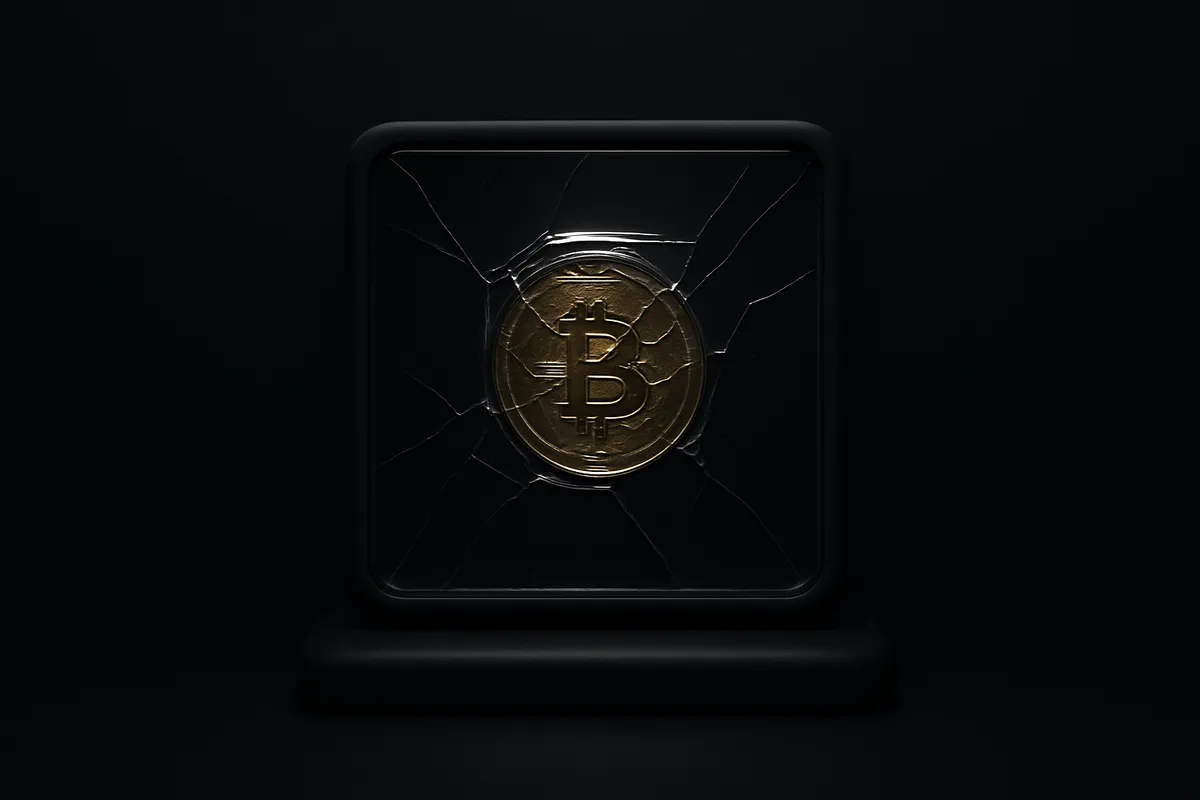
Share article
Share article
Wales' view, shared in comments highlighted by U.Today, is not a short-term price prediction dressed up as philosophy. It is a blunt thesis about utility, and a reminder that robustness and relevance are not the same thing. [2]
Enjoy articles without ads?
Register for free and get unlimited access to all articles.
Wales' 2050 forecast: not dead, just demoted
His key claims, summarized:
- Bitcoin likely does not "go to zero." Wales points to structural resilience, saying it should continue "in perpetuity" unless something fundamental breaks.
- The realistic tail risks he mentions are technical and network level: a major cryptographic failure or an unexpected 51% attack (a scenario where one party controls a majority of mining power and can disrupt transaction ordering and finality).
- Survival does not equal success. Wales calls Bitcoin a "complete failure" as a currency and store of value, and predicts it fails to become "dominant money of the future."
- The end state, in his telling: a niche asset priced for "hobbyist tinkering," under $10,000 by 2050, possibly much lower.
Why Wales thinks Bitcoin fails the "escape hatch" test
He counters with three practical objections that tend to show up in real-world adoption debates:
- Hard to use: Self-custody, key management, and operational security remain non-trivial for mainstream users. Even "easy" setups can fail under stress.
- Volatile: Volatility is not just a trader problem. It is a budgeting problem, and a "please do not liquidate my savings by Friday" problem.
- Not accepted as currency anywhere: Bitcoin acceptance exists, but Wales' point is that it has not achieved broad, everyday settlement status. Payment rails and user behavior still default to fiat.
ETFs and TradFi do not guarantee a floor, because of course they do not
Wales pushes back hard. He describes traditional finance intermediaries as "famously ruthless and not ideological." Translation: banks and asset managers will happily list a product when it is profitable, and just as happily watch it bleed if clients stop caring.
Takeaways: what Wales is really betting against
Here are the practical takeaways embedded in his argument:
1) Technical durability is not the same as monetary durability
Bitcoin can keep producing blocks and still lose cultural relevance. A system can be robust and still become niche.
2) "Store of value" is a social contract, not a software feature
3) The "escape hatch" narrative has friction costs
When times get stressful, people default to what they understand and what they can convert. Wales is skeptical that Bitcoin beats alternatives on usability and acceptance at the moment of need.
4) Institutional access is not institutional faith
Context: Wales' view sits far from the bullish consensus
That range, from "collectible" to "global reserve-ish asset," is the point. Bitcoin forecasting is less like estimating next quarter's earnings and more like choosing which story of the future you think becomes normal. Wales is choosing the story where Bitcoin remains technically alive but socially sidelined.
What to watch next (practical, not prophetic)
Wales' call is about utility and adoption. If you want to evaluate whether his "collectible Bitcoin" endpoint is becoming more or less plausible, watch these measurable signals:
-
Share of economic activity that is non-speculative
Look for growth in real payments, settlement use, and sustained merchant utility, not just exchange volumes and derivatives open interest. -
Volatility trend over full cycles
If Bitcoin is going to behave like a long-term store of value, volatility should compress structurally, not only during calm periods. -
Custody and UX improvements that reduce self-custody failure modes
Better wallets are not a vibe. They are a prerequisite for mainstream use that does not rely entirely on intermediaries. -
Regulatory posture toward self-custody and permissionless transactions
The "escape hatch" thesis weakens fast if access becomes legally or practically constrained, even if the network itself stays online. -
ETF flow persistence during drawdowns
The real test of institutionalization is not approval day. It is whether capital sticks around when the chart looks ugly.