 See more like this on Google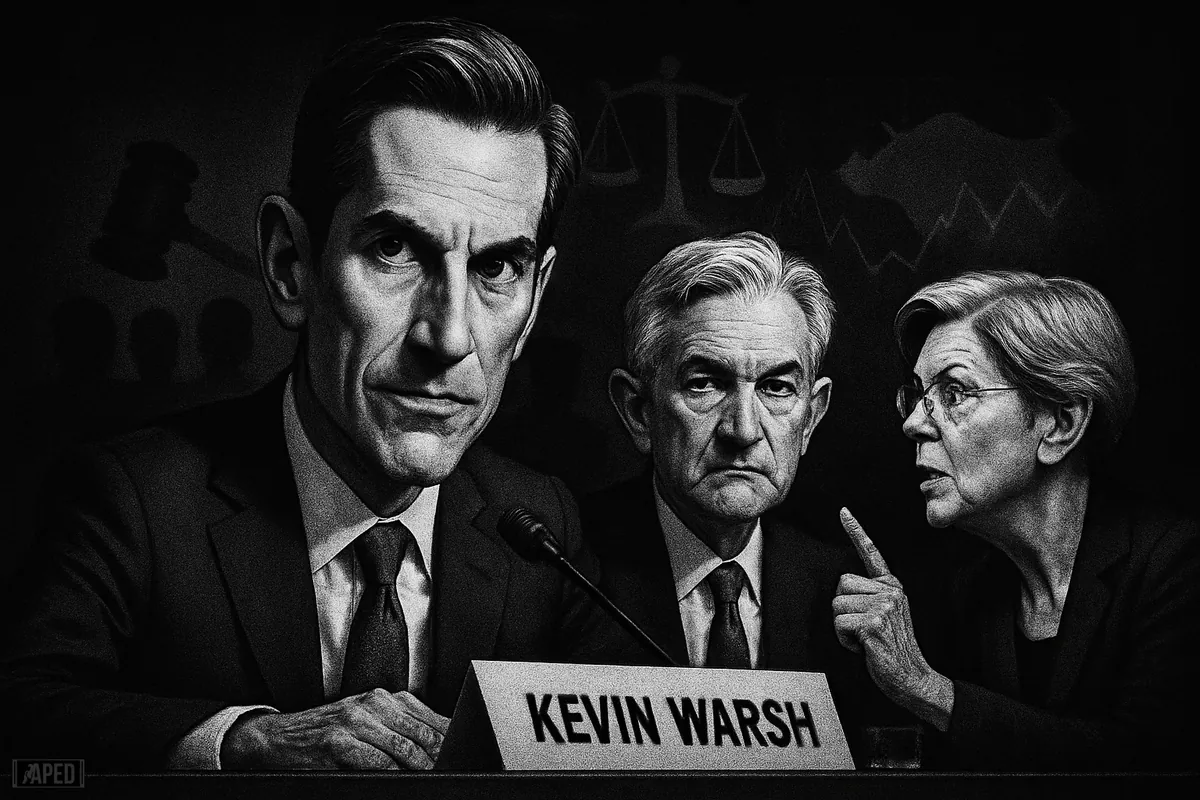
Share article
Share article
Washington is lining up the next big macro catalyst, and crypto traders should care.
Enjoy articles without ads?
Register for free and get unlimited access to all articles.
Why this matters for crypto
Fed chair headlines are not just Beltway noise. They flow straight into risk pricing.
That is where the real signal sits. Not the rumor, not the leak, not the politician spin.
The politics are already showing
Political opposition does not automatically derail a nominee, but it can reshape the hearing into a sharper public test. For markets, that matters because a combative hearing usually produces cleaner quotes and more direct answers. Traders want soundbites they can plug into rate expectations. Senators want clips. Same room, different bags.
What the market should focus on
The headline here is timing, but the useful part for investors is the checklist.
First, watch whether the April 13 week actually gets confirmed. If paperwork delays push the hearing back, it adds uncertainty to the Fed succession timeline.
Second, focus on Warsh's language around inflation persistence. If he frames price stability as the top priority even at the cost of slower growth, that would likely read as hawkish.
What to watch next
For now, this is a scheduling story with real macro teeth. The hearing is reportedly being lined up for the week of April 13, but the date is still soft until committee logistics and Warsh's paperwork are in place. [4]
If the hearing is confirmed and Warsh leans hawkish, watch for pressure on rate-sensitive risk assets, especially the more degenerate corners of crypto. If the date slips or Warsh sounds more balanced than expected, markets may fade the fear trade and refocus on incoming inflation and labor data.
People Referenced
Kevin Warsh
Former Federal Reserve governor nominated by Trump to chair the Fed, known for his market-oriented critiques of central bank policy.
Jerome Powell
Jerome H. “Jay” Powell is the 16th Chair of the U.S. Federal Reserve, serving since 2018 and guiding U.S. monetary policy.
Elizabeth Warren
Elizabeth Warren is a U.S. Senator from Massachusetts known for consumer protection and financial reform advocacy.