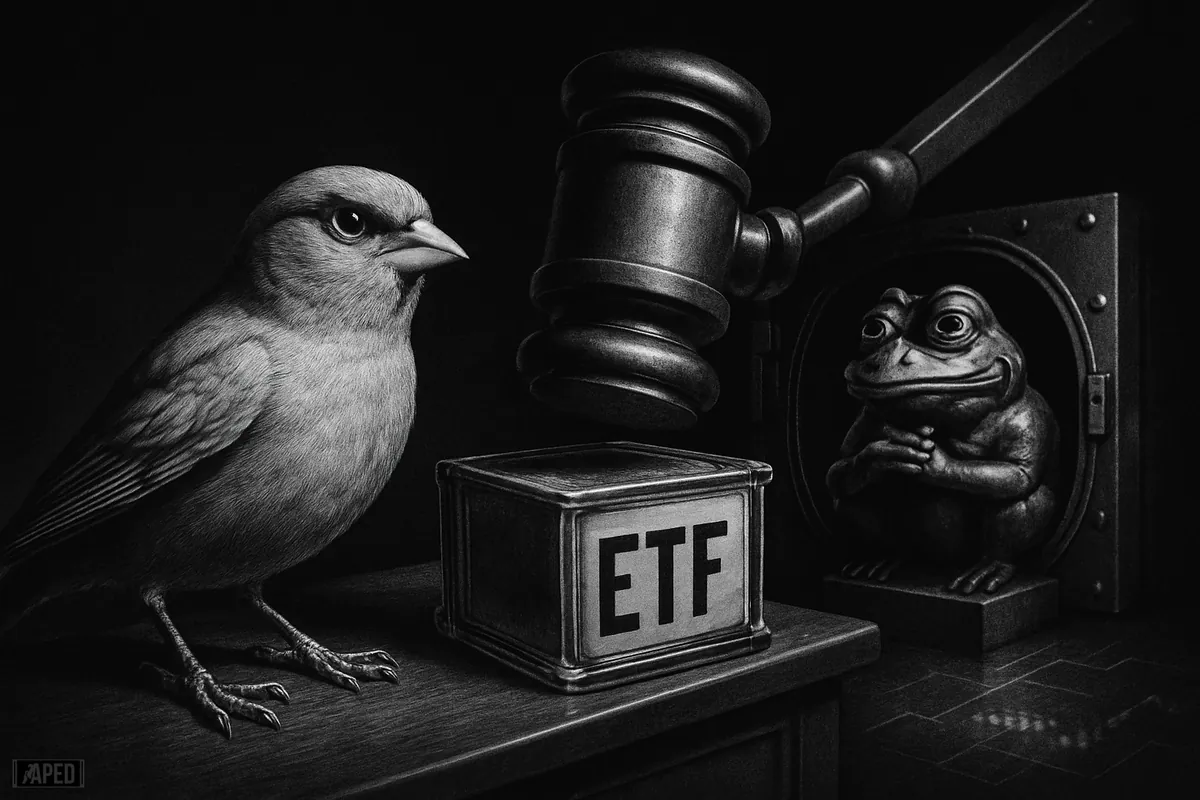
CanaryCapital just pushed memecoin ETF culture one step deeper into US markets. The firm filed an S-1 with the SEC on Wednesday for a spotPepe$0.00000386 ETF, a product that would hold the token directly, even as PEPE still trades roughly 85% below its December 2024 peak. [1]
That filing matters less because approval looks easy, it does not, and more because it shows how far the ETF race has moved beyond BTC and ETH. The latest bid is not for a large cap layer-1 or even a payments token. It is for one of crypto's most recognizable meme assets, with all the volatility and market structure baggage that comes with it.
Register for free and get unlimited access to all articles.
Canary's filing puts PEPE into the ETF queue
According to the registration statement, the proposed product is called the CANARY PEPE ETF. The trust would seek to track the price of Pepe$0.00000386, with the token held by a custodian on behalf of the fund. [2]
One unusual detail is operational, not thematic. The filing says the trust may hold up to 5% of its assets in Ethereum$2,415.00 to cover Ethereum network transaction fees. That is a practical nod to the fact that PEPE is an ERC-20asset, and any creation, redemption, or custody movement onchain needs gas. For traders, it is a small but useful reminder that spot crypto ETFs are still wrappers around real blockchainsettlement. [3]
The S-1 is only the opening step. A full path to launch typically also requires an exchange rule-change filing, usually a 19b-4, before the SEC can move toward approval. So this is a real filing, but not a finished product. [4]
PEPE is not being pitched from a position of price strength. The token is still around 85% below its all-time high from December 2024, based on the source reporting. That makes the timing look contrarian, or opportunistic, depending on your read. [5]
From Canary's angle, the logic is straightforward. If issuers believe US regulators are becoming more open to a broader menu of crypto ETPs, memecoins are the next frontier for attention and flows. Pepe$0.00000386 has brand recognition, deep exchange support, and enough liquidity to make an institutional wrapper at least imaginable, even if the demand case is still highly speculative.
This is also part of a wider pattern. ETF issuers have been stress-testing the edges of what the SEC might entertain, moving from core assets into increasingly niche exposures. Filing does not mean approval odds are high. It does mean firms see optionality in being early.
The market structure questions are the real story
A PEPE ETF would almost certainly face tougher scrutiny than spot BTC or ETH products did. Bitcoin had a mature futures market, surveillance arguments, and years of institutional market infrastructure behind it. PEPE has none of that depth in the same form.
That leaves a few obvious pressure points. First is price discovery. Regulators will want to know which venues matter, how fragmented liquidity is, and whether those markets are resilient enough to support an exchange-traded product. Second is custody and transfer risk. Meme tokens can be liquid, but they can also trade in ways that amplify slippage when flows hit all at once. Third is concentration. If large holders control an outsized share of supply, that raises the usual whale risk around sharp moves and thinner real float than headline market cap suggests.
The filing itself does not solve those concerns. It simply puts them in front of the SEC.
Even if this product never launches, the filing says something about the current cycle. Asset managers are no longer only chasing conservative crypto exposure. They are trying to package internet-native speculation into regulated rails.
That could widen access for traditional brokerage users who want PEPE exposure without touching wallets, bridges, or centralized exchange accounts. It could also compress the psychological distance between meme trading on crypto-native venues and buying a ticker in a brokerage app. For some investors, that is convenience. For others, it is a warning sign that risk is being made easier to access, not easier to understand.
Why It Matters
Canary's PEPE ETF filing is a long-shot application with real signaling power. It tells the market that issuers think the US ETF window may be open wider than it was a year ago, and they are willing to test that thesis with assets far outside the blue-chip bucket.
For PEPE holders, the headline is bullish on paper but not a free bid. A filing can spark attention and volume, yet approval remains uncertain and the token is still trading far below its prior cycle high. The clean read is this: PEPE has made it to the SEC's doorstep, but that is very different from making it onto an exchange. Until the next filing lands, the thesis is narrative-heavy, and the invalidation is simple, no regulatory follow-through.
Your reviews help us improve the quality of both current and future articles. All reviews are public and visible to other readers. We use both ratings and comments to improve future articles and to revise any articles that do not meet our standards.
 See more like this on Google