 See more like this on Google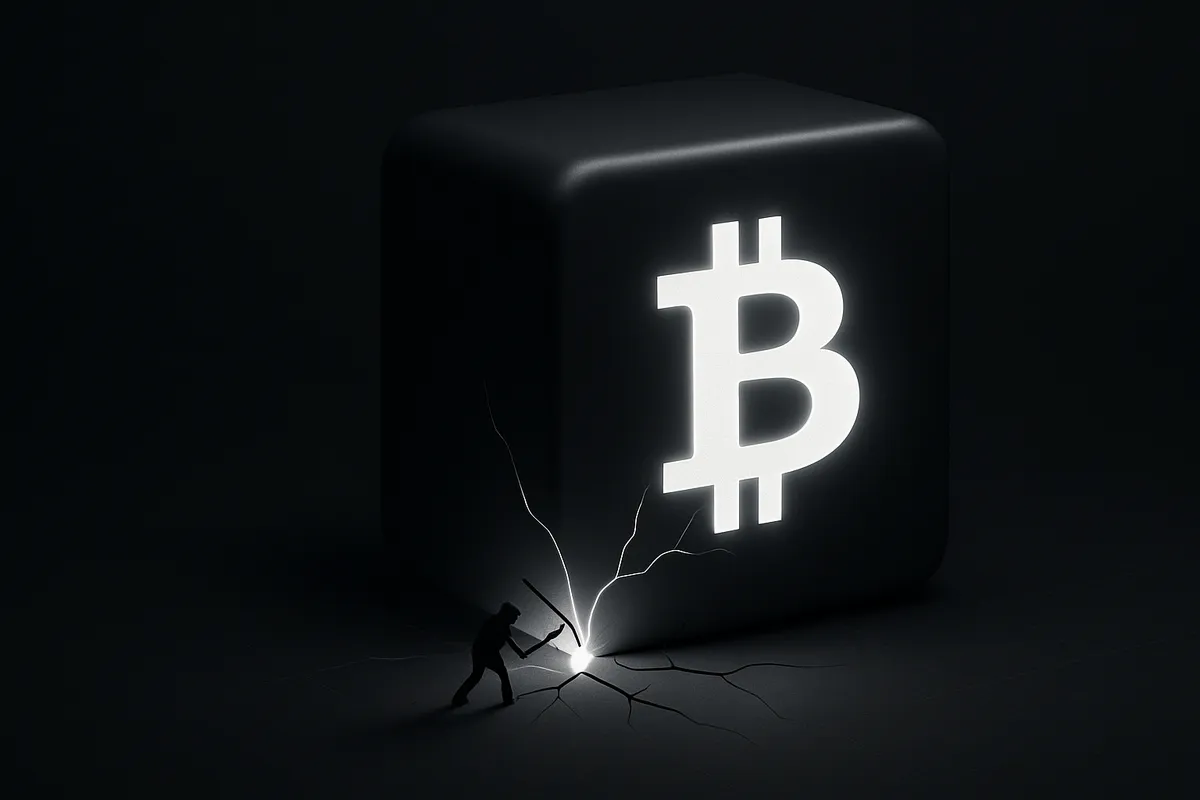
Share article
Share article
Enjoy articles without ads?
Register for free and get unlimited access to all articles.
The win: one block, one payout, no pool split
What makes this episode stand out is the method: rather than relying purely on a static home setup, the miner appears to have boosted their odds with on-demand rented hashpower, spending about $75 to temporarily increase their computing firepower.
Rented hashrate 101: paying for probability, not certainty
Rented hashrate is basically a short-term lease on mining power. [1] Instead of buying ASICs, sourcing cheap electricity, and dealing with heat, noise, and hardware failures, you rent a slice of someone else's compute for a fixed time window.
Why this is rare: Bitcoin mining difficulty is built to punish optimism
- Network difficulty is structurally high, because Bitcoin incentivises industrial scale.
- Variance is extreme for small participants, because block discovery is winner-takes-all.
- Fees are unpredictable, swinging with mempool congestion and demand for blockspace.
That last point matters: the headline number is driven by the fixed subsidy, but fees can add meaningful upside in busy periods, and disappoint in quiet ones.
The backdrop: post-halving rewards make every block feel heavier
At Bitcoin around $62,862, the base subsidy alone comes in near the $200,000 mark. Add fees and you get a payout that is, in practical terms, a house deposit in most places, or an entire house in a few. Not bad for a setup described as "hobby-level" once you include on-demand hashrate.
What the chain tells you: confirmation is public, identity is not
Braiins flagging the event gives it additional credibility, but the chain is the final receipt. If you are tracking this as a trend, that's the real takeaway: solo wins are verifiable, but the narrative details (how much hash was rented, for how long, and from where) are often inferred or self-reported.
The less fun bit: this can also be a cautionary tale
Crypto Twitter will naturally file this under "proof the little guy can still make it". Fine. The risk section still deserves to be stapled to the top:
- Expected value is not your friend. If you repeatedly spend $75 renting hashpower, your most likely outcome is repeated losses. This win is the exception that goes viral.
- Hashrate rental markets are not risk-free. Counterparty risk, payout structure quirks, and misconfiguration can turn "I'm renting hash" into "I'm donating money".
- Liquidity and fees cut both ways. Your reward is denominated in Bitcoin, but your costs may be in fiat or stablecoins. If Bitcoin dumps between "win" and "sell", the vibe changes quickly.
- Security narratives get spicy. Renting hashpower is legitimate for mining, but similar mechanisms are discussed in the context of attacking smaller proof of work networks. Bitcoin's scale makes that vastly harder, but the optics still matter.
None of that negates the achievement. It just stops people from treating it like a repeatable strategy rather than what it is: a high-variance punt that occasionally hits.
What to watch next (checklist)
- Bitcoin difficulty adjustment: rising difficulty makes these solo victories even rarer unless the rented hashrate scales up too.
- Network hashrate trend: if hashrate keeps climbing, small miners need bigger boosts to get the same probability window. [4]
- Mempool and fee conditions: higher fees can materially increase the "jackpot" on top of the 3.125 Bitcoin subsidy.
- Hashrate rental pricing: if rental costs spike, the already-thin probability math gets worse.
- More solo block finds: a cluster of wins can signal more hobby miners experimenting with temporary hashrate bursts, or simply statistical noise doing what it does.
For now, the clean fact remains: block 938092 was mined solo, and the miner bagged a 3.125 Bitcoin subsidy worth north of $200K, after reportedly spending about $75 on rented hashpower. Sometimes the chain really does hand out lottery tickets, and once in a while, someone actually cashes one in.