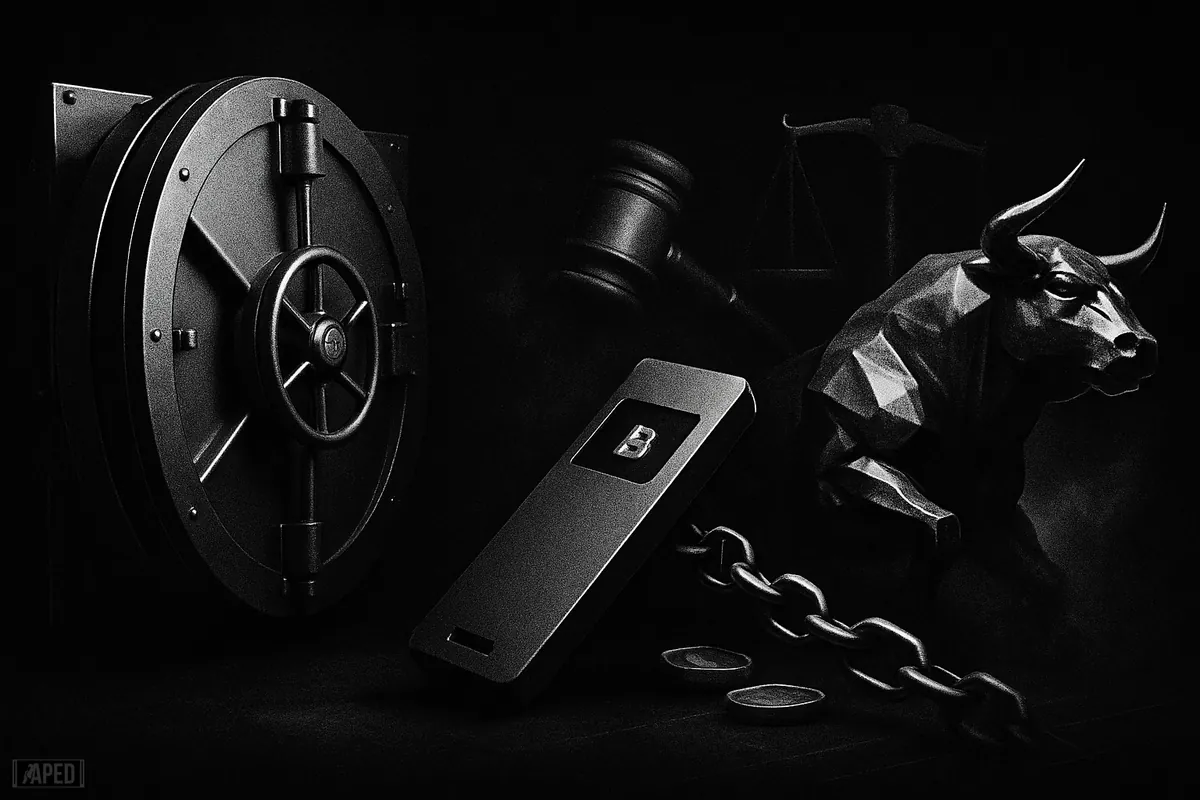
Traders did what traders do: they heard "self-custody" and bought the bits of crypto most exposed to it. The more interesting part is that this latest SEC shift is not just a vibes boost for wallets and DeFi rails, it is a signal that the regulator is carving out more room for crypto products that do not sit neatly inside the old broker-custodian model. [1]
That matters for Bitcoin$81,749.99 first, and for DeFi infrastructure not far behind.
Enjoy articles without ads?
Register for free and get unlimited access to all articles.
The update, stripped of the legal fog
The SEC's latest move has been read across the market as a softer stance on how certain crypto platforms can operate when users retain control of their own assets. The practical takeaway is straightforward: firms building around self-custody, wallet-based access, and decentralized execution now have a clearer argument that they are not automatically stepping into the same regulatory bucket as traditional intermediaries holding customer funds. [2]
This comes after a stretch in which U.S. policy often looked actively hostile to on-chain models. Previous proposals around safeguarding and digital assetcustody had raised the obvious fear that if every touchpoint with crypto triggered full custodial obligations, then non-custodial wallets and DeFi front ends would end up regulated like banks or brokers despite never actually controlling user assets. [3]
The new posture does not erase regulation. It does, however, suggest the SEC is drawing more distinctions between software, access, and actual custody. For an industry that has spent years saying "not your keys, not your coins," that is more than semantics. [4]
Bitcoin$81,749.99 tends to benefit whenever policy language makes self-custody sound less suspect. It is the cleanest asset in the room on this theme: a bearer asset with a mature wallet ecosystem, a clear user case for direct ownership, and less dependence on complex application-layer narratives than most altcoins.
The market reaction makes sense in that light. A more permissive view of self-custody lowers one of the headline regulatory risks hanging over wallet providers, hardware wallet makers, and Bitcoin treasury users who want direct control rather than exchange exposure.
DeFi-related tokens and wallet-adjacent names also caught a bid because the update points toward a future where user-controlled interfaces have more breathing room. If a product helps users interact with crypto without taking possession of funds, the compliance analysis may be less brutal than many had feared. [5]
That is not a free pass. It is a repricing of tail risk.
The DeFi angle is real, but selective
There is a temptation to read every SEC concession as a blanket win for DeFi. That would be tidy, and wrong.
The likely beneficiaries are the parts of DeFi closest to pure software and user-directed execution: wallet infrastructure, non-custodial routing, self-custody trading apps, and protocols where the user signs every action from their own address. These models fit the spirit of the SEC's updated stance better than systems that rely on identifiable operators making discretionary decisions behind the curtain. [6]
Projects that still look functionally centralized, even if wrapped in decentralization branding, remain exposed. If a team controls upgrades, steers treasury flows, curates access, captures fees, and markets the product like a managed platform, regulators are unlikely to be fooled by a token and a Discord server.
That distinction matters because DeFi liquidity is still highly uneven. Blue-chip protocols with deep TVL and visible usage may attract institutional interest if self-custody policy keeps easing. Smaller governance tokens with thin books and mostly narrative-driven demand are another story. Some of those can rally hard on headlines, then round-trip the whole move by next Tuesday.
Wallets move from side character to strategic layer
The clearest long-term winner may be the wallet stack itself. If policy is shifting toward accepting self-custody as a legitimate operating model rather than a compliance loophole, wallets become more than a utility. They become the regulated edge of crypto user experience.
That expands the design space for trading apps, payment tools, Bitcoin spending products, and embedded DeFi access. Instead of forcing every serious product into a custodial wrapper, the market can support more models where users hold keys and applications provide routing, discovery, analytics, and interface layers.
For Bitcoin, this is particularly useful. The asset does not need a complex product story to benefit from better wallet regulation. Every improvement in the legal treatment of self-custody supports the simplest Bitcoin use case: buying, withdrawing, and holding coins directly.
Ethereum$2,405.71 and broader DeFi ecosystems may gain even more functionality from the shift, because wallet-native apps are how users access swaps, lending, staking, and tokenized assets. But Bitcoin remains the easiest beneficiary for traditional investors to understand.
What this does not solve
A friendlier SEC line on self-custody does not fix the entire U.S. crypto rulebook. Token classification fights remain unresolved. Market structure questions are still messy. Stablecoin legislation remains its own battlefield. State-level money transmission issues have not vanished either.
There is also a practical gap between regulatory language and bank behaviour. Even if the SEC becomes more accommodating, banking partners, payment processors, and app stores may still treat crypto products conservatively. Anyone building in the U.S. knows that formal permission and actual distribution are not the same thing.
Then there is enforcement risk by fact pattern. A wallet may be non-custodial in theory, but if the surrounding business model includes fee extraction, routing preferences, token promotion, or privileged backend control, scrutiny can return quickly. The industry has a habit of declaring itself decentralized five minutes before lawyers arrive.
Bitcoin's edge in this setup
Bitcoin$81,749.99 stands out because it requires the least interpretive effort. It has no issuer, no central roadmap, no foundation steering ecosystem incentives, and a deeply entrenched self-custody culture. If regulators are getting more comfortable with user-controlled digital assets, Bitcoin is the obvious beneficiary.
That could reinforce existing flows into spot Bitcoin products while also supporting direct on-chain ownership. Those are not mutually exclusive tracks. In fact, a healthier market probably has both: institutional wrappers for some buyers, personal custody for others.
This policy direction may also strengthen the narrative that Bitcoin is the least politically fragile major crypto asset in the U.S. market. For allocators who still worry about securities risk in altcoins, any signal that self-custodied Bitcoin sits on firmer ground can matter at the margin.
Headline-driven rallies in DeFi can get silly quickly, especially when traders leap from "policy is less hostile" to "regulatory overhang is gone." It is not gone.
Watch liquidity before buying the story wholesale. If open interest jumps faster than spot volume, the move can become funding-driven rather than conviction-driven. If token prices run while on-chain user activity stays flat, that is usually a tell. Wallet growth, swap counts, bridge activity, and net stablecoin inflows into protocols will be more useful than celebratory posts on Crypto Twitter.
Bitcoin has cleaner exposure, but even there the usual caveats apply. Macro still matters. If rates, dollar strength, or ETF flows turn against risk, a custody-friendly headline will not stop a broader unwind.
What to watch next
SEC follow-up guidance that clarifies the line between software access and actual custody
Whether wallet providers and self-custody trading apps publicly expand U.S. offerings
On-chain flows into major DeFi protocols, especially sustained stablecoin deposits rather than one-day spikes
Bitcoin exchange outflows, which would suggest users are acting on the self-custody narrative, not just trading it
Funding rates and open interest in DeFi-related tokens, to separate genuine accumulation from leverage chasing
Any legal pushback or industry challenge that tests how far this new regulatory interpretation really goes
For now, the market's read is sensible enough: if the SEC is making more room for users to hold their own keys, Bitcoin and the sturdier end of DeFi should benefit first. The rest, as ever, depends on whether the flows show up after the headline.
Your reviews help us improve the quality of both current and future articles. All reviews are public and visible to other readers. We use both ratings and comments to improve future articles and to revise any articles that do not meet our standards.
 See more like this on Google